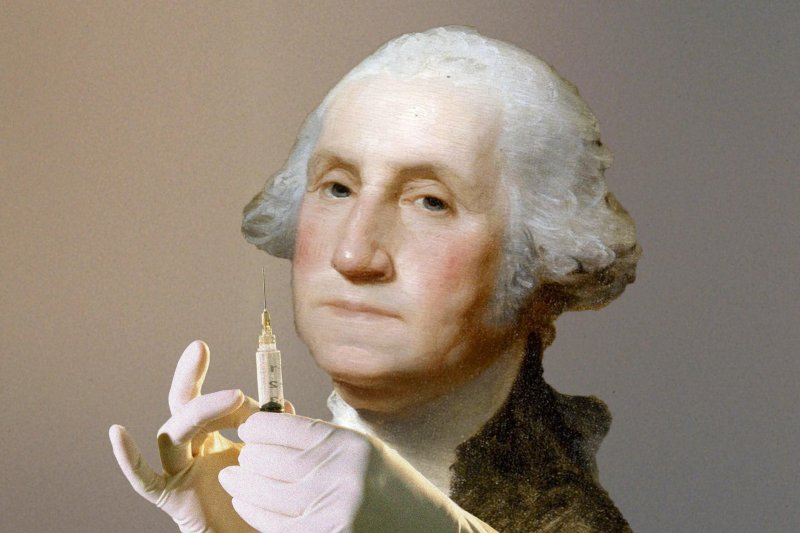
The United States owes its existence as a nation partly to an immunization mandate.
In 1777, smallpox was a big enough problem for the bedraggled American army that George Washington thought it could jeopardize the Revolution. An outbreak had already led to one American defeat, at the Battle of Quebec. To prevent more, Washington ordered immunizations — done quietly, so the British would not hear how many Americans were sick — for all troops who had not yet had the virus.
It worked. The number of smallpox cases plummeted, and Washington’s army survived a war of attrition against the world’s most powerful country.
In the decades that followed, immunization treatments became safer (the Revolutionary War method killed 2 percent or 3 percent of recipients), and mandates became more common, in the military and beyond. They also tended to generate hostility from a small minority of Americans.

A Cambridge, Mass., pastor took his opposition to a smallpox vaccine all the way to the Supreme Court in 1905, before losing.