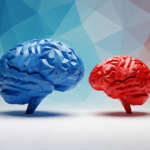
Music and the mind: How can Mozart treat epilepsy?

Credit: News Latest
Credit: News Latest

While the claims of intelligence boosting are dubious, one assertion that sounds just as implausible but is absolutely real is that classical music can help treat epilepsy.

But not just any classical music — specifically, Mozart’s Sonata for Two Pianos in D Major (K448). Known as the “Mozart K448 effect,” this bizarre phenomenon was first described nearly 30 years ago.

Since then, researchers have learned more about the Mozart K448 effect. It seems to work by reducing so-called interictal epileptiform discharges (IEDs) — abnormal brainwaves that occur in between seizures in epileptic patients. 

Follow the latest news and policy debates on sustainable agriculture, biomedicine, and other ‘disruptive’ innovations. Subscribe to our newsletter.

In their new paper, published in Scientific Reports, [researcher Robert] Quon’s team recruited 16 volunteers who had brain implants for the treatment of refractory focal epilepsy — that is, epileptic seizures that originate in one side of the brain and do not respond to treatment.


His team first showed that, for the K448 effect to take place, a patient must be exposed to the music for a certain period of time: at least 30 seconds. 

There is still much to figure out. But the fact that scientists are closer to understanding how Mozart can bring relief to refractory epilepsy patients must be music to their ears.


This is an excerpt. Read the original post here. 

{{ reviewsTotal }}{{ options.labels.singularReviewCountLabel }}
{{ reviewsTotal }}{{ options.labels.pluralReviewCountLabel }}
{{ options.labels.newReviewButton }}
{{ userData.canReview.message }}

Related Articles

Infographic: Global regulatory and health research agencies on whether glyphosate causes cancer

Infographic: Global regulatory and health research agencies on whether glyphosate causes cancer

Does glyphosate—the world's most heavily-used herbicide—pose serious harm to humans? Is it carcinogenic? Those issues are of both legal and ...

Most Popular

Screenshot-2026-05-01-at-1.29.41-PM
Viewpoint: What happens when whole grains meet modern food manufacturing? Labels don’t tell the whole story.
S
As vaccine rejectionism spreads, measles may be taking a more dangerous turn
ChatGPT-Image-Apr-13-2026-02_20_22-PM
Viewpoint: Misinformation infodemic? Why assessing evidence is so challenging 
Screenshot-2026-04-20-at-2.26.27-PM
Viewpoint — Food-fear world: The latest activist scientists campaign: Cancer-causing additives
ChatGPT-Image-Mar-27-2026-11_47_30-AM-2
FDA’s expedited drug reviews are hailed in some quarters but other approval practices are problematic
Screenshot-2026-03-13-at-12.14.04-PM
The FDA wants to make many popular prescription drugs OTC—a great idea. Here’s why it’s unlikely to happen
bigstock opioids on chalkboard with rol
GLP podcast: 'Safe injection sites': enabling drug addiction or saving lives?
circular-bioeconomy-should-focus-on-sustainable-wellbeing
GLP podcast: What's wrong with 'doomsday' environmentalism? It's false.
Farmers can talk to plants
Farmers are a major source of misinformation—about farming
glp menu logo outlined

Get news on human & agricultural genetics and biotechnology delivered to your inbox.