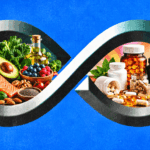
Those delightful calories we swallow are broken down as we chew them up, further dissolved with acids in the stomach, which then releases them to our intestinal tract, where we absorb the nutrients and send the rest to our microbiome. The various taxonomic groups within the microbiome convert our leftovers into additional nutrients that we can absorb – the “payment” for their efforts is to eat the rest for themselves. New studies suggest that some of the microbiome charge more for their services than others. As a result, the composition of our microbiome can influence how readily we can lose weight.

What constitutes obesity remains ill-defined. Characterizing the constituents of our microbiome, from a metabolic viewpoint, does not discriminate healthy overweight from any other presentation of weight excess, the phenotypes of obesity. Studies show that what we eat, say fiber, in the presence of some bacteria that find fiber their favorite food, will result in significant weight loss – there seems to be a metabolic signal for us to identify.
The researchers made use of participants in a commercial weight loss program. They identified 239 (out of 5,000) with available blood and stool samples for analysis. They stratified the group into those losing >1% of their bodyweight per month over six to 12 months and those who maintained their bodyweight – so the study involved 105 individuals. The ages of the groups and their glucose levels (a measure of diabetes) were the same at the start of the intervention. But the group that ultimately had weight loss had higher baseline weight and HDLs. The weight maintenance group was not quite as overweight at baseline; 50% were considered overweight or obese compared to 100% in the weight loss group.
- Those with higher baseline BMI (weight) lost more weight than those with lower baseline BMI
- The weight loss group showed “broad improvement” in biomarkers associated with inflammation and metabolic “derangements.” – losing weight made them metabolically healthier
- None of the food frequency measures or baseline blood metabolites were associated with weight loss. Nor was the diversity of the microbiome.
- But the presence of 31 functional genes derived from the microbiome was associated with weight loss. These genes were related to the breakdown of polysaccharides and proteins and responses to stress and respiration.
But what does this mean?
The presence of some bacterial species competes more effectively for the polysaccharides we eat. They metabolize them first and give us back “lower energy-dense fermentation byproducts,” more specifically short-chain fatty acids that we believe reduce inflammation and provide fewer calories to us in the process. This reduction in energy and conversion into more beneficial byproducts is the payment I alluded to in the first paragraph.





There is increasing evidence that it is not just what we eat that determines whether we gain, lose or maintain our weight. The composition of our microbiome, as this study demonstrated, can exact a higher “processing fee” for its contribution, which will result in more beneficial, less caloric nutrients for us.
The study is preliminary; it is still searching for a stronger signal of what is going on. The sample size is small, and the results may be certain, but the meaning remains fuzzy. But it does suggest that understanding obesity involves more than how much we exercise and how many calories we ingest. As with everything in our nature, it is complex, and the parts act in relation to one another in ways we are just beginning to understand.
Dr. Charles Dinerstein, M.D., MBA, FACS is the Medical Director at the American Council on Science and Health. He has over 25 years of experience as a vascular surgeon. He completed his MBA with distinction in the George Washington University Healthcare MBA program and has served as a consultant to hospitals
A version of this article was originally posted at the American Council on Science and Health and has been reposted here with permission. The American Council on Science and Health can be found on Twitter @ACSHorg