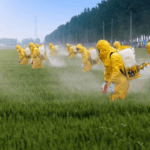
In many ways, various governments have passed regulations with a “one size fits all” mentality. More often than not, however, this approach wrongly limits consumer choice, and more importantly creates tremendous externalities which are often left unaddressed. Our goal is to highlight instances where the “one size fits all” approach has failed consumers and explain why.
Concern over glyphosate in food has become a major topic the last couple of years and has gained a lot of media attention in a recent study where they found that organic beers and wines contained small traces of glyphosate – a pre-harvest herbicide and harvest aid used on cereal crops like wheat, oats and vegetable seed oils like canola and sunflower. However, the U.S. Environmental Protection Agency’s safety limit for glyphosate is 100 times greater than the amounts found in the beer and wine samples, and thus, the risk of human contamination is extremely low. Nevertheless, policymakers want to ban glyphosate which would reduce crop yields and make beer and wine even more expensive.

You probably heard about the “Beepocalypse” – the catastrophic scenario in which declining honeybee population is caused by pesticides. However, honeybees aren’t actually declining but increasing. Occasional reductions in honeybee populations are multifactorial, but varrora mites and the viruses they carry are likely the leading drivers, nutrition being another big factor. According to a USDA bee researcher: “If there’s a top ten list of what’s killing honey bee colonies, I’d put pesticides at number 11″. By creating a “one size fits all” regulation and thus banning pesticides, policymakers could make the mite problem worse which would actually harm honey bee colonies instead of protecting them.

Crop protection tools, including herbicides, insecticides, and fungicides, are essential to guarantee food safety and food security. If regulators decide to phase out these substances, prices are expected to increase as production levels drop. After the phase-out of neonicotinoid insecticides in France, sugar beet farmers were at the brink of collapse, and prices exploding. To avoid a complete disaster, France decided to lift the ban for three years. Food safety agencies in Europe make scientifically sound analysis on the safety of these chemicals. The decision to ban them regardless is political, not scientific, and ends up hurting consumers.

Man made chemical compounds are vital for contamination-resistant gowns and drapes, implantable medical devices, stent-grafts, heart patches, sterile container filters, needle retrieval systems, tracheostomies, catheter guide wire for laparoscopy and inhaler canister coatings. To declare all these chemical compounds hazardous, which Congress intends to do, without evaluating the risk associated with each use, puts lifesaving medical technologies in jeopardy and patient safety at risk.

If the PFAS Action act proceeds as written is it would significantly jeopardize the domestic smartphone market, used by the vast majority of Americans everyday. As cell phones and 5G technology continue to grow and require faster speeds at smaller sizes, these compounds are involved in everything from producing semiconductors to helping cool data centers for cloud computing. Forcibly removing these chemicals from the production process, especially because they present very little risk to humans, will drastically disrupt supply chains and inflate costs that will hurt low-income people the hardest.




The difference between hazard and risk
Much of the “one size fits all” approach can be summarized as a failure to properly understand the difference between hazards and risks. This is an incredibly important distinction when policymakers are crafting laws aimed at protecting consumers, and in many instances public health.
Risk-based regulation considers exposure to hazards. For instance, the Sun is a hazard when going to the beach, yet sunlight enables the body’s production of vitamin D and some exposure to it is essential to human health.

As with everything else, it is the amount of exposure that matters. A hazard-based regulatory approach to sunlight would shut us all indoors and ban all beach excursions, rather than caution beach-goers to limit their exposure by applying sunscreen. The end result would be to harm, not the protection of human health.
regulation, where it creates equally absurd inconsistencies. For instance, if wine was sprayed on vineyards as a pesticide, it would have to be banned under EU law, as alcohol is a known and quite potent carcinogen at high levels of consumption. All this is rationalized through an inconsistent and distorted application of the precautionary principle.
In essence, hazard-based regulation advocates would endorse outlawing all crop protection methods that cannot be proven completely safe at any level, no matter how unrealistic — a standard which, if applied consistently, would outlaw every organic food, every life-saving drug, and indeed every natural and synthetic substance. By ignoring the importance of the equation Risk = Hazard x Exposure, hazard-based regulation does not follow a scientifically sound policy-making approach.