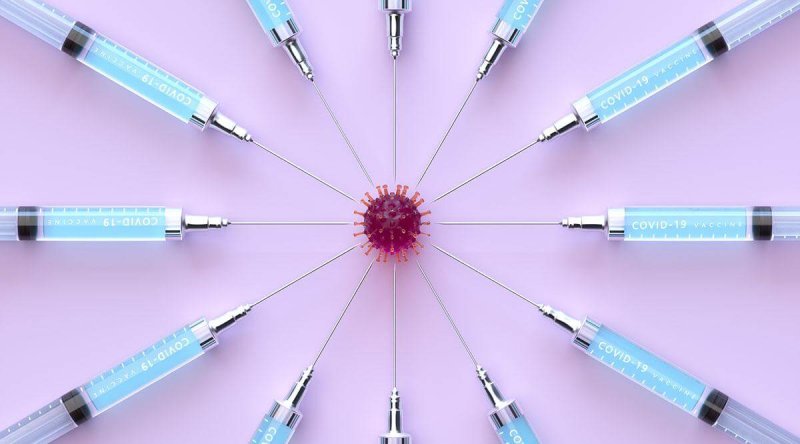
How concerned should vaccinated people be about spreading COVID?

Credit: AAMC
Credit: AAMC

In the early days of vaccine bliss, many Americans had thought that the shots were a ticket to normalcy—and at least for a while, that’s precisely what public-health experts were telling us: Sure, it was still possible for vaccinated people to get COVID-19, but you wouldn’t have to worry much about spreading it to anyone else. Interim guidance shared by the CDC in March stated that these cases “likely pose little risk of transmission,” and a few weeks later, CDC Director Rochelle Walensky said that “vaccinated people do not carry the virus.”

And then came Delta. 

Follow the latest news and policy debates on sustainable agriculture, biomedicine, and other ‘disruptive’ innovations. Subscribe to our newsletter.

“The data are very clear that vaccinated individuals are less likely to spread the virus to others than unvaccinated individuals,” Christopher Byron Brooke, an assistant professor at the University of Illinois at Urbana-Champaign, told me in an email.

A recent paper Brooke co-wrote showed that vaccinated people shed less virus, stop shedding virus sooner than the unvaccinated, and shed particles that are less infectious—supporting the notion that they’re less likely to transmit disease.

One study from the Netherlands found a 63 percent reduction in household transmission among the vaccinated. That’s a testament to our vaccines.


This is an excerpt. Read the original post here.

{{ reviewsTotal }}{{ options.labels.singularReviewCountLabel }}
{{ reviewsTotal }}{{ options.labels.pluralReviewCountLabel }}
{{ options.labels.newReviewButton }}
{{ userData.canReview.message }}

Related Articles

Infographic: Global regulatory and health research agencies on whether glyphosate causes cancer

Infographic: Global regulatory and health research agencies on whether glyphosate causes cancer

Does glyphosate—the world's most heavily-used herbicide—pose serious harm to humans? Is it carcinogenic? Those issues are of both legal and ...

Most Popular

Picture1-5
Science Disinformation Gap: The transatlantic battle over social media and censorship
ChatGPT Image May 10, 2026, 08_16_59 PM 2
Overmedicalization? RFK Jr.’s antidepressant crackdown raises conflict questions over his fee stake in Wisner Baum, the tort firm built on suing drug makers
Picture1-1
Cooling the planet with balloons: Could a geoengineering gamble slow global warming?
Screenshot-2026-05-11-104424
Hantavirus outbreak research: Trump administration shut down study last year on rodent-to-human transmission
Picture1-14
When superbugs threaten vulnerable children: Can AI help solve antibiotic resistance?
Screenshot 2026-05-11 at 11.30
Despite politicized disinformation, Midwest AI data centers are fueling a solar energy boom
ChatGPT-Image-Apr-13-2026-02_20_22-PM
Viewpoint: Misinformation infodemic? Why assessing evidence is so challenging 
Screenshot-2026-05-08-at-3.40.33-PM
Seeds of power: China turns to genetic engineering to become global superpower
S
As vaccine rejectionism spreads, measles may be taking a more dangerous turn
images
The never-ending GMO debate: Pros and cons
glp menu logo outlined

Get news on human & agricultural genetics and biotechnology delivered to your inbox.