4 million tons of rice is destroyed each year to flooding in Southeast Asia. This genetically-engineered rice variety could limit losses

Credit: World Agroforestry

Global rice production will likely be hit by the devastating effects of climate change as early as 2030, according to a recent NASA study.

Among those trying to mitigate the losses of rice โ€” the worldโ€™s second most important cereal crop โ€” is plant geneticistย Pamela Ronald. Her lab at the University of California Davis studies genes that control resistance to disease and tolerance of environmental stress in food crops.

Follow the latest news and policy debates on sustainable agriculture, biomedicine, and other ‘disruptive’ innovations. Subscribe to our newsletter.

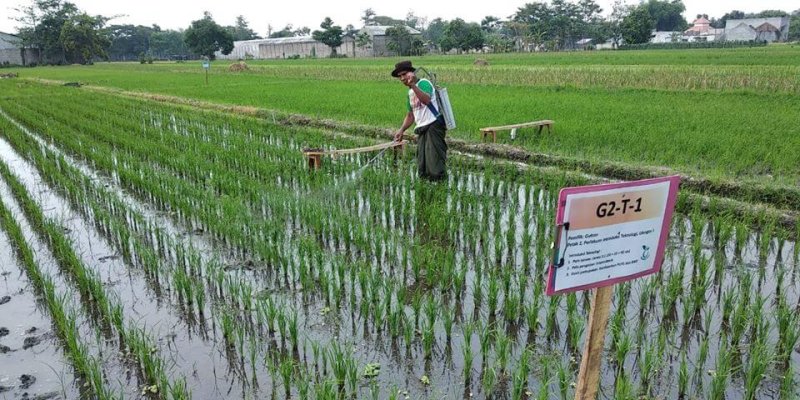
For the past few years, her team spent her time working with rice farmers in Southeast Asia, where increased flooding limits crop production in areas that are already dealing with flood-prone land.

โ€œItโ€™s estimated that 4 million tons of rice โ€” enough to feed up to 30 million people โ€” is lost every year to flooding,โ€ Ronald says.

Her laboratory created a rice disease resistance gene that has reached more than 6 million subsistence farmers in India and Bangladesh.

To achieve this, her team took advantage of an ancient Indian rice, isolated its gene and introduced it into rice varieties using modern technology. Those new varieties can withstand flooding for up to two weeks and have a 60% yield advantage compared with their conventional counterparts.


This is an excerpt. Read the original post here.

{{ reviewsTotal }}{{ options.labels.singularReviewCountLabel }}
{{ reviewsTotal }}{{ options.labels.pluralReviewCountLabel }}
{{ options.labels.newReviewButton }}
{{ userData.canReview.message }}

Related Articles

Infographic: Global regulatory and health research agencies on whether glyphosate causes cancer

Infographic: Global regulatory and health research agencies on whether glyphosate causes cancer

Does glyphosateโ€”the world's most heavily-used herbicideโ€”pose serious harm to humans? Is it carcinogenic? Those issues are of both legal and ...

Most Popular

Screenshot-2026-04-14-at-11.11.06-AM
โ€˜Turbo cancerโ€™ or mRNA cancer cure? Strategies to counter misinformation
Picture1
The Orange Bowl without oranges: Can CRISPR save Florida citrus?
ChatGPT-Image-May-22-2026-10_26_09-AM
Gutting the National Science Board: How the Trump-RFK, Jr. crusade is erasing the separation of science and state
Screenshot 2025-11-12 at 3.28
GLP podcast: Evolutionary biologist debunks the 'sex spectrum'
ChatGPT-Image-May-26-2026-09_19_32-AM
Viewpointโ€” โ€œA safe space to chat, flirt, and be intimate without sexโ€: Are new AI companies exploiting vulnerable asexuals?
Screenshot 2026-05-22 at 3.28
Vagus nerve wellness grift: How to build a billion dollar business. Are you listening, Kelly Ripa?
Screenshot-2026-04-22-at-12.21.32-PM
Viewpoint: Why the retracted Monsanto glyphosate study doesnโ€™t change the scienceโ€”the worldโ€™s most popular herbicide is safeย 
ChatGPT-Image-Mar-10-2026-01_39_01-PM
Viewpointโ€”โ€œMiracle moleculeโ€ debunked: Why acemannan supplements donโ€™t work
ChatGPT-Image-May-26-2026-09_04_31-AM-2
Hantavirus revives COVID-era conspiracies and distrust in public healthย 
global warming
โ€˜Implausibleโ€™: Top climate scientists reject worst-case scenarioโ€”soaring temperatures and fast-rising sea levels
ChatGPT-Image-Apr-16-2026-02_56_53-PM
Financial incentives, over diagnosis, and weak oversight: Autism claims are driving up Medicare costs
Screenshot-2026-05-26-at-9.48.42-AM
Seed oil panic: RFK Jr. and influencers made linoleic acid a dietary villain and heart risk. Evidence points the other way โ€” replacing them with animal fat is.
glp menu logo outlined

Get news on human & agricultural genetics and biotechnology delivered to your inbox.