Fertility fraud: Should there be laws to disclose whether an ‘anonymous sperm donor’ was actually the fertility clinic doctor?

Credit: Adriana Heldiz

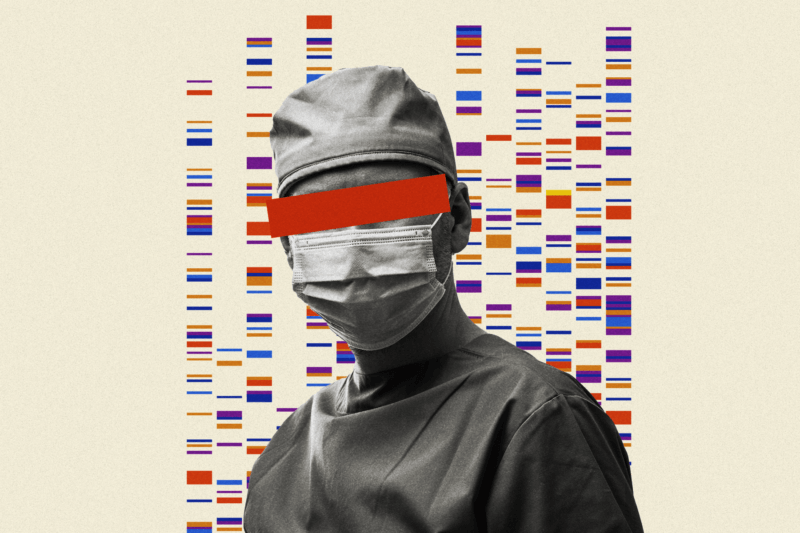
A growing number of people are finding out through DNA testing that instead of being “donor conceived” — the product of an anonymous sperm donation — they were “doctor conceived.” Their mothers’ fertility doctors used their own genetic material to impregnate their patients. And right now, there are few options for parents or children to pursue civil or criminal remedies in these cases. There’s a push to change that in Washington state: A bill making its way through Olympia that would make fertility fraud a crime.

Traci Portugal lives in Woodinville, and discovered her biological father was her parents’ fertility doctor.

“I don’t think there’s words to really put out there to capture the absolute annihilation of a sense of trust, a sense of who you are, where you came from. Even where you are, your place in this world,” Portugal said.

Follow the latest news and policy debates on sustainable agriculture, biomedicine, and other ‘disruptive’ innovations. Subscribe to our newsletter.

[Right to Know co-founder Kara] Rubenstein Deyerin says that she believes when you’re making humans, you don’t have a right to remain anonymous, at least when it comes to your genetic data.

“I think if you agree to make a human, you need to agree to ensure that they have information that they need for their own health and future children’s health.”


This is an excerpt. Read the original post here. 

{{ reviewsTotal }}{{ options.labels.singularReviewCountLabel }}
{{ reviewsTotal }}{{ options.labels.pluralReviewCountLabel }}
{{ options.labels.newReviewButton }}
{{ userData.canReview.message }}

Related Articles

Infographic: Global regulatory and health research agencies on whether glyphosate causes cancer

Infographic: Global regulatory and health research agencies on whether glyphosate causes cancer

Does glyphosate—the world's most heavily-used herbicide—pose serious harm to humans? Is it carcinogenic? Those issues are of both legal and ...

Most Popular

Screenshot 2026-05-26 at 10.15
Viewpoint: Double standard—Why does the wellness industry get a free pass while Big Healthcare is treated as morally suspect?
Screenshot 2025-07-30 at 10.48
Can gene editing eliminate Down syndrome? Scientists have done it in lab-grown cells
tick-DNA
GLP podcast: Spread meat allergy with gene-edited ticks? Bioethicists pose vile ‘thought experiment’
ChatGPT-Image-Mar-10-2026-01_39_01-PM
Viewpoint—“Miracle molecule” debunked: Why acemannan supplements don’t work
ChatGPT-Image-Jun-4-2026-01_27_58-PM
Viewpoint—N.A.D.+: Why Gwenyth Paltrow’s heralded anti-aging supplement doesn’t work
Screenshot-2026-06-03-at-1.24.46-PM
Challenging anti-GMO disinformation: Why genetically-tweaked crops offer bushels of benefits
downsyndrome_compilation_MID_1
CRISPR breakthrough that can remove the chromosome responsible for Down syndrome raises ethical questions
ChatGPT-Image-Jun-4-2026-11_49_36-AM-2
‘You don’t understand Tolkien’: Skeptic Pope trolls tech giants about the exaggerated, risk-less benefits of AI
Screenshot-2026-06-04-at-12.05.08-PM
Cases of brain inflammation surge as U.S. measles pandemic approaches 2000
ChatGPT-Image-May-26-2026-07_51_21-AM-2
Viewpoint: There are more than 1,000 chemicals in a cup of coffee—including many substances that can cause cancer. Why isn’t it banned?

Sorry. No data so far.

glp menu logo outlined

Get news on human & agricultural genetics and biotechnology delivered to your inbox.