Increased pest and plant diseases, higher temperatures, soils drying up, shifts in suitable areas for growing crops and livestock, increased desertification, deforestation, biodiversity loss, erosion and regular floods are all signs that climate change is already happening on the continent. It represents one of the greatest environmental, social and economic threats facing Africa.
Climate change impacts could make many parts of Africa uninhabitable even as we Africans are faced with ever-increasing food insecurity and its cascading effects of malnutrition and illnesses due to recurrent famines.
In the first nine months of 2021, floods in Africa destroyed over 20,000 homes and affected over 3 million people, according to conservative estimates. These extreme weather events displaced millions of people, forcing communities and nations into long recovery periods. Although these problems are not unique to Africa, the economic status of most African nations, together with the lingering effects of the pandemic, have increased the urgent need to adapt to climate change.
A major tool for tackling climate change and other existential threats is technology. Synthetic biology in particular has shown outstanding potential in providing affordable solutions. By embracing technology Africa can leverage the vast potentials of synthetic biology and progress toward the shared goal of addressing climate change.
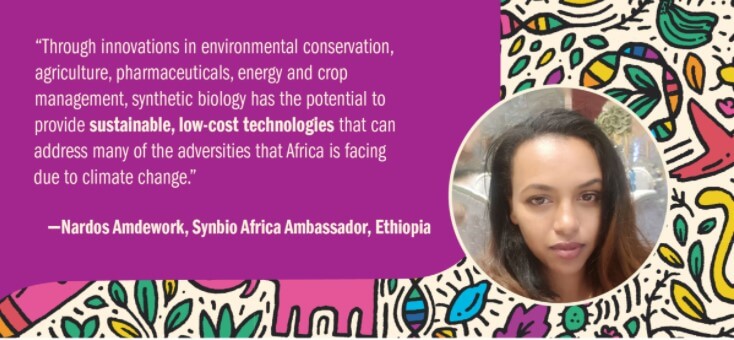
Synthetic biology is an interdisciplinary science with the potential to provide sustainable, low-cost technologies that can address many of the adversities facing Africa due to climate change. It can produce innovations in environmental conservation, agriculture, crop management and biodiversity preservation by strengthening organisms’ resilience to external threats.

The possible risks and uncertainties that are inhibiting Africa’s introduction and development of synthetic biology are neither unique to the continent nor avoidable by closing doors to the technology. They can only be controlled, minimized or avoided by assertively developing and managing the sector. It’s also noteworthy that many of the alternatives that are being proposed, such as agroecology, will not be sufficient to solve current and future problems like food shortage.
Synthetic biology presents opportunities for the agriculture-based African community. It’s a technology that is poised to greatly benefit the environment while generating enormous economic benefits. Africa not only needs the capacity to adapt to and address climate change through technology, it should also reap the economic benefits synthetic biology aspires to provide.
Synthetic biology is already building a positive foundation through the efforts of rising organizations like Synbio Africa, which are tasked to harmonize the efforts of scientists, students, researchers, farmers and policy makers to positively impact communities in Africa. They are leveraging the ever-decreasing costs of DNA sequencing and DNA synthesis, and the increasing speed at which these processes are being accomplished.
This progress on the research front leaves Africa’s policy makers and leaders with a big assignment to ensure that the technology thrives and changes people’s lives.
Nardos Amdework holds a master’s of science in environmental planning, is a Synbio Africa Ambassador and a 2019 Alliance for Science Global Leadership Fellow. You can follow Nardos on Twitter @hode1907
A version of this article was posted to the Alliance for Science and is used here with permission. You can follow Alliance for Science on Twitter @ScienceAlly