Here’s how COVID attacks your ability to smell

Credit: Flint Rehab
Credit: Flint Rehab

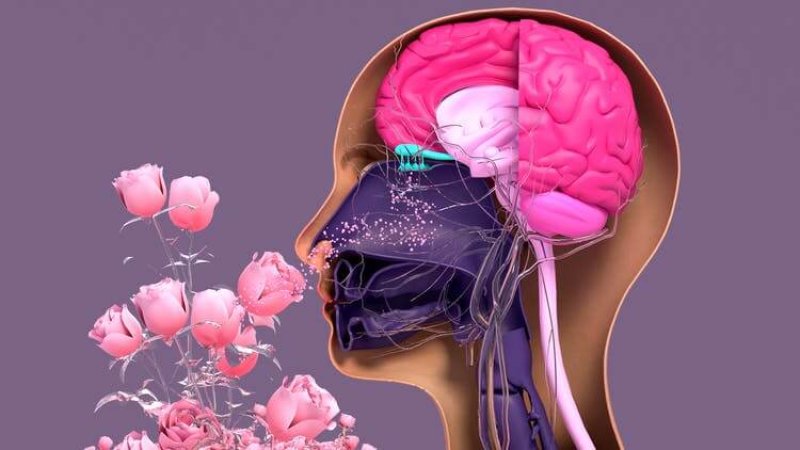
Few of Covid-19’s peculiarities have piqued as much interest as anosmia, the abrupt loss of smell that has become a well-known hallmark of the disease…. Scientists are now beginning to unravel the biological mechanisms, which have been something of a mystery: The neurons that detect odors lack the receptors that the coronavirus uses to enter cells, prompting a long debate about whether they can be infected at all.

Insights gleaned from new research could shed new light on how the coronavirus might affect other types of brain cells, leading to conditions like “brain fog.”

Follow the latest news and policy debates on sustainable agriculture, biomedicine, and other ‘disruptive’ innovations. Subscribe to our newsletter.

The new work, along with earlier studies, settles the debate over whether the coronavirus infects the nerve cells that detect odors: It does not. But the virus does attack other supporting cells that line the nasal cavity, the researchers found.


The infected cells shed virus and die, while immune cells flood the region to fight the virus. The subsequent inflammation wreaks havoc on smell receptors, proteins on the surface of the nerve cells in the nose that detect and transmit information about odors.

The process alters the sophisticated organization of genes in those neurons, essentially short-circuiting them, the researchers reported.


This is an excerpt. Read the original post here. 

{{ reviewsTotal }}{{ options.labels.singularReviewCountLabel }}
{{ reviewsTotal }}{{ options.labels.pluralReviewCountLabel }}
{{ options.labels.newReviewButton }}
{{ userData.canReview.message }}

Related Articles

Infographic: Global regulatory and health research agencies on whether glyphosate causes cancer

Infographic: Global regulatory and health research agencies on whether glyphosate causes cancer

Does glyphosate—the world's most heavily-used herbicide—pose serious harm to humans? Is it carcinogenic? Those issues are of both legal and ...

Most Popular

ChatGPT-Image-May-7-2026-12_16_37-PM-2
Viewpoint: Are cancer rates ‘skyrocketing’ as RFK, Jr. and MAHA claims? The evidence says mostly the opposite
ChatGPT-Image-May-13-2026-11_56_08-AM
After slashing global health aid by $19 Billion, Trump moves to tap $2.1 billion more—to cover shutdown costs
Screenshot-2026-04-22-at-10.46.29-AM
Viewpoint: How to counter science disinformation? Science journalist offers 12 practical tips
ChatGPT-Image-May-12-2026-08_39_41-PM
GLP podcast: Big Pharma, Big Ag, Big Food—health harming industries or life-saving innovators?
Screenshot-2026-04-23-at-11.00.36-AM
Regulators' dilemma: Thalidomide, Metformin, and the cost of getting drug approvals wrong
png-pill-omega-Supp-fish-oil
Millions take omega-3 fish oil for brain health. New research suggests it may do the opposite.
Screenshot-2026-02-20-at-10.48.04-AM
Deepfakes raise profound ethical questions in science
Picture1-5
Science Disinformation Gap: The transatlantic battle over social media and censorship
Picture1-1
Cooling the planet with balloons: Could a geoengineering gamble slow global warming?
Screenshot-2026-05-08-at-3.40.33-PM
Seeds of power: China turns to genetic engineering to become global superpower
ChatGPT-Image-May-12-2026-01_41_42-PM
Viewpoint: ‘Measles is a canary in the healthcare coal mine’: Challenging RFK, Jr.’s scare campaign
donut-decorated-with-e-food-additives-tablets
RFK, Jr. is targeting chemical food additives. What does science tell us?
glp menu logo outlined

Get news on human & agricultural genetics and biotechnology delivered to your inbox.