This Roundup accompanied an SMC Briefing.

Dr Adrian Ely, Reader in Technology and Sustainability at the Science Policy Research Unit at the University of Sussex, said:
That these important decisions will be debated in parliament is to be welcomed. The issues go beyond technical risks and benefits, and any decisions will help to shape the future of the UK’s agri-food system. Allowing sufficient time for democratic inputs to the debate will be vital.
Numerous studies show that most of the British public want GE food and ingredients to be labelled. How to deliver on these demands remains a key challenge for the Bill.
Decisions in the UK are taking place in a dynamic trade context. They have implications not only for trade with the EU, but also with other countries that regulate GE differently or not at all.
There are environmental opportunities associated with this technology, but also possible risks. Gene-editing can be used to develop herbicide tolerant crops, which under some management conditions can harm farmland biodiversity. How will the Bill address these types of concerns?

Dr Penny Hundleby, Senior Scientist at the John Innes Centre, said:
Consumers are all too aware of the challenges that war, drought and climate change are having on our collective food security. If we are to meet the ambitious targets of addressing the demands of a growing population without further adding to the cost of living, and while also reducing the environmental impact of agriculture, we need to embrace all safe technologies that help us reach these goals. Gene editing and genome sequencing are great UK strengths, and through the new Genetic Technology Bill, they will move us into an exciting era of affordable, intelligent and precision-based plant breeding.
 Prof Jonathan Jones, Plant Scientist, The Sainsbury Laboratory, said:
The proposed changes in regulation of gene edited crops are a very positive step in the right direction and will align the UK better with regulations outside the EU. I very much hope that in the future we will be able to go further. Crop varieties should be regulated on their properties rather than the method used to improve them, especially at a time when food prices are soaring. These new proposals, while enabling many useful innovations to go forward, will still leave crops improved with the GM method – such as blight resistant potatoes, or oilseeds that produce fish oil, or purple tomatoes – subject to the same excessive regulation as before.

Prof Bruce Whitelaw, Prof of Animal Biotechnology and Director of The Roslin Institute, said:
The Precision Breeding Bill is great news for science. It is also great news for the diverse societies across our planet that benefit from the UK’s research and innovation.
The opportunity offered by precision breeding to directly tackle food security and the many health challenges that we collectively face, is huge. This opportunity comes with responsibilities. We all want safe and appropriate food. We want the secure supply of food. We need to ensure the health and welfare of the many animals we farm while reducing the environmental footprint caused by agriculture. We want to sustain biodiversity and our rural communities in a fair manner. Precision breeding technologies can contribute to all these aspects addressing planet resilience.
At the Roslin Institute we pioneer precision breeding applications across all farmed animal species with focus on mitigating external stresses farmed animals face. Indeed these stresses are not that distinct from ourselves, with disease resilience top of the list. The Precision Breeding Bill will better enable Roslin’s research, and that of colleagues across the UK research & innovation community, to provide leadership in this exciting field.

Prof Andrew Thompson, Head of Cranfield University’s Soil and Agri Food Institute, said:
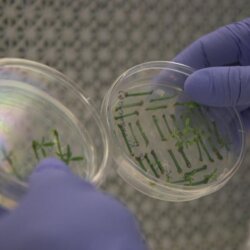
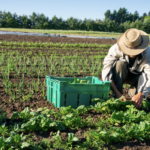


GMO technology from the 1980s has allowed us to create crop plants that use water more efficiently, generating “more crop per drop”- vital where food production is limited by water availability. These advances have had limited traction under the GMO regulatory system. More precise gene editing technologies, alongside a simpler regulatory regime proposed in the Genetic Technology Bill, will certainly help such advances to be fully exploited for the benefit of farmers, consumers and the environment. At Cranfield we are also helping commercial breeders to take up gene editing technology so they can more rapidly breed soft fruit varieties that have tastier, more nutritious and longer lasting fruit.
 Prof David Rose, Professor of Sustainable Agricultural Systems at Cranfield University, said:
Gene editing has the medium-term potential to address food production and environmental challenges – for example, creating crop varieties that are higher yielding, with better nutritional benefits, and that are more tolerant to pest and disease, reducing fuel and chemical usage. However, there are legitimately held concerns about the potential for gene editing to consolidate power inequalities in the food supply chain, ethical concerns particularly about usage in animals, and the potential to facilitate greater intensification of farming which could harm the environment. All points of view need to be considered in the pursuit of development and regulatory principles that foster responsible innovation. Due to the time needed to pass legislation, consider a wide range of views, and produce and sell seeds to farmers, it is not a short-term fix to the cost of production crisis facing farmers. The Defra Chief Scientific Adviser in January said it was five years away.

Prof Martin Warren, Chief Scientific Officer at the Quadram Institute, said:
The Genetic Technology Bill provides a wonderful opportunity to explore ways to address the nutritional-deficiency that is found in many crop-based foods. Gene editing allows for the development of plants with improved qualities that normally take many years to produce using traditional breeding programs. The ability to increase levels of key minerals such as iron and zinc and vitamins A, B and D in plants holds significant potential as a way to improve lifelong health through biofortification. As we move towards more crop-based sustainable diets the need to develop sustainable and healthy functional foods is clear.

Prof Maurice Moloney, Founder and managing partner of AgriTecKnowledge, and former CEO of Rothamsted Research, said:
Moving modern breeding techniques into UK law is way overdue, but it was impossible under EU Commission Rules. It is a tangible example of how Brexit can deliver positive opportunities. However, moving forward with rational, science-based policies is urgent. North and South America are already there, China and India are now enacting new laws and the EU will revisit their 2018 ruling (which was against their own legal advice) soon. This is a great milestone, but the UK must accelerate this initiative or we shall be ‘also-rans’.
The good news is that this change will also facilitate free-trade deals, where food and agriculture are always massive impediments. This is the opportunity to harmonize these regulations and remove non-tariff trade barriers.

Prof John Dupré, philosopher of science from the University of Exeter, said:
The relaxation of obstacles to the application of genome modification technologies to plants is to be welcomed. This technology undoubtedly presents very significant opportunities to improve the qualities of crop varieties in dimensions including disease resistance and thereby reduced pesticide use, climate adaptability and nutritional value. It is also good to see that, in accordance with the major recommendation of the recent Nuffield Council on Bioethics report on genome editing of farmed animals, no changes are to be made to the regulation of this technology for animals prior to the development of regulations to protect animal welfare.
It will, of course, be vital to retain robust regulations and monitoring of new crop varieties on a range of properties ranging from effects on human health to potential environmental impact before licensing the introduction of new varieties. But shifting this regulation from a concern with the process of development to the characteristics of the specific product is entirely sensible. The successful implementation of this change of regulations will ultimately depend on public acceptance, and serious public engagement regarding the rationale and implications of this change will be essential.
A version of this article was originally posted at the Science Media Centre and is reposted here with permission. The Science Media Centre can be found on Twitter @SMC_London