At a moment when half of U.S. states stand poised to outlaw or sharply curtail abortion services, the last-ditch pill for women aiming to stave off an unwanted pregnancy rests in the unlikely stewardship of two private equity firms whose investment portfolios range from Italian foods to vineyard management to children’s cough medicine.
Kelso & Co. and Juggernaut Capital Partners bought Plan B One-Step from Teva for $675 million in 2017 as the Israeli-based pharmaceutical giant was selling off its global women’s health business. In the years since, the drug has become America’s most widely used over-the-counter emergency contraception and — at an average cost of $45 per dose — one of the highest-priced over-the-counter medications sold in the U.S.
Foundation Consumer Healthcare, the company owned by Kelso and Juggernaut that sells Plan B, has managed to aggressively market the product while staying under the radar of anti-abortion activists and Republican lawmakers who vilify it as another form of abortion.
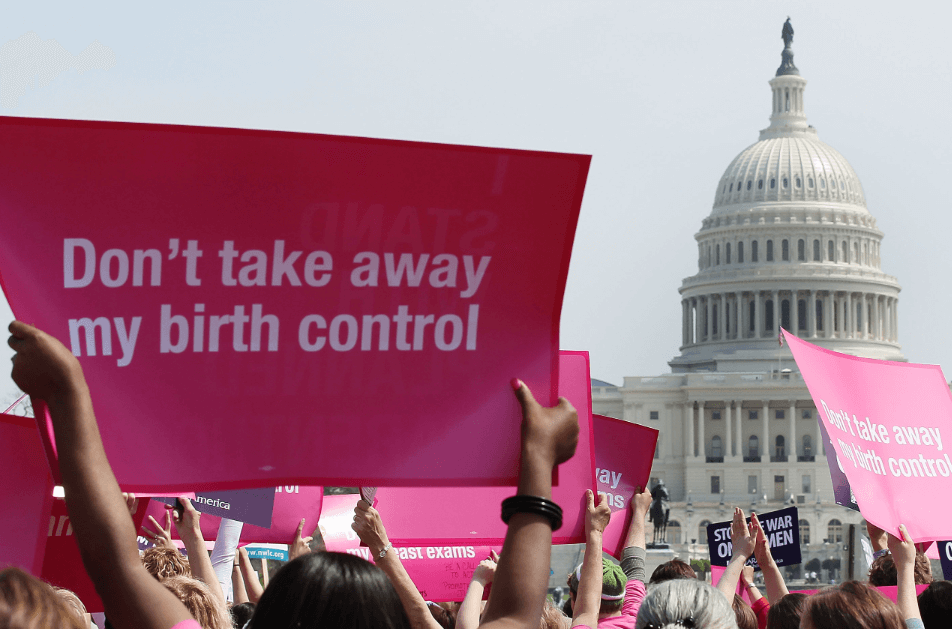
But the company’s stewardship and women’s continued access to Plan B have become matters of urgent concern as the religious belief that life begins before a fertilized egg implants in the uterus gains currency as a legitimate legal standard among Republican lawmakers in state capitals and in Congress. If the Supreme Court cements a leaked draft decision to overturn Roe v. Wade without explicitly deferring to the medical standard of when a pregnancy begins — which is after implantation — Republican-controlled legislatures could declare Plan B and intrauterine devices, or IUDs, to be abortifacients.
States that enact legislation to confer “personhood rights” to fertilized eggs, embryos, and fetuses would open a new frontier in laws that dictate the options available for women who are pregnant and those who seek not to become pregnant. The states considering such a move include Alabama, Missouri, and Kansas.
Complicating that political battle, women’s health advocates say, is that Foundation Consumer Healthcare and the FDA have failed to correct outdated wording on the product’s label that has led to rampant misinformation about how Plan B works.
The language in question, stated as part of Plan B’s “drug facts,” warns that the pill could prevent “attachment of a fertilized egg to the uterus.” But numerous studies have shown that is not the mechanism of action for Plan B, a hormonal medication that delays ovulation and can prevent sperm from fertilizing an egg. Research also shows Plan B does not harm an existing pregnancy, according to the American College of Obstetricians and Gynecologists.

That packaging language has been cited, nonetheless, to justify regulations in at least nine states that exclude Plan B from government family planning programs and contraception coverage mandates or that allow pharmacists to refuse to sell Plan B on moral grounds.
The U.S. Supreme Court’s 2014 decision in Burwell v. Hobby Lobby Stores cited the FDA’s webpage about Plan B in ruling that requiring family-owned corporations with religious convictions to pay for health insurance coverage for contraception violated a federal law protecting religious freedom.
Similarly, a bill before Congress that would require Department of Veterans Affairs facilities to cover the cost of all forms of contraception for female veterans has been stalled by opposition to the inclusion of Plan B. “The Plan B pill kills a baby in the womb once a woman is already pregnant,” U.S. Rep. Marjorie Taylor Greene (R-Ga.) erroneously stated during a floor debate. “The VA should not be paying for abortion.”
European authorities required the language be dropped from Plan B packaging sold in those countries in 2015, and it has been rejected by the International Federation of Gynecology and Obstetrics and American medical associations.
 Making a similar label change in the U.S. would require Foundation Consumer Healthcare to petition the FDA — an action that women’s health advocates say is long overdue.
“The FDA isn’t going to change it unless the companies come in with the data and ask for a label change,” said Susan Wood, a health policy professor at George Washington University and former director of women’s health at the FDA. A label update would be “straightforward because there is human data that shows that it works prior to ovulation.”
“It’s the company’s responsibility,” she added.
Foundation Consumer Healthcare, in an emailed response to a list of questions from KHN, declined an interview and said it would not comment on sales figures, discussions with the FDA, or investment plans.
“The mission of FCH is and always has been increasing the education and availability of Plan B One-Step® emergency contraception for women across the country,” the company wrote. “We work with a variety of partners to ensure everyone understands how the product works and when it should be taken, and with retailers to make sure the product is available in all major retail stores.”
The FDA also declined to comment, citing regulations that protect “the confidentiality of commercial information.”

Emboldened by the Supreme Court’s leaked draft decision on Roe and its earlier decision to allow Texas’ six-week abortion ban to take effect, lawmakers in multiple Republican-led states already are openly considering bans on emergency contraception and IUDs.
Plan B’s labeling issue dates to its inception as an over-the-counter pill in 2006. When the drug company that owned Plan B at the time, Barr Pharmaceuticals, sought FDA permission to sell it over-the-counter, the effort faced opposition from anti-abortion forces, according to historical accounts, as well as interviews with people involved. Those forces included a member of the scientific advisory panel reviewing the application. Dr. Joseph Stanford, a Mormon physician who believed life begins at fertilization, argued that a remote possibility existed that Plan B could prevent implantation of a fertilized egg.
Despite having no scientific evidence to support that claim, the company agreed to list the post-fertilization mechanism on the packaging as a way of getting the application approved.
That seemingly innocuous capitulation has paid dividends for abortion opponents, codifying in official government documents a mechanism of action that would be used to blur the line between contraception and abortion, said Christopher ChoGlueck, an assistant professor of ethics at New Mexico Tech who has documented the history of emergency contraception.
Foundation Consumer Healthcare’s investment in Plan B is difficult to assess: Private equity firms are required to disclose only limited information, obscuring their operations and holdings.
But drug industry analysts say the business is clearly profitable. Emergency contraception is relatively inexpensive to make, said Samantha Miller, co-CEO of Cadence Health, a biopharmaceutical company developing over-the-counter birth control pills. And the customers are largely young women who buy the pill over the counter even if they — or their parents — have health insurance.
Between 2013 and 2015, 22% of women ages 15 to 44 who had ever had sex reported having used emergency contraception pills at least once, an increase from 4% in 2002, according to a KFF analysis of Centers for Disease Control and Prevention survey data.
Private equity firms typically raise funds from institutional investors, often with a focus on generating short-term revenue. When Kelso and Juggernaut Capital acquired Plan B in 2017, the campaign to end federal abortion rights, cresting after decades of legal challenges, would have made the purchase of the nation’s most popular emergency contraception a tantalizing option. “Private equity senses a possibility wherever vulnerable people are involved,” said Eileen Appelbaum, co-director of the Center for Economic and Policy Research.
Interestingly, one of the biggest investors in two Kelso funds invested in Foundation Consumer products is the Teachers’ Retirement System of Louisiana, one of at least 13 states with trigger laws that would ban abortion if Roe falls.
Other investors from anti-abortion states include the University of Houston System endowment and the Houston Police Officers’ Pension System.
“With customers buying up Plan B, this could be very good for their investors regardless of their level of comfort profiting off of Plan B,” said Eileen O’Grady, of the Private Equity Stakeholder Project, who researches the tangled holdings of private equity firms.
Miller and other industry experts say Foundation can maintain its $45 average price tag for Plan B because of its market dominance. Lower-priced generic emergency contraception is available, largely online, said Dima Qato, associate professor of clinical pharmacy at the University of Southern California. But Plan B’s distribution arrangements with national pharmacies, Walmart, and Target have largely locked out competitors.
“People don’t use the generics, and not many places carry them,” said Qato. “You want to make sure it’s effective. There is a preference for the brand.”
Still, if a Supreme Court decision permits states to criminalize abortion and certain contraceptives, Kelso and Juggernaut’s investment would certainly be imperiled. States oversee pharmacy laws, leaving ample room for legislatures to allow pharmacies to refuse to dispense emergency contraception.
“Texas and other states will claim this is similar to an abortion pill,” said Qato, “and they will say you can’t sell it.”
Sarah Varney is a Senior Correspondent and an enterprise reporter with a special focus on racial and ethnic health disparities and the impacts of federal and state health laws on vulnerable populations, including children. Find Sarah on Twitter @SarahVarney4
A version of this article was originally posted at Kaiser Health News and is reposted here with permission. Find Kaiser Health News on Twitter @KHNews