UK split: Here’s why England and Scotland are going in different directions in regulating agricultural gene editing

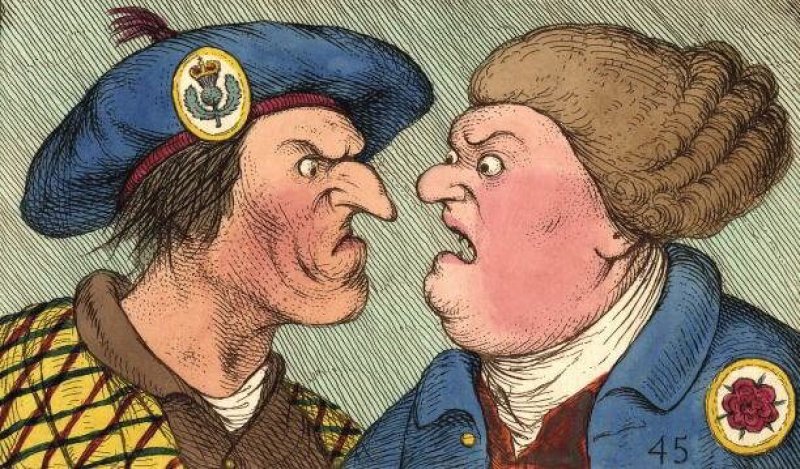
Gene-editing is certainly not the first time the Scots and the English disagree. Credit: Hannah Humphrey

The UK government has introduced a Genetic Technology (Precision Breeding) Bill which would set different rules from the EU following Brexit.

But the idea has been dismissed by environment secretary Mairi McAllan.

Follow the latest news and policy debates on sustainable agriculture, biomedicine, and other ‘disruptive’ innovations. Subscribe to our newsletter.

In turning down the UK government’s offer to include Scotland in its gene editing scheme, the Scottish government is not saying “never”.

Its preference is to wait for an EU-wide review of the technology, rather than to press ahead, with England, using the policy-making freedom that Brexit allows.

That is partly political – SNP ministers opposed Brexit and want to stay closely aligned to EU rules in the hope Scotland can one day rejoin the union as an independent country.

There’s also a more practical consideration – that divergence could lead to new trade barriers with the European single market if it wants to keep gene-edited produce out.

Gene editing is supported by the National Farmers Union (NFU) in Scotland but Scottish ministers have consistently railed against it, aiming to keep as close as it can to EU regulations.

However, the EU has recently launched a consultation on bringing forward similar legislation for plants, food and feed produced from new genomic technologies.


This is an excerpt. Read the original post here

{{ reviewsTotal }}{{ options.labels.singularReviewCountLabel }}
{{ reviewsTotal }}{{ options.labels.pluralReviewCountLabel }}
{{ options.labels.newReviewButton }}
{{ userData.canReview.message }}

Related Articles

Infographic: Global regulatory and health research agencies on whether glyphosate causes cancer

Infographic: Global regulatory and health research agencies on whether glyphosate causes cancer

Does glyphosate—the world's most heavily-used herbicide—pose serious harm to humans? Is it carcinogenic? Those issues are of both legal and ...

Most Popular

ChatGPT Image May 26, 2026, 08_42_17 AM (1)
Viewpoint: Greenpeace and poison: How environmental advocacy groups rely on compliant (and often ignorant) journalists to spread disinformation and spark litigation
Screenshot 2025-07-30 at 10.48
Can gene editing eliminate Down syndrome? Scientists have done it in lab-grown cells
Screenshot 2026-05-26 at 10.15
Viewpoint: Double standard—Why does the wellness industry get a free pass while Big Healthcare is treated as morally suspect?
ChatGPT-Image-Jun-4-2026-11_49_36-AM-2
‘You don’t understand Tolkien’: Skeptic Pope trolls tech giants about the exaggerated, risk-less benefits of AI
ChatGPT-Image-Jun-4-2026-01_27_58-PM
Viewpoint—N.A.D.+: Why Gwenyth Paltrow’s heralded anti-aging supplement doesn’t work
Screenshot-2026-06-04-at-12.05.08-PM
Cases of brain inflammation surge as U.S. measles pandemic approaches 2000
ChatGPT Image May 26, 2026, 08_21_36 AM
Limiting gender affirming interventions: Trump administration targets Texas even though it already bans youth access
Screenshot-2026-06-03-at-1.24.46-PM
Challenging anti-GMO disinformation: Why genetically-tweaked crops offer bushels of benefits
ChatGPT-Image-Jun-2-2026-03_04_17-PM
Viewpoint: Why the hyper-promoted doping ‘enhanced games’ pseudo Olympics flopped
ChatGPT-Image-Mar-10-2026-01_39_01-PM
Viewpoint—“Miracle molecule” debunked: Why acemannan supplements don’t work
Screenshot-2026-05-28-at-1.36.28-PM
Viewpoint: Can mRNA research survive the Trump administration?
ChatGPT-Image-May-26-2026-07_51_21-AM-2
Viewpoint: There are more than 1,000 chemicals in a cup of coffee—including many substances that can cause cancer. Why isn’t it banned?
glp menu logo outlined

Get news on human & agricultural genetics and biotechnology delivered to your inbox.