‘Using insect biology against themselves’: New type of pesticide uses caterpillar pheromones to stop pests from mating

They drop out of the sky like paratroopers. Credit: Missouri Pest Monitoring Network

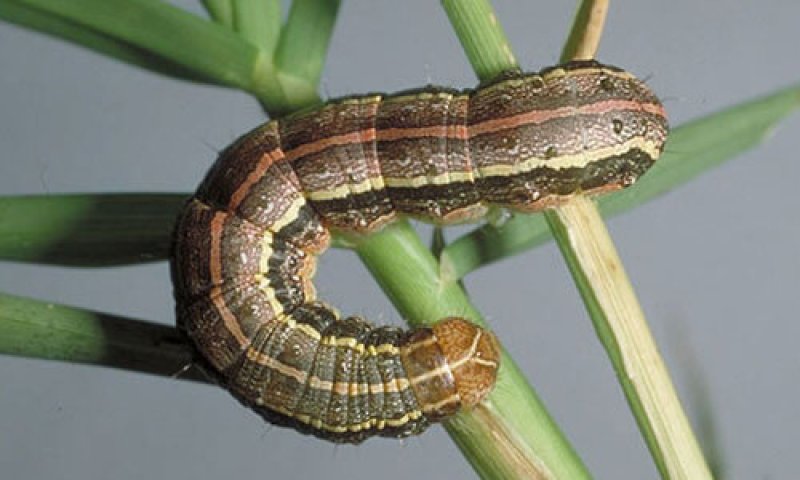
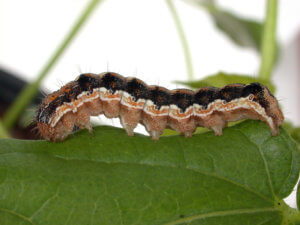
The caterpillars are the larvae of the fall armyworm moth, a planetary crop invader. The annual toll of their attacks is at least $300 million for farmers in the U.S., and billions of dollars around the globe.

But now scientists from the University of Missouri are on the edge of a new frontier in pest control: They are filling fields with a chemical — not a pesticide — that replicates the pheromones of the moth, overwhelms its senses and stops it from mating, essentially using the insect’s own biology against it. The system could reshape pest control in the U.S., and be even more useful in countries where subsistence farming is common and access to genetically modified crops isn’t.

Follow the latest news and policy debates on sustainable agriculture, biomedicine, and other ‘disruptive’ innovations. Subscribe to our newsletter.

Female moths have glands that emit the pheromone, a compound specific to the species. They pump out the pheromone into the air at night, and male moths use pheromone receptors in their antennae to sense the chemicals and find the female. Then they mate. Females can produce up to 2,000 eggs in their five-day lifespan.
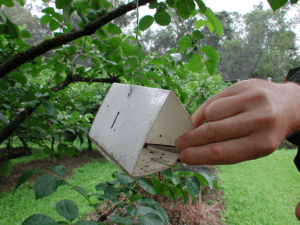
The researchers’ experiment is designed to thwart the moths’ romance: Plastic pheromone strips are attached with a binder clip to wooden stakes in the ground. The strips release clouds of pheromones so intense the males can’t pinpoint a mate.


This is an excerpt. Read the original post here

{{ reviewsTotal }}{{ options.labels.singularReviewCountLabel }}
{{ reviewsTotal }}{{ options.labels.pluralReviewCountLabel }}
{{ options.labels.newReviewButton }}
{{ userData.canReview.message }}

Related Articles

Infographic: Global regulatory and health research agencies on whether glyphosate causes cancer

Infographic: Global regulatory and health research agencies on whether glyphosate causes cancer

Does glyphosate—the world's most heavily-used herbicide—pose serious harm to humans? Is it carcinogenic? Those issues are of both legal and ...

Most Popular

Screenshot-PM-24
Viewpoint: The herbicide glyphosate isn’t perfect. Banning it would be far worse.
d-b
Blocked arteries, kidney stones, nausea, constipation, fatigue: Long list of health problems caused by too much vitamin D 
79d03212-2508-45d0-b427-8e9743ff6432
Viewpoint: The Casey Means hustle—Wellness woo opportunism dressed up as medical wisdom
ChatGPT-Image-Mar-10-2026-01_39_01-PM
Viewpoint—“Miracle molecule” debunked: Why acemannan supplements don’t work
ChatGPT-Image-Apr-30-2026-12_21_05-PM-2
The tech billionaires behind the immortality movement
ChatGPT-Image-Mar-27-2026-11_27_05-AM
The myths of “process”: What science says about the “dangers’ of synthetic products and ultra-processed foods
ChatGPT-Image-Apr-30-2026-05_00_48-PM
Wellness grifter physician turned wellness influencer out as surgeon general nominee

Sorry. No data so far.

glp menu logo outlined

Get news on human & agricultural genetics and biotechnology delivered to your inbox.