Is any agriculture method ‘ecologically sustainable’? A biologist’s perspective

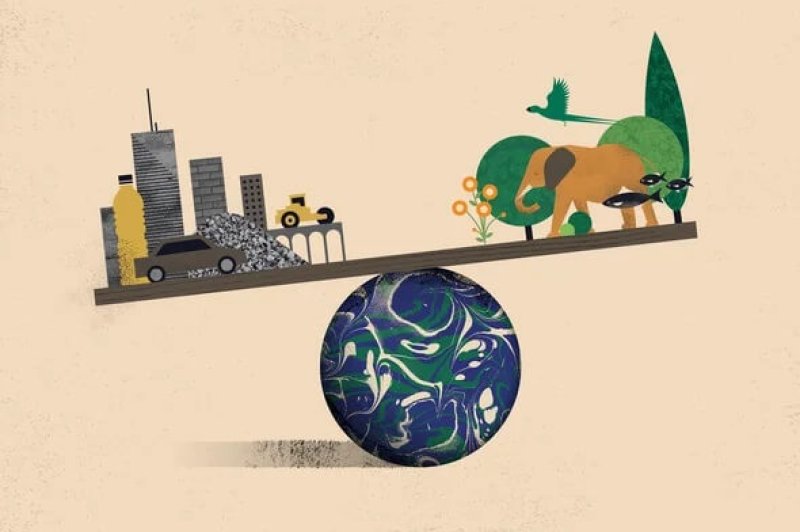
In terms of other forms of pollution, ‘organic farming’ has a greater potential for eutrophication —up to 36% higher in phosphates, and 13% in sulfur dioxide— and an ammonium emission 11% higher than conventional agriculture. Credit: Itai Raveh

If we define “ecological” as that act or activity that is carried out without causing a negative impact on the environment or, better still, protecting it, then until today, there is no form of truly ecological agriculture. All agricultural exploitation, without exception, requires a space, some resources and a series of activities that impact the environment, to a greater or lesser extent.

What we can talk about is whether a given exploitation or management method is more or less sustainable than another.

Follow the latest news and policy debates on sustainable agriculture, biomedicine, and other ‘disruptive’ innovations. Subscribe to our newsletter.

In general, ‘ecological’ production has shown a reduction in energy use of between 15 and 20% compared to conventional production, all other things being equal. When the different products are analyzed in detail, we find that the greatest reduction in energy use occurs with cereals, legumes and oil production. However, the opposite trend is observed when we analyze horticultural production.

Regarding greenhouse gas emissions, no significant differences are seen in most crops, only a reduction in favor of ‘ecological farming’ is recorded in fruit crops. However, in terms of nitrogen oxide emissions, an increase of about 8% is observed.

Perhaps the most relevant, in food production, with respect to greenhouse gas emissions, is in transportation. The most sustainable of kiwifruit, planted in New Zealand and shipped to Europe, is associated with far greater emissions than the least sustainable of kiwifruit grown within 50km of where it is consumed. In other words, in terms of emissions, the most sustainable is the consumption of local products, and it has much more weight than the mode of production itself.

[Editor’s note: this article has been translated from Spanish and edited for clarity.]

This is an excerpt. Read the original post here

{{ reviewsTotal }}{{ options.labels.singularReviewCountLabel }}
{{ reviewsTotal }}{{ options.labels.pluralReviewCountLabel }}
{{ options.labels.newReviewButton }}
{{ userData.canReview.message }}

Related Articles

Infographic: Global regulatory and health research agencies on whether glyphosate causes cancer

Infographic: Global regulatory and health research agencies on whether glyphosate causes cancer

Does glyphosate—the world's most heavily-used herbicide—pose serious harm to humans? Is it carcinogenic? Those issues are of both legal and ...

Most Popular

ChatGPT-Image-Jun-17-2026-10_52_43-AM
Utah is sad illustration of the dangers of America’s alarming—and expanding— anti-vaccine movement
Screenshot-2026-06-24-at-2.40.46-PM
Hegseth reversal: As Air Force flu outbreak continues to surge, military reinstitutes mandatory vaccines for recruits
Screenshot-2026-06-24-at-2.57.41-PM
Viewpoint: Trump’s Reflecting Pool algae fiasco points to a bigger culprit: Climate change
Screenshot-2026-06-22-at-9.04.46-PM
Kennedy’s nutrition prescription for medical schools: Real problem, bad cure
Screenshot-2026-06-15-at-1.17.09-PM
Viewpoint: More and more younger men are falling outside our health system. What can reverse this?
Screenshot-2026-06-23-at-12.00.12-PM
Desperate patients of autistic children paying up to $20,000 for bogus stem cell injections recommended by RFK, Jr.
ChatGPT-Image-Jun-23-2026-01_12_57-PM
After Mel Gibson’s Joe Rogan comments, grifters promoting ivermectin, without evidence, as a hantavirus preventive 
ChatGPT-Image-Jun-22-2026-01_30_11-PM
Facts & Fallacies podcast: Psychedelics for PTSD? Examining RFK, Jr's claims about ibogaine
ChatGPT-Image-Jun-19-2026-04_11_20-PM
Daubert for Dummies—Scientific Reliability in U.S. Courts: Daubert, Rule 702, and Made-for-Litigation Evidence
ChatGPT-Image-Mar-10-2026-01_39_01-PM
Viewpoint—“Miracle molecule” debunked: Why acemannan supplements don’t work
ChatGPT-Image-Jun-22-2026-02_03_24-PM-2
AI’s promotion of ‘fake news’ erodes everyday thinking, MIT study reveals
ChatGPT-Image-Jun-18-2026-04_15_29-PM
Viewpoint: RFK, Jr. ignores oversight of vast HHS programs to focus on his pet obsessions—and gets much of the science wrong
Screenshot-2026-06-25-at-1.48.40-PM
Glyphosate affirmed as safe: Supreme Court rejects lawsuit claiming Roundup herbicide causes cancer, upholding EPA determination
ChatGPT-Image-Jun-9-2026-01_11_37-PM
Turmeric supplements: More risks than benefits
glp menu logo outlined

Get news on human & agricultural genetics and biotechnology delivered to your inbox.