
But that receptivity diminishes slightly when gene editing is discussed in relationship to genetically modified organisms (GMOs).
The findings result from an online survey of 1,012 persons over the age of 18 conducted between May 26-June 5, 2022. The survey, conducted by Seattle-based Hemispheres, has a margin of error of + 3 percent.
Though three-quarters of those surveyed said they have little understanding of gene editing, 52 percent felt it offered positive benefits for agriculture. That figure increased to 66 percent after the respondents read an informational paragraph about the technology.
Even people who remained consistently negative to gene editing became less so after learning more about the benefits, suggesting that increased education and outreach can achieve gains in the public’s acceptance of the technology.
The survey found that people are particularly supportive of using gene editing to increase crop yields and boost climate-resiliency in countries that are food insecure. Other applications of gene editing that elicited a favorable response are reducing pesticide and fertilizer use; lowering food prices through higher yields; reducing water use in farming; boosting the nutritional value of food; helping crops adapt to climate change; removing allergens and gluten from foods; and developing fruits and vegetables that are naturally resistant to bruising and browning.
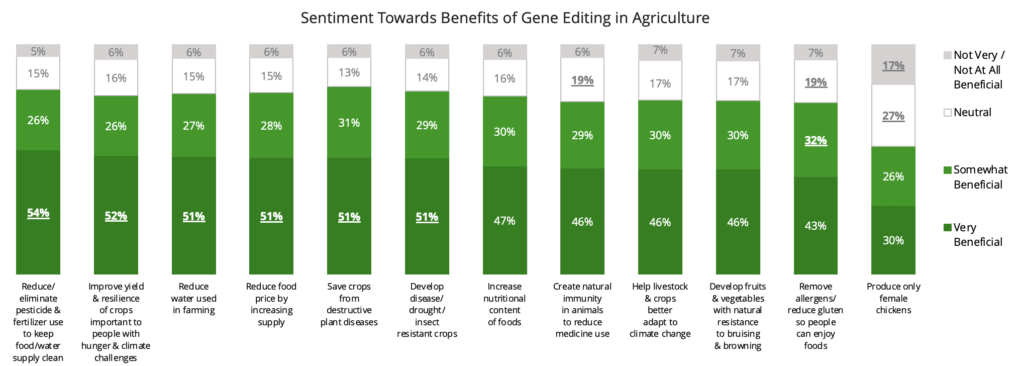
Respondents also supported the use of gene editing to help increase animal welfare, such as improving disease-resistance in livestock to minimize the use of veterinary drugs, helping livestock adapt to the higher temperatures associated with climate change and eliminating the need for egg producers to cull male chicks.
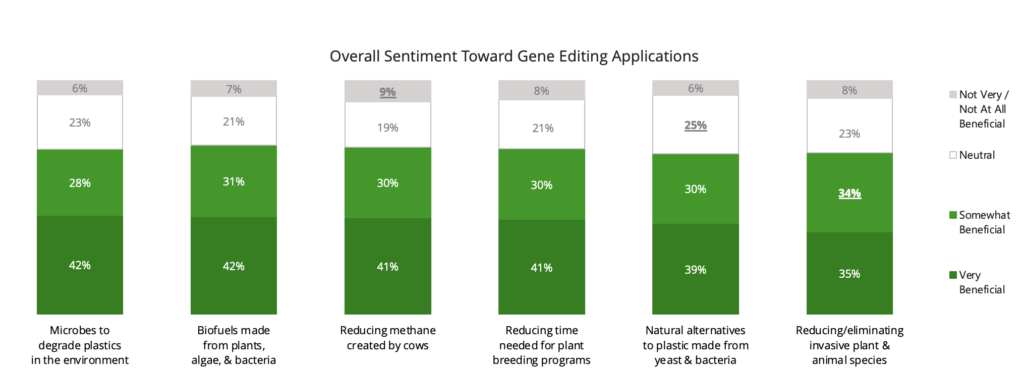
Respondents were also supportive of using gene editing to address environmental problems, such as creating “greener” biofuels that reduce the need for fossil fuel imports, developing natural alternatives to plastic, reducing methane produced by cows and accelerating the time needed to develop new crop varieties.
In both the survey and the six geographically diverse focus group sessions that informed the questionnaire, people expressed a desire to know if the products they were consuming are gene-edited.



They also want information about the testing and regulatory processes that are in place and reassurance that gene-edited foods are safe for consumption.
People also want to know more about the difference between gene editing and so-called GMOs — a conversation likely best conducted outside of discussions about specific gene-edited products. That’s because 62 percent of the respondents questioned the safety of eating genetically modified foods. Even briefly exploring the differences between gene editing and GMOs slightly decreases the number of people feeling very positive about gene editing.
However, explaining the possible benefits and applications for gene editing increased positive sentiment and decreased those who feel negative toward the technology.
The survey also offered insights into the demographics of those who support gene editing. They tend to be male, educated, enjoy higher incomes, live in a city and have children. They typically consume media related to science and technology daily and via all media sources, especially traditional media and scientific journals or websites. They are also more likely to vote for Democratic candidates.
This research was conducted to develop a gene editing messaging kit that can be used to communicate effectively about the technology. To that end, the survey revealed that people would like to see more public education about gene editing, including information about the technology’s potential downsides. A Spanish-language version of the messaging kit was also prepared.
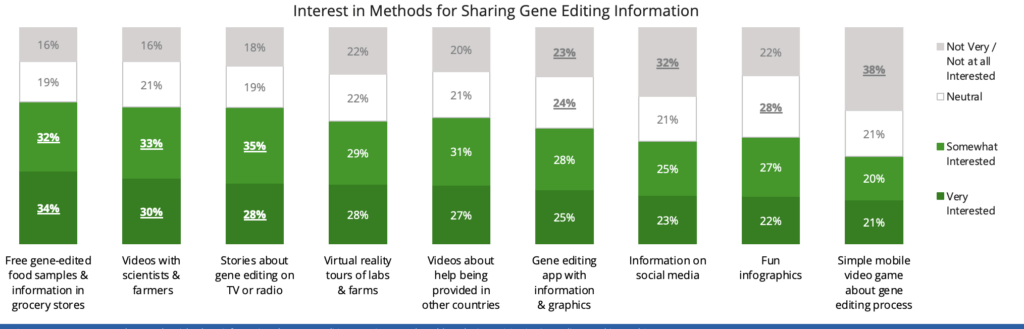
Consumers are also interested in getting information about gene editing through videos, TV and radio where they can watch and/or listen to stories from scientists and farmers who have expertise and experience with gene-edited products. Additionally, 66 percent liked the idea of getting free samples of gene-edited foods in grocery stores.
Joan Conrow is a longtime Hawaii journalist and blogger who has written extensively about agricultural, environmental and political issues. Follow Joan on Twitter @joanconrow
A version of this article was posted at Cornell Alliance for Science and is used here with permission. Check out Cornell Alliance for Science on Twitter @ScienceAlly