
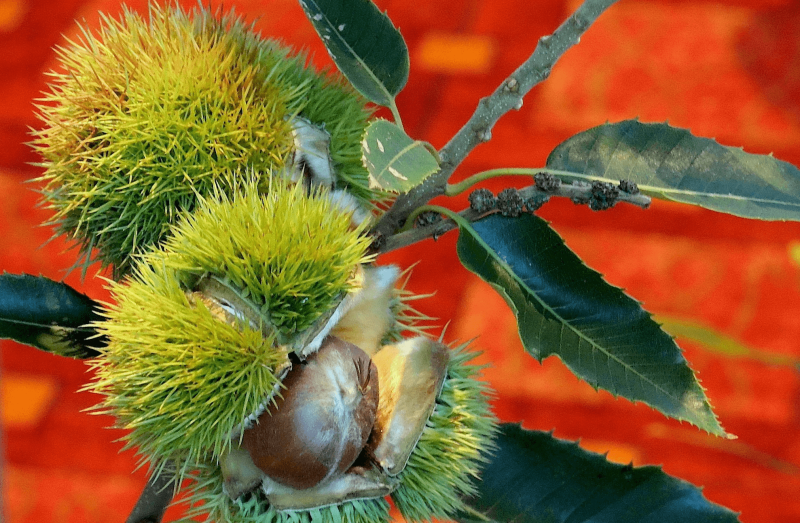
Gene editing could revive the American chestnut tree and help fight climate change — but familiar anti-biotechonology activist critics will have none of it

Credit: Independent Science News

These trees once ruled the canopies of much of Appalachia, with billions of mature American chestnut trees that towered in leafy forests from Maine to Mississippi. But around the beginning of the 20th century, an exotic fungus nearly drove the tree out of existence. Today, they still sprout in the wild but rarely reach maturity. Outside of growers’ orchards, scientists say, the tree is “functionally extinct.”

[Kyra] LoPiccolo and other researchers at SUNY ESF are growing American chestnut trees in the fields of Syracuse that can withstand that infection: Half of the nuts produced with the genetically engineered pollen will carry DNA meant to fight the blight. The researchers are now ready to sow the seeds in the wild, pushing to become the first in the United States to use genetic engineering to bring a forest tree back to its former glory.

But first, the project is seeking approval not only from three federal agencies but also from chestnut aficionados concerned about altering the genome of a beloved tree.

Mis- and disinformation are distorting science and public policy. Subscribe to our Daily and Weekly Digests for incisive coverage of ‘disruptive’ innovations in AI, agricultural biotechnology, food, chemicals, nuclear energy, vaccines, and other disruptive innovations.

Anne Petermann, executive director of Global Justice Ecology Project, which helped organize the campaign against Darling 58, is worried the project will lead to more commercial use of transgenic trees, to produce paper and lumber. She noted biotech firms hoping to make greater use of genetically modified organisms have helped fund SUNY ESF’s work.


“There are studies coming out weekly that show just how much we don’t know about forest ecosystems,” she said.


This is an excerpt. Read the original post here

Related Articles

Infographic: Global regulatory and health research agencies on whether glyphosate causes cancer

Infographic: Global regulatory and health research agencies on whether glyphosate causes cancer

Does glyphosate—the world's most heavily-used herbicide—pose serious harm to humans? Is it carcinogenic? Those issues are of both legal and ...

Most Popular

ChatGPT-Image-Mar-10-2026-01_39_01-PM
Viewpoint—“Miracle molecule” debunked: Why acemannan supplements don’t work
Screenshot-2026-10-14-at-11.45.36-AM
Viewpoint: RFK Jr.’s stacked FDA advisory council endorses multicancer screening test from ethically- questionable company that would increase false positives and waste billions of dollars
Screenshot-2026-10-08-at-10.41.33-AM
Viewpoint: Wellness patches: Most vitamin supplements are useless and sometimes even dangerous, but this craze is even worse
newborn baby spit up gerd
Vaccine-preventable congenital infections are a leading driver of autism
Open-Menthol-Cigarette-Pack
How the tobacco industry conspired with conservative activists to kill the Biden administration’s proposed ban on menthol cigarettes 
Screenshot-2026-10-15-at-12.13.33-PM
Ahead of the midterms, Meta has paid at least 29 anti-LGBTQ accounts for their posts
glp menu logo outlined

Get news on human & agricultural genetics and biotechnology delivered to your inbox.













