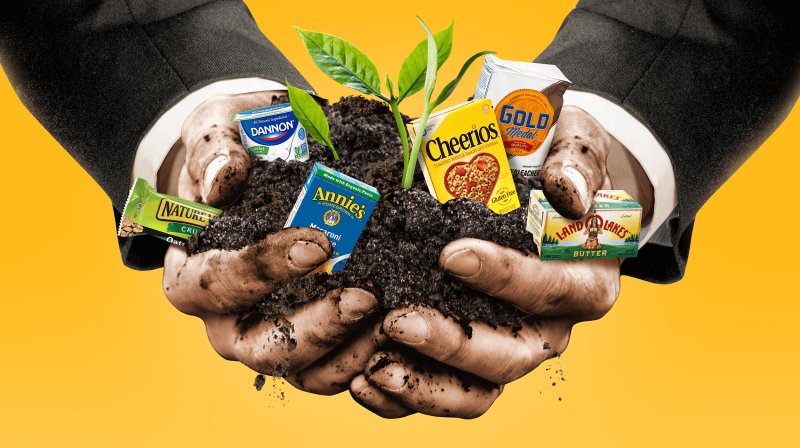
Nestle, General Mills, PepsiCo and other food companies have pledged support for regenerative agriculture. Is this a greenwashing campaign?

regenerative agriculture main kh
Credit: Civil Eats

According to a new report by the non-profit Forum for the Future, the regenerative agriculture movement in the U.S. has “never had more momentum”.

General Mills, Unilever, PepsiCo and Nestle are among the major food companies pledging large-scale support for this type of farming, which emphasizes soil health, biodiversity and avoids the use of synthetic pesticides and fertilizers. Amazon-owned Whole Foods called it the number one food trend in 2020.

Of those food conglomerates recognizing the value of more nature-based production, General Mills has been particularly vocal. It has pledged to advance regenerative agriculture on 1 million acres globally by 2030, an area that represents approximately 25-35% of its worldwide sourcing footprint.

Follow the latest news and policy debates on sustainable agriculture, biomedicine, and other ‘disruptive’ innovations. Subscribe to our newsletter.

It all sounds very altruistic, but what’s the true scale of this movement? According to Dr Kristine Nichols, a soil microbiologist and regenerative agriculture expert, of the 900 million arable acres in the U.S., only about 1.5% is being farmed regeneratively.

The Forum for the Future report says that there have been some positive shifts in the last few years, “around policy change, valuation of ecosystem services, alternative types of financial flows, demonstration of the business case and coalition-building amongst farmers”, but these shifts are still nascent.


This is an excerpt. Read the original post here

{{ reviewsTotal }}{{ options.labels.singularReviewCountLabel }}
{{ reviewsTotal }}{{ options.labels.pluralReviewCountLabel }}
{{ options.labels.newReviewButton }}
{{ userData.canReview.message }}

Related Articles

Infographic: Global regulatory and health research agencies on whether glyphosate causes cancer

Infographic: Global regulatory and health research agencies on whether glyphosate causes cancer

Does glyphosate—the world's most heavily-used herbicide—pose serious harm to humans? Is it carcinogenic? Those issues are of both legal and ...

Most Popular

ChatGPT-Image-Jun-25-2026-12_23_17-PM
No, Bill Gates did not secretly engineer ticks to promote veganism
ChatGPT-Image-Mar-10-2026-01_39_01-PM
Viewpoint—“Miracle molecule” debunked: Why acemannan supplements don’t work
ChatGPT-Image-Jun-23-2026-03_12_23-PM
Is cellular reprogramming junk science? Nearly 20 patients are getting eye injections in the first FDA-cleared cellular trial
ChatGPT-Image-Jun-17-2026-10_52_43-AM
Anguished parents, doctors in tears: Utah’s long measles outbreak takes a toll
Screenshot-2026-06-05-at-2.12.30-PM
Some plants can poison you. So how did humans figure out what is safe to eat?
ChatGPT-Image-May-18-2026-12_06_18-PM-2
Defying death: The immortality movement goes mainstream

Sorry. No data so far.

glp menu logo outlined

Get news on human & agricultural genetics and biotechnology delivered to your inbox.