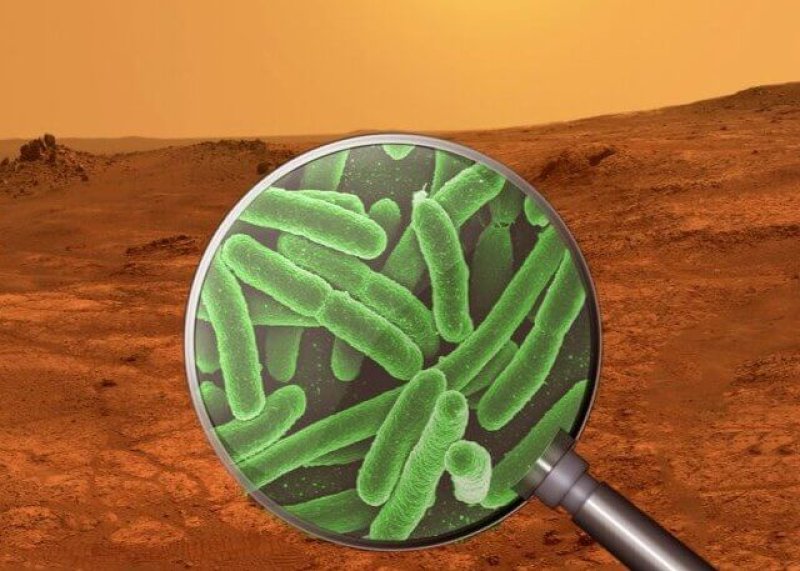

Ancient microbial life on Mars could have destroyed the planet’s atmosphere through climate change, which ultimately led to its extinction, new research has suggested.
The new theory comes from a climate modeling study that simulated hydrogen-consuming, methane-producing microbes living on Mars roughly 3.7 billion years ago. At the time, atmospheric conditions were similar to those that existed on ancient Earth during the same period. But instead of creating an environment that would help them thrive and evolve, as happened on Earth, Martian microbes may have doomed themselves just as they were getting started, according to the study published Oct. 10 in the journal Nature Astronomy.
The model suggests that the reason life thrived on Earth and was doomed on Mars is because of the gas compositions of the two planets, and their relative distances from the sun. Being farther away from our star than Earth, Mars was more reliant on a potent fog of heat-trapping greenhouse gases, such as carbon dioxide and hydrogen, to maintain hospitable temperatures for life.


“The ingredients of life are everywhere in the universe,” study lead author Boris Sauterey, an astrobiologist at the Institut de Biologie de l’Ecole Normale Supérieure in Paris, France told Space.com. “So it’s possible that life appears regularly in the universe.”