
Here’s how a treasure trove of plant genetics helped develop drought-tolerant wheat that farmers in arid countries are ‘falling in love with’

Credit: Michael Major/Crop Trust

A new drought-tolerant variety of durum wheat has been created as part of an international breeding programme to boost climate resilience in the food system by increasing crop diversity.

Durum wheat is used to make pasta, pizza crusts, and flatbreads such as pitta and chapatis, as well as for couscous, bulgur and pastry for desserts such as baklava.

The new wheat Jabal, which means “mountain” in Arabic, was developed by farmers and crop scientists by crossing a commercial durum wheat with a wild relative from an arid region of Syria, to create a new durum variety which can withstand drought.

Follow the latest news and policy debates on sustainable agriculture, biomedicine, and other ‘disruptive’ innovations. Subscribe to our newsletter.

Breeders and farmers in drought-affected areas planted numerous new durum wheat varieties between 2017 and 2021. Jabal stood out as it was able to flourish and produce grains while all commercial varieties of durum failed. Its distinctive black spikes also produced high yields of plump grains that made tasty bread, scientists said.
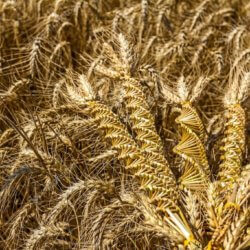
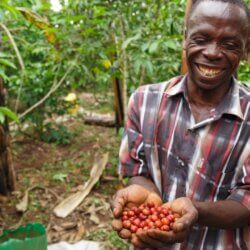
“Many farmers said it was love at first sight when they saw it standing strong when all other varieties were being destroyed by drought,” said Filippo Bassi, senior scientist with the durum wheat breeding program at the International Centre for Agricultural Research in the Dry Areas (Icarda) in Lebanon.


This is an excerpt. Read the original post here

{{ reviewsTotal }}{{ options.labels.singularReviewCountLabel }}
{{ reviewsTotal }}{{ options.labels.pluralReviewCountLabel }}
{{ options.labels.newReviewButton }}
{{ userData.canReview.message }}

Related Articles

Infographic: Global regulatory and health research agencies on whether glyphosate causes cancer

Infographic: Global regulatory and health research agencies on whether glyphosate causes cancer

Does glyphosate—the world's most heavily-used herbicide—pose serious harm to humans? Is it carcinogenic? Those issues are of both legal and ...

Most Popular

Screenshot-2026-04-22-at-12.21.32-PM
Viewpoint: Why the retracted Monsanto glyphosate study doesn’t change the science—the world’s most popular herbicide is safe 
Picture1
The FDA couldn’t find a vaccine safety crisis, so it buried its own research
ChatGPT-Image-May-1-2026-11_42_59-AM-2
Viewpoint: NAD is the wellness grifters latest evidence-lite longevity fad. At least the mice are impressed.
ChatGPT-Image-Apr-16-2026-02_56_53-PM
Financial incentives, over diagnosis, and weak oversight: Autism claims are driving up Medicare costs
global warming
‘Implausible’: Top climate scientists reject worst-case scenario—soaring temperatures and fast-rising sea levels
ChatGPT-Image-May-12-2026-11_27_01-AM-2
AI likely to improve health care, research shows—but not for blacks and ethnic minorities
ChatGPT-Image-May-7-2026-01_23_27-PM-2
Viewpoint: Will AI democratize personalized cancer treatment or fuel medical misinformation?
vax-misinformation-main
Facts & Fallacies Podcast: Limit free speech to blunt social media misinfo?

Sorry. No data so far.

glp menu logo outlined

Get news on human & agricultural genetics and biotechnology delivered to your inbox.