How Neanderthals thrived hunting prehistoric elephants

How Neanderthals thrived hunting prehistoric elephants
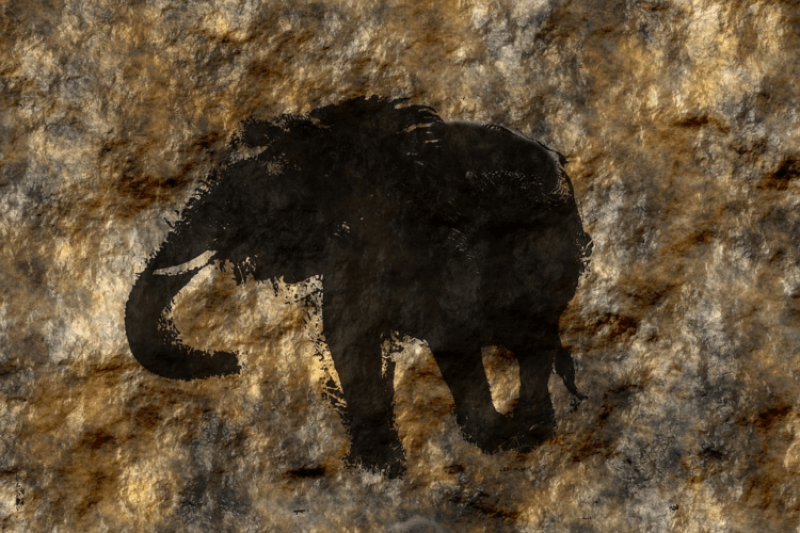
Credit: Pixabay/ Gerd Altmann

The bones of around 70 elephants from the Pleistocene era were discovered in the 1980s in a huge coal quarry that has since been converted into an artificial lake.

Elephants of the time were much larger than the woolly mammoth and three times the size of the present day Asian elephant, and an adult male could weigh up to 13 metric tons.

“Hunting these giant animals and completely butchering them was part of Neanderthal subsistence activities at this location,” Wil Roebroeks, a co-author of the study, told AFP.

“This constitutes the first clear-cut evidence of elephant hunting in human evolution,” said Roebroeks, a professor of archeology at Leiden University in the Netherlands.

Follow the latest news and policy debates on sustainable agriculture, biomedicine, and other ‘disruptive’ innovations. Subscribe to our newsletter.

The researchers determined the elephants had been hunted—and not just scavenged—because of the age and sex profile of the remains found in the quarry.

Most of them were males and there were few young or old ones.

“It’s a typical selection made by hunters who went for the biggest prey,” Roebroeks said.

Adult male elephants would have been easier to hunt than females, who tend to move in herds protecting their young.


This is an excerpt. Read the full article here

{{ reviewsTotal }}{{ options.labels.singularReviewCountLabel }}
{{ reviewsTotal }}{{ options.labels.pluralReviewCountLabel }}
{{ options.labels.noReviewsLabel }}
{{ options.labels.newReviewButton }}
{{ userData.canReview.message }}

Related Articles

Infographic: Global regulatory and health research agencies on whether glyphosate causes cancer

Infographic: Global regulatory and health research agencies on whether glyphosate causes cancer

Does glyphosate—the world's most heavily-used herbicide—pose serious harm to humans? Is it carcinogenic? Those issues are of both legal and ...

Most Popular

ChatGPT-Image-Jul-26-2026-05_35_53-PM
FDA takes up peptide therapies as hype outpaces science
ChatGPT-Image-Jul-26-2026-05_58_17-PM
Louisiana and Texas bring RFK,Jr.- MAHA-backed restrictions on dyes and other ‘controversial’ ingredients to eight states
ChatGPT-Image-Mar-10-2026-01_39_01-PM
Viewpoint—“Miracle molecule” debunked: Why acemannan supplements don’t work
ChatGPT-Image-Jul-9-2026-11_33_49-AM
Viewpoint: High-dose resveratrol supplements to extend health and life? Don’t waste your money.
Screenshot-2026-07-23-at-11.58.47-AM
Viewpoint: ‘Thought police in the UK?’ Conservatives lash out at government report calling anti-LGBQT+ narratives ‘false and misleading’
ChatGPT-Image-Jul-10-2026-09_42_12-AM-1
Peptides, patient autonomy, and the limits of medical freedom
ChatGPT-Image-Jul-22-2026-09_13_07-AM
Viewpoint—The Strategic Litigation boom: Understanding the tightening coalition among NGOs, foundations, journalists, and tort lawyers
organic scaled
Facts & Fallacies podcast: Organic food cuts pesticide exposure? A response to Dr. Rhonda Patrick
How to Include More Strawberries in Your Diet
Strawberries are berries—and 35 other surprising food and drink myths
IVF Rex
Poll: Younger people more open to using genetics to increase fertility and reduce chances of inherited diseases 
ChatGPT-Image-May-22-2026-10_26_09-AM
Trump-RFK, Jr. National Science Board firings: Accountability vs. partisan meddling
Screenshot-2026-07-07-at-12.55.44-PM
Viewpoint: Yes, we can adapt to a changing climate without devastating the environment and the economy
Screenshot 2026-07-22 at 1.38
Viewpoint: Are the U.S. and Europe headed towards a repudiation of agricultural biotechnology red tape?
glp menu logo outlined

Get news on human & agricultural genetics and biotechnology delivered to your inbox.