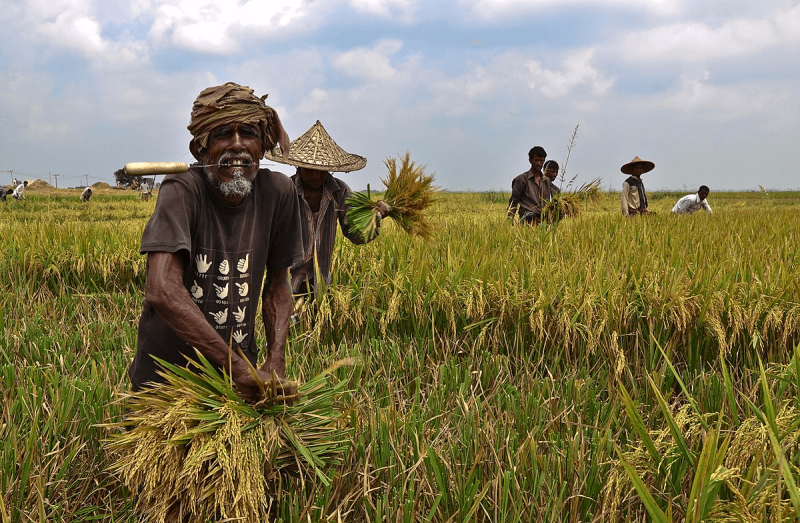
Southeast Asia split on embrace of biotech crops: India ‘indecisive’, Bangladesh on board

Credit: Balaram Mahalder via CC-BY-SA-3.0

Bangladesh is seen as the most willing nation to adopt a modern agricultural policy network, including the use of biotechnology, while India has yet to make its mind on genetically engineered or modified crops, the Foreign Agriculture Service (FAS) of the US Department of Agriculture (USDA) has said.

In Pakistan, a March 2019 moratorium on further approvals for all GM crops except cotton has slowed ongoing research and development activities, while no GM crop is grown in Sri Lanka, the USDA said in its annual report on agricultural biotechnology.

Follow the latest news and policy debates on sustainable agriculture, biomedicine, and other ‘disruptive’ innovations. Subscribe to our newsletter.

“India remains undecided on genetically engineered (GE) crops, despite its regulatory authorities clearing on the environmental release of GE eggplant (brinjal) and mustard events. Bt cotton (Bacillus thuringiensis) remains the sole crop derived from biotechnology approved for commercial cultivation,” the USDA’s FAS said.

On the other hand, the Indian government has approved for imports soya and canola oils derived from select GE soya and canola events, along with some food ingredients from microbial biotechnology.

India’s policy indecision is despite illegal cultivation of unapproved generically modified crops continuing unabated. Quoting industry sources, the USDA said herbicide-tolerate Bt cotton (HTBt) might account for 15-20 of the total cotton acreage in recent years.


This is an excerpt. Read the original post here

{{ reviewsTotal }}{{ options.labels.singularReviewCountLabel }}
{{ reviewsTotal }}{{ options.labels.pluralReviewCountLabel }}
{{ options.labels.newReviewButton }}
{{ userData.canReview.message }}

Related Articles

Infographic: Global regulatory and health research agencies on whether glyphosate causes cancer

Infographic: Global regulatory and health research agencies on whether glyphosate causes cancer

Does glyphosate—the world's most heavily-used herbicide—pose serious harm to humans? Is it carcinogenic? Those issues are of both legal and ...

Most Popular

Screenshot-2026-04-13-at-3.54.04-PM
AI disinformation stress test: Challenges and response strategies
ChatGPT-Image-Feb-16-2026-01_04_32-PM
Raw milk myth wake-up call
ChatGPT-Image-Apr-20-2026-11_17_18-AM-2
10,000 scientists gone: Trump’s cuts create an unprecedented brain drain
ChatGPT-Image-Apr-23-2026-09_20_20-PM
Kennedy’s CDC blocks publication of study that shows vaccines reduce hospitalizations by 50%, then misrepresents why
Screenshot-2026-04-21-at-12.05.38-PM
MAHA’s special protein-focused formula for skin care: Beef tallow and salmon sperm. How could they be wrong?
images
The never-ending GMO debate: Pros and cons
Screenshot-2026-04-22-at-1.14.34-PM
Latest fevered, right-wing conspiracy: Fox, New York Post, and kooky GOP legislators push ‘Dead Scientists’ scare
Screenshot-2026-04-12-135256
Bixonimania: The fake disease scam that AI swallowed whole

Sorry. No data so far.

glp menu logo outlined

Get news on human & agricultural genetics and biotechnology delivered to your inbox.