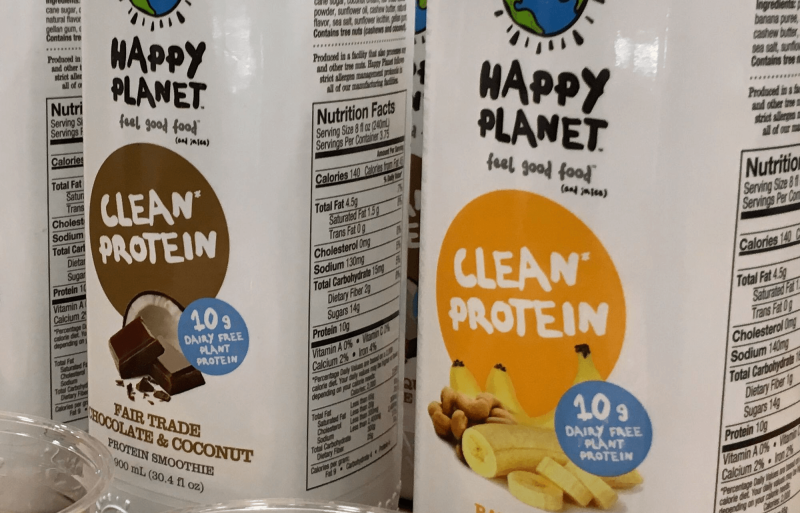
Does the ‘clean’ food label provide useful information?

Credit: Food Navigator

The world of food labels is a confusing one — natural, organic, non-GMO, sugar-free, and clean are just a few. In addition, a laundry list of ingredients on the back of packaged foods may cause a bit of unease about what you are consuming, and rightfully so. In an ideal world, we’d trust the claims on the front of every package, but unfortunately, it’s still the Wild West for manufacturers and their attempts to target consumers. And as the popularity and demand for these healthy labels grow, the umbrella of interpretations they encompass seems to as well, per [International Food Information Service, or] IFIS.

Follow the latest news and policy debates on sustainable agriculture, biomedicine, and other ‘disruptive’ innovations. Subscribe to our newsletter.

While the label “clean” means nothing, many brands may use it to signify the product is less processed than typical, but it’s important to remember this is not guaranteed nor regulated. The good news is the demand for a clean label is growing, and the market is forecasted to reach close to $65 billion by 2026. Perhaps this means that in the future, there will be a label to delineate between ultra- and less-processed food, but for now? Clean may as well mean the package was wiped off with a cloth. It offers absolutely no insight into the contents of the food.
This is an excerpt. Read the original post here

{{ reviewsTotal }}{{ options.labels.singularReviewCountLabel }}
{{ reviewsTotal }}{{ options.labels.pluralReviewCountLabel }}
{{ options.labels.newReviewButton }}
{{ userData.canReview.message }}

Related Articles

Infographic: Global regulatory and health research agencies on whether glyphosate causes cancer

Infographic: Global regulatory and health research agencies on whether glyphosate causes cancer

Does glyphosate—the world's most heavily-used herbicide—pose serious harm to humans? Is it carcinogenic? Those issues are of both legal and ...

Most Popular

Picture1
The Orange Bowl without oranges: Can CRISPR save Florida citrus?
global warming
‘Implausible’: Top climate scientists reject worst-case scenario—soaring temperatures and fast-rising sea levels
vax-misinformation-main
Facts & Fallacies Podcast: Limit free speech to blunt social media misinfo?
Screenshot 2026-05-22 at 11.31
‘Realistic and durable’: EPA proposes loosening restrictions on some PFAS ‘forever chemicals.’
ChatGPT-Image-May-1-2026-11_42_59-AM-2
Viewpoint: NAD is the wellness grifters latest evidence-lite longevity fad. At least the mice are impressed.
Screenshot-2026-04-22-at-12.21.32-PM
Viewpoint: Why the retracted Monsanto glyphosate study doesn’t change the science—the world’s most popular herbicide is safe 
ChatGPT Image May 26, 2026, 12_06_53 PM
Fake Ebola cure promoters already cashing in as disinformation videos flood social media
Screenshot-2026-05-21-at-12.15.17-PM
UK gene-editing milestone: Livestock barley that increases ruminant value and reduces methane emissions is first-approved CRISPR crop
ChatGPT Image May 24, 2026, 03_16_36 PM
Here come the biohackers' Enhanced Games—The Olympics for athletes doping up on steroids, hormones and peptides. What’s wrong with that?
Picture1
The FDA couldn’t find a vaccine safety crisis, so it buried its own research
glp menu logo outlined

Get news on human & agricultural genetics and biotechnology delivered to your inbox.