Global pesticide use has soared by 80% since 1990, with the world market set to hit $130bn next year, according to a new Pesticide Atlas. But pesticides are also responsible for an estimated 11,000 human fatalities and the poisoning of 385 million people every year, the report finds.
These are undoubtedly troubling statistics to the uninitiated reader, but that’s really all they are. Looking at the numbers in context clearly shows that the benefits of pesticide use outweigh the risk it poses.
“Soaring” pesticide use
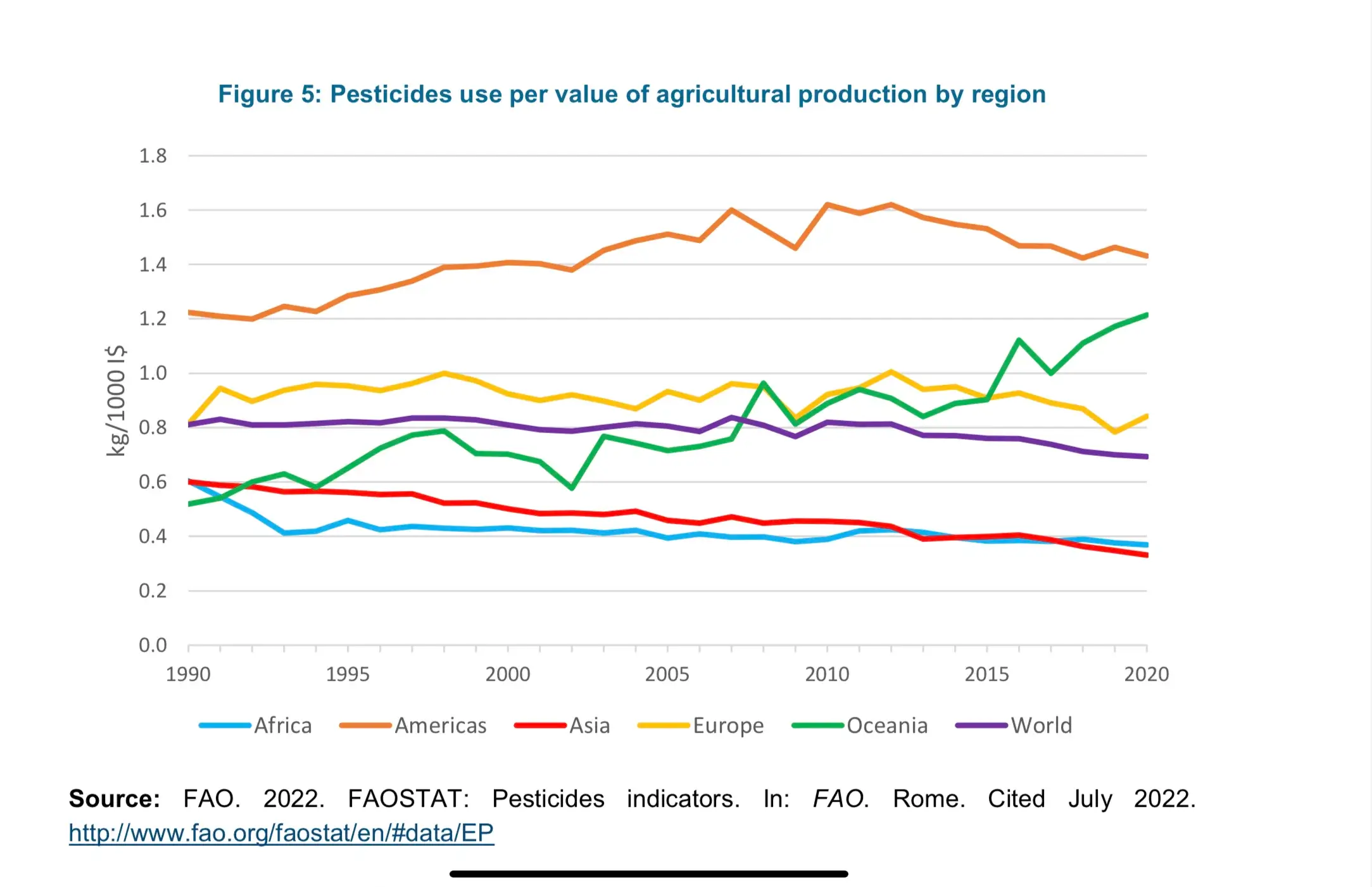
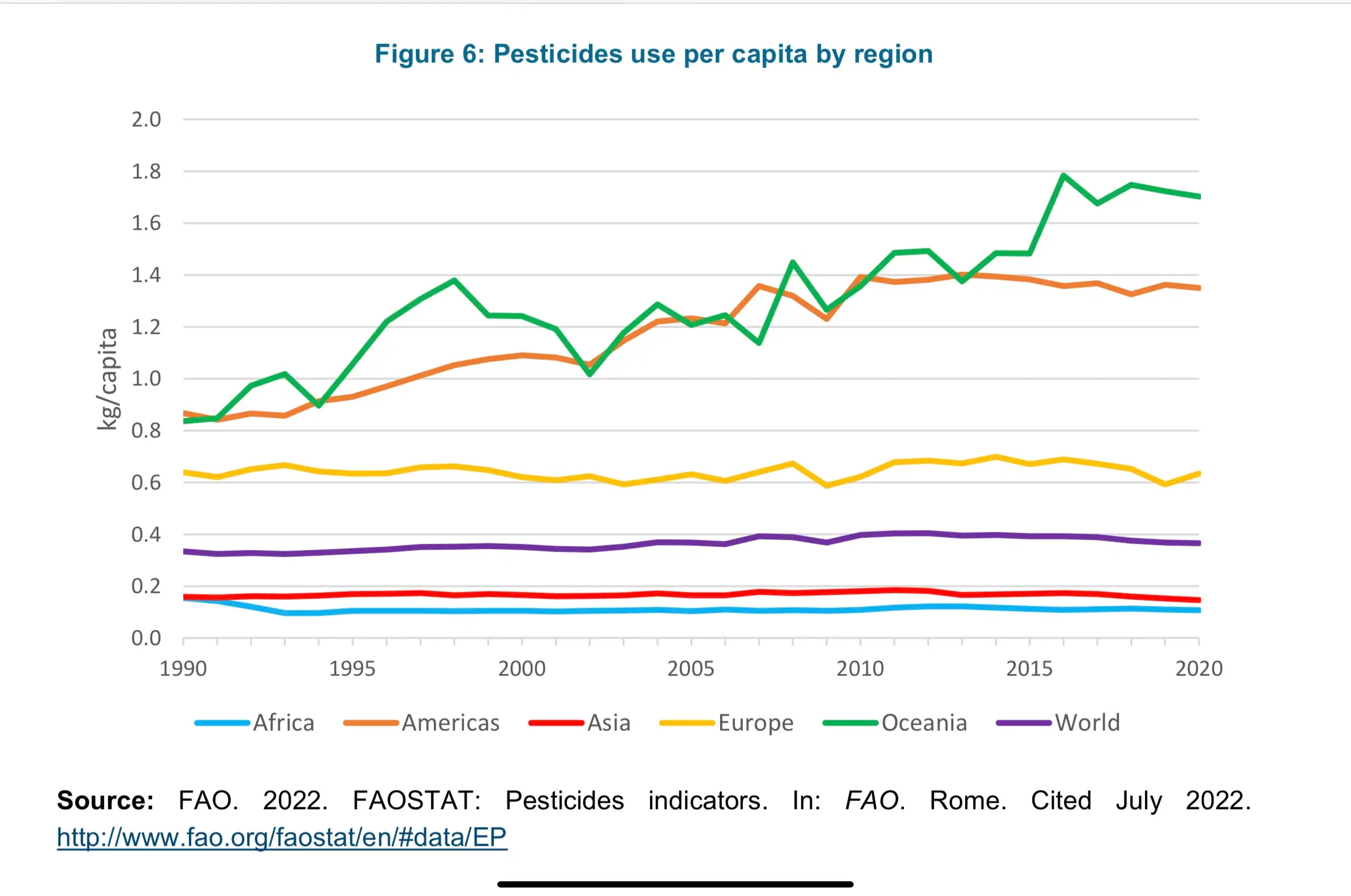
Let’s begin with the most shocking statistic — “Global pesticide use has continued to grow steadily for decades: Between 1990 and 2017 by about 80 percent,” according to the Guardian’s cited “Pesticide Atlas,” authored by Friends of the Earth Europe (FOE). This figure doesn’t mean much on its own. In fact, by subtly shifting how we measure pesticide use, we can get different results. Per $1,000 of agricultural production, pesticide use has declined over the same period, according to the UN’s Food and Agricultural Organization (Figure 5). If we measure per capita, there’s been essentially no change since 1990 (Figure 6).
We should also ask an important question about this 80 percent figure: compared to what? For example, if we begin in 1996, the first year genetically engineered (GE) crops occupied significant areas of farmland (1.66 million hectares), we get a very important piece of context. As economist Graham Brookes reported in a study published this month:
Since 1996, the use of pesticides on the GM crop area has fallen by 748.6 million kg of active ingredient (a 7.2% reduction) relative to the amount reasonably expected if this crop area had been planted to conventional crops … In terms of the environmental impact associated with herbicide and insecticide use on these crops … this improved by 17.3%
Notice the subtle yet significant variable Brookes’ peer-reviewed analysis injects into the discussion: how much higher would pesticide use have been absent the introduction of GE crops in the mid-1990s? As economists have known for centuries, we have to consider the seen and unseen effects of a given action. FOE dedicated less than two pages (p 36-37) to the impact of GE technology, and the group failed to explain how the introduction of these improved crops influenced pesticide use. The report only included numbers on the application of the herbicide glyphosate and “insecticides” for select countries and periods of time.
That leads us to another reason why these figures are misleading. Pesticides are not all created equal. As FOE correctly explained, “factors such as the toxicity of the substances, methods of application, application rates, or the frequency of application also play a role” in their health and environmental impacts.
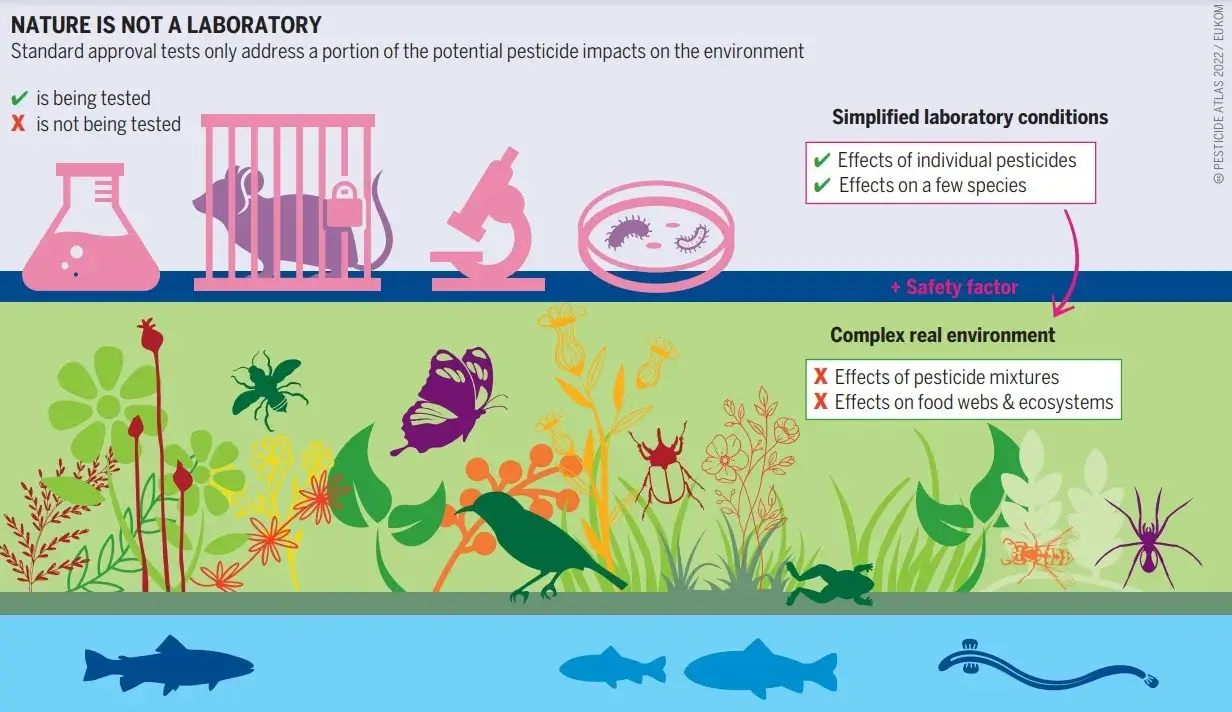
Even in cases where the amount of pesticide applied increases, there may still be a net benefit if a less-toxic chemical displaces or reduces the use of another with a worse environmental profile. Better herbicides and insecticides have been developed over the years that make this sort of progress possible. Summing the amounts of a chemical applied to a crop isn’t nearly as informative as the public has been led to believe. As weed scientist Andrew Kniss noted in 2017:

A large increase in the weight of herbicide applied could simply be due to a switch from a herbicide which is active at low doses to a less bioactive herbicide. Likewise, a reduction in the total weight of herbicide applied may not actually be indicative of reduced herbicide use, as a single herbicide may be replaced by many different herbicides with lower use rates, and could actually pose substantially greater risk to applicators and the environment.
With those very crucial qualifiers in mind, we can see why FOE’s emphasis on “Global consumption of pesticides” is completely misdirected.
The same can be said of the Guardian’s fearful observation that pesticides are “responsible for an estimated 11,000 human fatalities and the poisoning of 385 million people every year.” These figures were extrapolated from 7,446 fatalities and 733,921 non-fatal cases of alleged pesticide poisoning reported by individual studies.
The researchers acknowledged that their conclusion was “partly based on a weak database. Some countries were covered by only one publication or by data on small samples sizes [as few as 50 people] of specific study populations.” Additionally, they explained, “most studies gave no clear case definitions and timeframes.” It’s difficult to estimate pesticide poisonings when the definition of “poisoning” is uncertain.
Statistical footwork aside, pesticide poisoning is tragic, though it’s usually the result of improper use or attempted suicide. It has nothing to do with the safety of our food supply, nor the risk farmers and pesticide applicators face when they use these chemicals as intended. We wouldn’t use drunk-driving fatalities to discourage people from commuting to work in the morning, yet this is exactly the sort of sophistry FOE has engaged in.
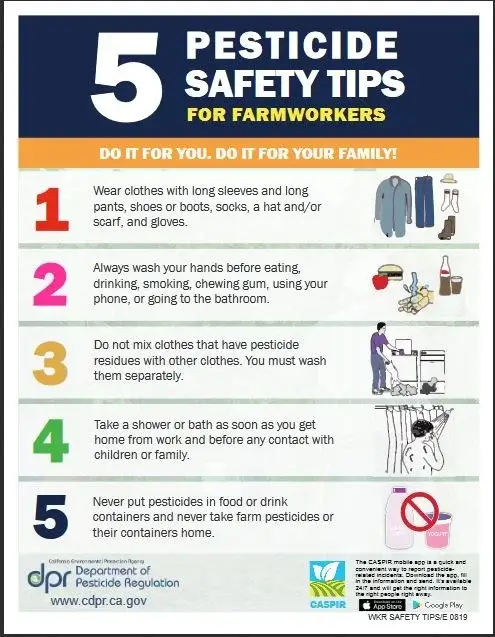
The inescapable conclusion is this: pesticides, while potentially very dangerous, are essential tools that help farmers produce our abundant food supply. In a world without access to these chemicals, many more people would be hungry, sick, or even dead. I’m grateful we don’t live there.
Cameron J. English is the director of bio-sciences at the American Council on Science and Health. Visit his website and follow ACSH on Twitter @ACSHorg
A version of this article was originally posted at the American Council on Science and Health and is reposted here with permission. The Cornell Alliance for Science can be found on Twitter @ACSHorg