Fortunately, a whole raft of new technologies is being developed that make a system-wide revolution in food production feasible. According to recent research by one of us (Chris), this transformation could meet increased global food demands by a growing human population on less than 20% of the world’s existing farmland. Or in other words, these technologies could release at least 80% of existing farmland from agriculture in about a century.
Around four-fifths of the land used for human food production is allocated to meat and dairy, including both range lands and crops specifically grown to feed livestock. Add up the whole of India, South Africa, France and Spain and you have the amount of land devoted to crops that are then fed to livestock.
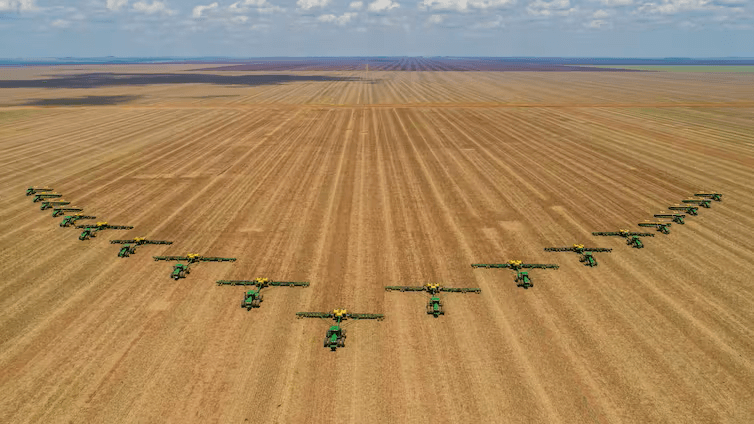
Despite growing numbers of vegetarians and vegans in some countries, global meat consumption has increased by more than 50% in the past 20 years and is set to double this century. As things stand, producing all that extra meat will mean either converting even more land into farms, or cramming even more cows, chickens and pigs into existing land. Neither option is good for biodiversity.
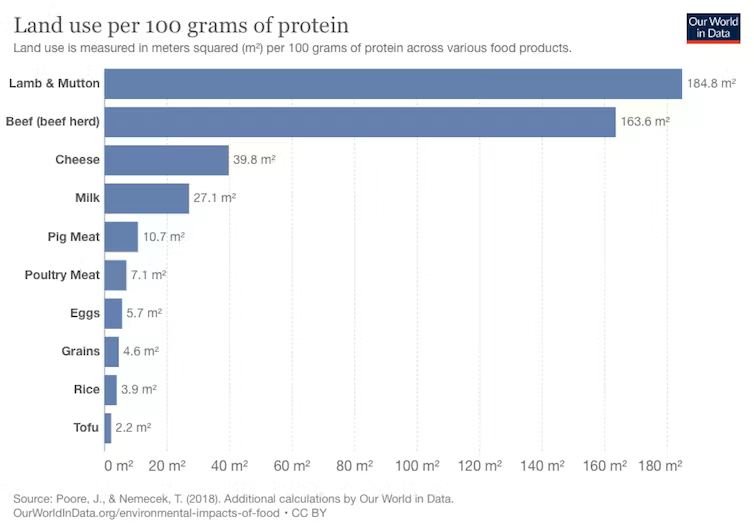
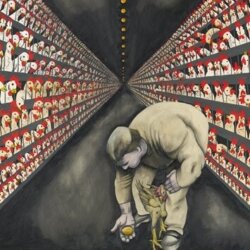
Meat and dairy production is already an unpleasant business. For instance, most chickens are grown in high-density feeding operations, and pork, beef and especially dairy farming is going the same way. Current technologies are cruel, polluting and harmful to biodiversity and the climate – don’t be misled by cartoons of happy cows with daisies protruding from their lips.
Unless food production is tackled head-on, we are left resisting inevitable change, often with no hope of long-term success. We need to tackle the cause of biodiversity change. The principal global approach to climate change is to focus on the cause and minimise greenhouse gas emissions, not to manufacture billions of parasols (though we may need these too). The same is required for biodiversity.
So, how can we do this?
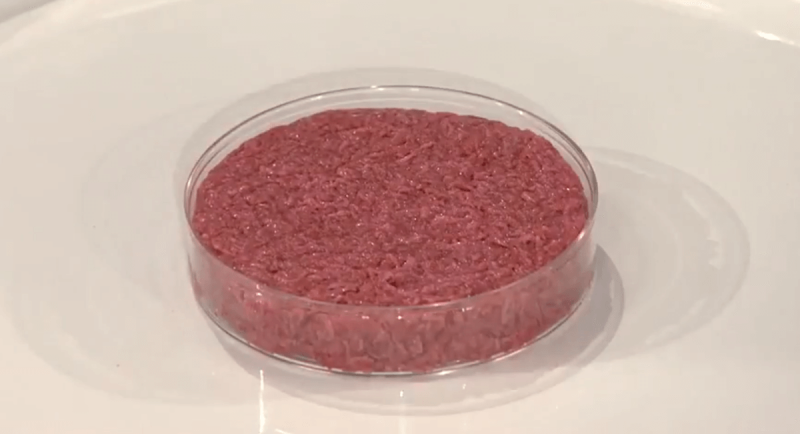
Cellular agriculture provides an alternative, and could be one of this century’s most promising technological advancements. Sometimes called “lab-grown food”, the process involves growing animal products from real animal cells, rather than growing actual animals.
If growing meat or milk from animal cells sounds strange or icky to you, let’s put this into perspective. Imagine a brewery or cheese factory: a sterile facility filled with metal vats, producing large volumes of beer or cheese, and using a variety of technologies to mix, ferment, clean and monitor the process. Swap the barley or milk for animal cells and this same facility becomes a sustainable and efficient producer of dairy or meat products.
Animal cruelty would be eliminated and, with no need for cows wandering around in fields, the factory would take up far less space to produce the same amount of meat or milk.
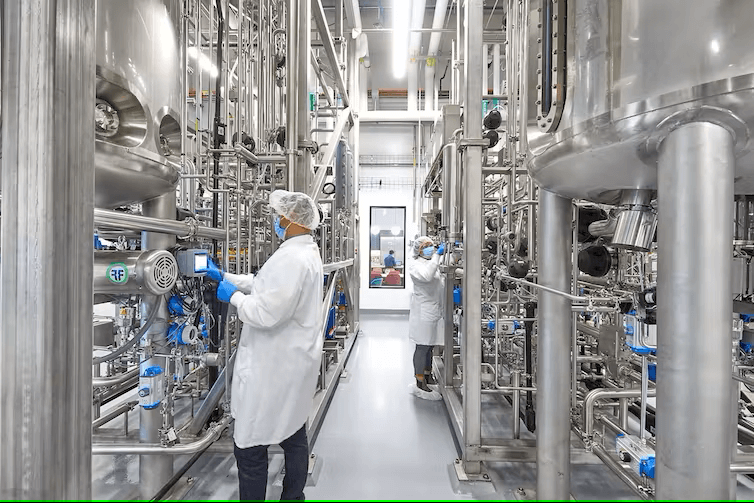
Other emerging technologies include microbial protein production, where bacteria use energy derived from solar panels to convert carbon dioxide and nitrogen and other nutrients into carbohydrates and proteins. This could generate as much protein as soybeans but in just 7% of the area. These could then be used as protein food additives (a major use of soy) and animal feed (including for pets).
It is even possible to generate sugars and carbohydrates using desalination or through extracting CO₂ from the atmosphere, all without ever passing through a living plant or animal. The resulting sugars are chemically the same as those derived from plants but would be generated in a tiny fraction of the area required by conventional crops.


What to do with old farmland
These new technologies can have a huge impact even if demand keeps growing. Even though Chris’s research is based on the assumption that global meat consumption will double, it nonetheless suggests that at least 80% of farmland could be released to be used for something else.
That land might become nature reserves or be used to store carbon, for example, in forests or the waterlogged soils of peat bogs. It could be used to grow sustainable building materials, or simply to produce more human-edible crops, among other uses.
Gone too will be industrial livestock systems that produce huge volumes of manure, bones, blood, guts, antibiotics and growth hormones. Thereafter, any remaining livestock farming could be carried out in a compassionate manner.
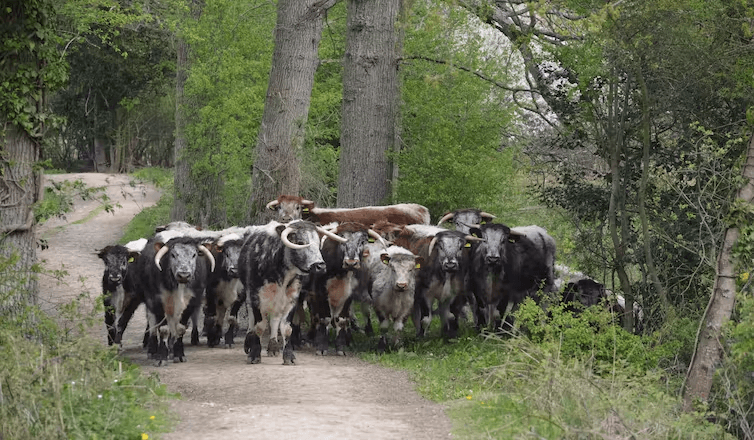
Since there would be less pressure on the land, there would be less need for chemicals and pesticides and crop production could become more wildlife-friendly (global adoption of organic farming is not feasible at present because it is less productive). This transition must be coupled with a full transition towards renewable energy as the new technologies require lots of power.
Converting these technologies into mass-market production systems will of course be tricky. But a failure to do so is likely to lead to ever-increasing farming intensity, escalating numbers of confined animals, and even more lost nature.
Avoiding this fate – and achieving the 80% farmland reduction – will require a lot of political will and a cultural acceptance of these new forms of food. It will require economic and political “carrots” such as investment, subsidies and tax breaks for desirable technologies, and “sticks” such as increased taxation and removal of subsidies for harmful technologies. Unless this happens, biodiversity targets will continue to be missed, COP after COP.
Chris Thomas is Director of the Leverhulme Centre for Anthropocene Biodiversity, University of York. Follow Chris on Twitter @Prof_CThomas
Jack Hatfield is a Postdoctoral Research Associate at Leverhulme Centre for Anthropocene Biodiversity, University of York. Follow Jack on Twitter @JackHHatfield
Katie Noble is a PhD Candidate at the Leverhulme Center for Anthropocene Biodiversity, University of York. Follow Katie on Twitter @CulturedKatie
A version of this article was posted at Conversation and is used here with permission. Check out Conversation on Twitter @ConversationEDU