Self-domestication: Like humans and bonobos, elephants have evolved cooperative, socially beneficial behavior

Like humans and bonobos, have elephants evolved a cooperative, socially beneficial behavior
Credit: Unsplash/ David Clode
Humans have complex social behavior, diverse communication skills, and a capacity for highly developed tool use. Researchers argue that human evolution may resemble the process of animal domestication, where less aggressive animals are favoured. In the same way, human evolution may be the result of natural selection for more prosocial and cooperative individuals. Such individuals are more likely to interact with others and form complex communities, in which they can learn from each other.

“The theory of self-domestication is hard to test”, says first author Limor Raviv. “This is because only one other species besides humans has been argued to be self-domesticated: bonobos.” Could elephants be the first non-primate animal model for self-domestication? Raviv and her colleagues set out to study the similarities between elephants, bonobos, and humans, and followed up with a genetic analysis.

Mis- and disinformation are distorting science and public policy. Subscribe to our Daily and Weekly Digests for incisive coverage of ‘disruptive’ innovations in AI, agricultural biotechnology, food, chemicals, nuclear energy, vaccines, and other disruptive innovations.

Hallmarks of domestication

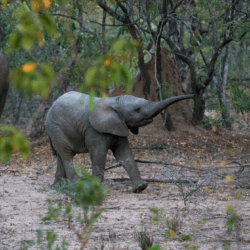
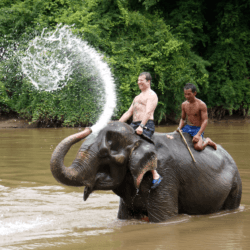
The team found that elephants show many hallmarks of domestication. Similar to humans and bonobos, they have low levels of aggression, high levels of empathic and prosocial behaviour, an extended juvenile period, and increased playfulness and curiosity. Elephants form coalitions, ‘babysit’ calves, offer protection and comfort to others, and help dying or ill members of their herds—and even the occasional outsider. There is also evidence that elephants are both self-aware and sensitive to the needs and wants of others.

Another important hallmark is elephants’ ability to learn from each other. Behaviours that are often innate in other animals—such as what to eat or how to raise offspring—are socially transmitted in elephants. Elephants also have a sophisticated multimodal communication system with an extensive vocal repertoire, ranging from trumpets and roars to low-frequency rumbles. For example, elephants in Kenya have different alarm calls for humans and for bees. Their varied and combined calls even show signs of grammar.
Finally, the team found several candidate genes associated with domestication in elephants.
Safe environment

The authors propose that self-domestication in elephants could be related to their massive size and relative strength. “This means that elephants are generally less worried about evading or fighting other animals for their survival”, Raviv explains. “This kind of ‘safe environment’ could relax selective pressures for aggression, free cognitive resources, and open up more opportunities for exploration, communication, and play.”

“Our hypothesis of self-domestication in elephants has exciting potential for future research in other species”, concludes Raviv. “It can inform our understanding of the evolution of prosocial behaviour across evolutionarily distant species, providing important insights into convergent evolution.”


Read the original post here

Related Articles

Infographic: Global regulatory and health research agencies on whether glyphosate causes cancer

Infographic: Global regulatory and health research agencies on whether glyphosate causes cancer

Does glyphosate—the world's most heavily-used herbicide—pose serious harm to humans? Is it carcinogenic? Those issues are of both legal and ...

Most Popular

ChatGPT Image Jul 31, 2026, 08_05_37 AM
26% and far worse than during COVID: Under RFK Jr., Americans’ opinion of ‘revamped’ CDC hits an all-time low
Cancer mRNA Vaccine Concept
'A new frontier': Though scorned by RFK Jr., personalized mRNA vaccine offers hope for many suffering from melanoma skin cancer
ChatGPT-Image-Mar-10-2026-01_39_01-PM
Viewpoint—“Miracle molecule” debunked: Why acemannan supplements don’t work
Screenshot-2026-10-24-121036
Many hospitals embrace longevity medicine. Are they separating science from hype?
Screenshot-2026-10-26-at-11.06.10-AM
Viewpoint: The organic, good-food, small-farm movement is seductive but wrongheaded. Here’s the sustainability and environmental case for industrial farming
Picture1
Viewpoint: How badly is the U.S. food-safety net fraying? FDA’s bungled handling of the tainted lettuce crisis deepens concerns over cuts to disease tracking and response
China Innovation Lightbulb 2
China’s 5-year plan to accelerate science innovation is putting the U.S. and Europe in the rearview mirror
Screenshot-2026-10-23-at-10.37.12-AM
Viewpoint: Drones, dollars and baby food: Critical innovations that anti-plastic ideologues willfully ignore
Healthy Food Sensitivity Test Collection
Viewpoint: That’ll be $300: The wellness industry’s junk science scam to ‘fix’ your immune system that isn’t broken
Crimson Drips Over the White House
In Trump administration redirect, U.S. steers NIH sharply away from biodefense and pandemic preparedness
Screenshot 2026-10-16 at 5.38
PFAS in Agriculture: Science, Uncertainty, and Risk Communication
Screenshot-2026-10-19-at-12.04.51-PM
Victims of their own success: As memories of killer diseases fade, vaccine rejectionism soars
West-Virginia-SNAP-Water-Bottle-Sticker
A ‘shining success’ or 'empty promises’: Two years along, West Virginians assess MAHA’s food promises
glp menu logo outlined

Get news on human & agricultural genetics and biotechnology delivered to your inbox.