Viewpoint: Gene editing and climate change — Aquaculture’s vulnerability to high temperatures, parasites and contagion could be solved with biotech

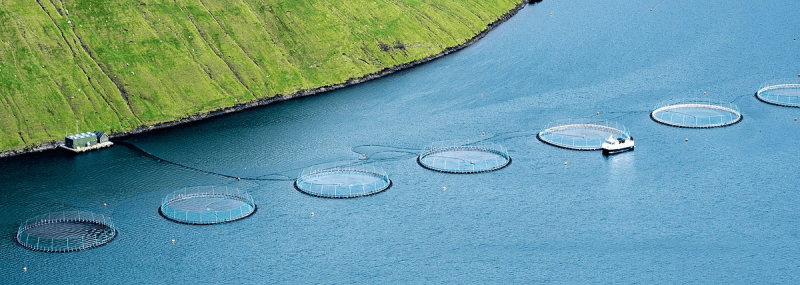
Aquaculure of salmon in Finland. Credit: Ekrem Canli via CC-BY-SA-4.0

Aquaculture is a diverse sector with about 600 cultured species, as the Food and Agriculture Organization (FAO) of the United Nations reported.

However, only 15 species contribute significantly to world production.

With the prevailing and worsening conditions brought about by climate change to the fishes’ natural habitats, tools that can improve the species’ resiliency are necessary.

Follow the latest news and policy debates on sustainable agriculture, biomedicine, and other ‘disruptive’ innovations. Subscribe to our newsletter.

[Professor Eric] Hallerman presented gene transfer and gene editing as promising techniques to shield the world’s aquaculture from the climate crisis.

“Fishes are excellent systems for gene transfer and gene editing,” Hallerman pointed out.

The main reason behind this is that fish can produce multiple offspring. At the same time, researchers have designed protocols for the successful artificial induction of spawning in cultured fish species.

Furthermore, fish eggs are large, and the development of the embryo or larvae occurs outside the mother’s body, enabling successful modification of valuable traits in fish.

Gene editing has been used to improve fish species’ productivity, disease resistance and sustainability.

The current thrust of aquaculture research worldwide is to improve fish species’ growth and muscle development.


This is an excerpt. Read the original post here

{{ reviewsTotal }}{{ options.labels.singularReviewCountLabel }}
{{ reviewsTotal }}{{ options.labels.pluralReviewCountLabel }}
{{ options.labels.newReviewButton }}
{{ userData.canReview.message }}

Related Articles

Infographic: Global regulatory and health research agencies on whether glyphosate causes cancer

Infographic: Global regulatory and health research agencies on whether glyphosate causes cancer

Does glyphosate—the world's most heavily-used herbicide—pose serious harm to humans? Is it carcinogenic? Those issues are of both legal and ...

Most Popular

d-b
Blocked arteries, kidney stones, nausea, constipation, fatigue: Long list of health problems caused by too much vitamin D 
Screenshot-PM-24
Viewpoint: The herbicide glyphosate isn’t perfect. Banning it would be far worse.
circular-bioeconomy-should-focus-on-sustainable-wellbeing
GLP podcast: What's wrong with 'doomsday' environmentalism? It's false.
Screenshot-2026-04-29-at-11.31.42-AM
Dad brains: Only women undergo bodily changes during and after childbirth? Think again.
png-pill-omega-Supp-fish-oil
Fish oil supplements for brain injuries probably don’t work 
ChatGPT-Image-Feb-16-2026-01_04_32-PM
Raw milk myth wake-up call
ChatGPT-Image-Feb-16-2026-01_57_31-PM
Viewpoint: ‘Science-as-Satan’ unites the MAHA—MAGA movements. Is a breakup in the works?
screen shot at pm
Word games: How Moderna is selling its newest vaccine without using the “v” word
ChatGPT-Image-Apr-22-2026-11_06_18-AM
Wellness influencer nonsense: No, nicotine does not boost cognition and productivity, but it can damage your health 
Screenshot 2026-02-25 at 11.20
Why the herbicide glyphosate is key to sustainable agriculture
ChatGPT-Image-Mar-11-2026-11_58_46-AM
The Trump administration has run out more than 4,000 National Institutes of Health employees. Here are the consequences
ChatGPT-Image-Apr-20-2026-11_17_18-AM-2
10,000 scientists gone: Trump’s cuts create an unprecedented brain drain
glp menu logo outlined

Get news on human & agricultural genetics and biotechnology delivered to your inbox.