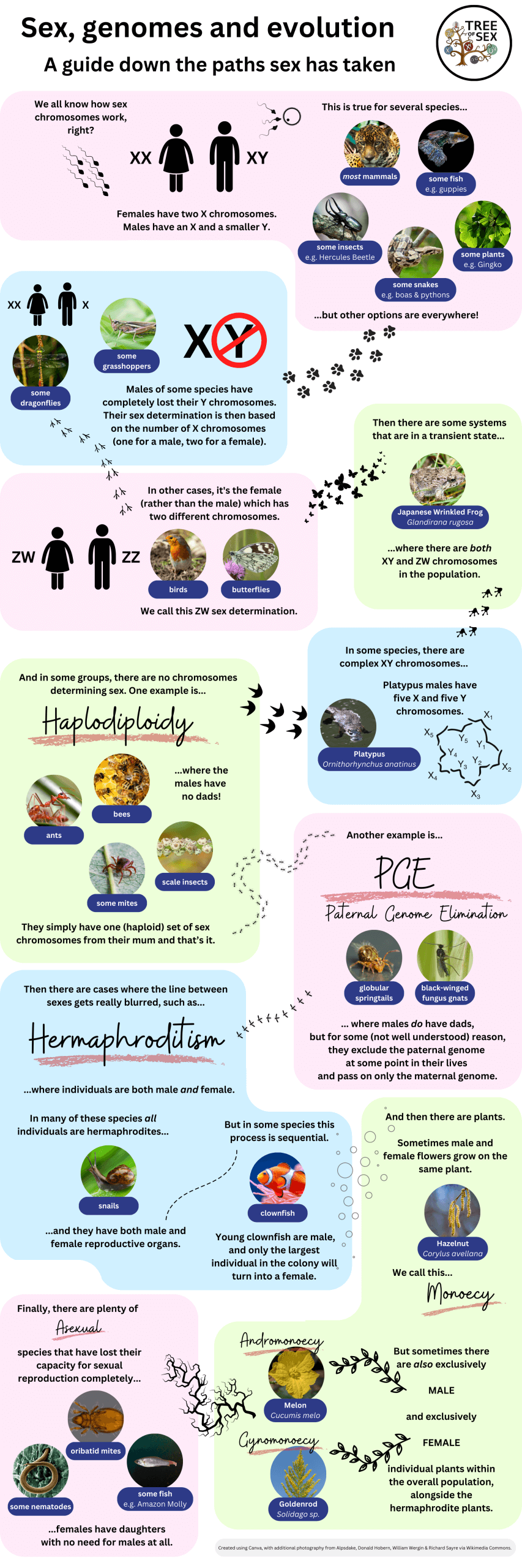
Infographic: Tree of Sex — Cataloging wild ways nature reproduces, from sex-changing fish to asexual lizards

Tree of Sex: Cataloging the wild ways nature reproduces — from sex-changing fish to asexual lizards
Credit: Pexels/ Pixabay

Thirteen years ago, a group of scientists came together to talk about sex. They were interested in how different species across the tree of life pass DNA onto the next generation. They dubbed their project the Tree of Sex.

The work culminated in a database capturing the reproductive strategies of over 22,000 species.

Follow the latest news and policy debates on sustainable agriculture, biomedicine, and other ‘disruptive’ innovations. Subscribe to our newsletter.

In the years since, scientists continued their research – somewhere between 200 and 300 papers have been published every year on sex chromosomes alone. At the same time, genomic technology leapt forward. Many believed the time was now ripe for a Tree of Sex v2.0.

Since the last Tree of Sex, a genomic revolution has occurred. DNA sequencing technologies have become more sophisticated, their yields have increased, and costs have come down. Along with several other biodiversity genomics consortia, the Sanger Institute’s Tree of Life Programme has begun producing top-quality reference genomes for all kinds of species, something that new long-read DNA sequencing technology has only made possible in the last few years.


tos infographic

This is an excerpt. Read the full article here

{{ reviewsTotal }}{{ options.labels.singularReviewCountLabel }}
{{ reviewsTotal }}{{ options.labels.pluralReviewCountLabel }}
{{ options.labels.newReviewButton }}
{{ userData.canReview.message }}

Related Articles

Infographic: Global regulatory and health research agencies on whether glyphosate causes cancer

Infographic: Global regulatory and health research agencies on whether glyphosate causes cancer

Does glyphosate—the world's most heavily-used herbicide—pose serious harm to humans? Is it carcinogenic? Those issues are of both legal and ...

Most Popular

Screenshot 2026-05-26 at 10.15
Viewpoint: Double standard—Why does the wellness industry get a free pass while Big Healthcare is treated as morally suspect?
Screenshot 2025-07-30 at 10.48
Can gene editing eliminate Down syndrome? Scientists have done it in lab-grown cells
ChatGPT-Image-Mar-10-2026-01_39_01-PM
Viewpoint—“Miracle molecule” debunked: Why acemannan supplements don’t work
tick-DNA
GLP podcast: Spread meat allergy with gene-edited ticks? Bioethicists pose vile ‘thought experiment’
ChatGPT-Image-Jun-4-2026-01_27_58-PM
Viewpoint—N.A.D.+: Why Gwenyth Paltrow’s heralded anti-aging supplement doesn’t work
downsyndrome_compilation_MID_1
CRISPR breakthrough that can remove the chromosome responsible for Down syndrome raises ethical questions
Screenshot-2026-06-03-at-1.24.46-PM
Challenging anti-GMO disinformation: Why genetically-tweaked crops offer bushels of benefits
ChatGPT-Image-Jun-4-2026-11_49_36-AM-2
‘You don’t understand Tolkien’: Skeptic Pope trolls tech giants about the exaggerated, risk-less benefits of AI
ChatGPT-Image-May-26-2026-07_51_21-AM-2
Viewpoint: There are more than 1,000 chemicals in a cup of coffee—including many substances that can cause cancer. Why isn’t it banned?

Sorry. No data so far.

glp menu logo outlined

Get news on human & agricultural genetics and biotechnology delivered to your inbox.