Video: ‘Our brains love pictures’ — Lebanese teenage savant recites all 206 bones of the body in random order

'Our brain loves pictures" Lebanese teenage savant recites all 206 bones of the body in random order
Credit: Unsplash/ Lisa Fotios

“You don’t have to be born with superpowers to have a good memory,” researcher Olav Schewe says. He provides some useful tips.

But first, let’s talk to Banan Sultan Nassereddine from Lebanon.

Nassereddine memorised the names of the 206 bones in the body. Then she recited them at lightning speed in front of people from the Guinness World Records.

“I did it in 5 minutes and 37 seconds,” she says.

Nassereddine says she is an ordinary teenager without superpowers.

“Anyone with a strong desire and a goal can do what I did,” she says.

She does four things that help the brain along the way. She reads, engages in physical activity, plans, and gets enough sleep.

Follow the latest news and policy debates on sustainable agriculture, biomedicine, and other ‘disruptive’ innovations. Subscribe to our newsletter.

Schewe has conducted extensive research on how to improve our memory and has several tips.
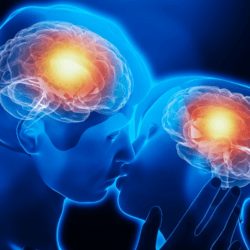
“Our brain loves pictures. It may therefore be helpful to visualise or find pictures related to what you want to remember,” he says.

Another tip is to test yourself.

“Let’s say you want to learn the capitals of Europe. It’s better to do more than just look at a list,” he says.

Creating flashcards is a good idea.

This is an excerpt. Read the full article here

{{ reviewsTotal }}{{ options.labels.singularReviewCountLabel }}
{{ reviewsTotal }}{{ options.labels.pluralReviewCountLabel }}
{{ options.labels.newReviewButton }}
{{ userData.canReview.message }}

Related Articles

Infographic: Global regulatory and health research agencies on whether glyphosate causes cancer

Infographic: Global regulatory and health research agencies on whether glyphosate causes cancer

Does glyphosate—the world's most heavily-used herbicide—pose serious harm to humans? Is it carcinogenic? Those issues are of both legal and ...

Most Popular

ChatGPT-Image-Mar-27-2026-11_47_30-AM-2
FDA’s expedited drug reviews are hailed in some quarters but other approval practices are problematic
Farmers can talk to plants
Farmers are a major source of misinformation—about farming
Screenshot-2026-05-01-at-1.29.41-PM
Viewpoint: What happens when whole grains meet modern food manufacturing? Labels don’t tell the whole story.
ChatGPT-Image-Apr-13-2026-02_20_22-PM
Viewpoint: Misinformation infodemic? Why assessing evidence is so challenging 
S
As vaccine rejectionism spreads, measles may be taking a more dangerous turn
Screenshot 2026-05-06 at 2.19
Vaccine shootout at the CDC 
What explains Homo sapiens’ huge brains? Ancient climate change played a role
Viewpoint: Internal White House documents detail administration’s strategy to undermine climate science
Screenshot-2026-04-20-at-2.26.27-PM
Viewpoint — Food-fear world: The latest activist scientists campaign: Cancer-causing additives
ChatGPT-Image-May-7-2026-11_28_04-AM-2
‘Conflict entrepreneurs’ are driving disinformation and shaping public opinion
ChatGPT-Image-May-6-2026-03_41_05-PM
‘Protecting the integrity of science’: Kennedy’s FDA blocks release of taxpayer-funded studies finding COVID and shingles vaccines safe
Screenshot-2026-05-06-at-2.07.43-PM
Manufacturing a conspiracy: The timeline of how  the White House embraced the fringe claim that scientists are being mysteriously murdered
bigstock opioids on chalkboard with rol
GLP podcast: 'Safe injection sites': enabling drug addiction or saving lives?
circular-bioeconomy-should-focus-on-sustainable-wellbeing
GLP podcast: What's wrong with 'doomsday' environmentalism? It's false.
Screenshot-2026-04-03-at-11.15.51-AM
Paraben panic: How a flawed study, media hype, and chemophobia convinced the public of the danger of one of the safest classes of preservatives
glp menu logo outlined

Get news on human & agricultural genetics and biotechnology delivered to your inbox.