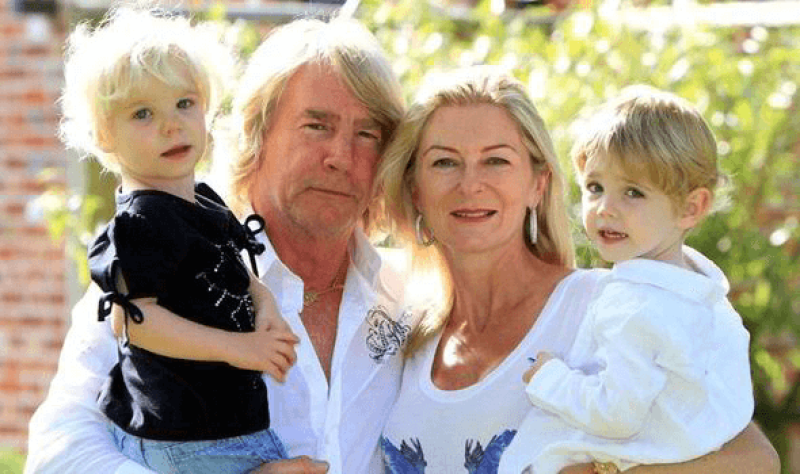
Although ancient records are sparse, researchers estimate that, for most of human history, women most typically conceived their first child in their late teens or early 20s and stopped having kids shortly thereafter.
But in recent decades, people around the world, especially in wealthy, developed countries, have been starting their families later and later.
Rama Singh, an evolutionary biologist at McMaster University, in Canada, thinks that if women keep having babies later in life, another fundamental reproductive stage could change: Women might start to enter menopause later too.
…

So far, scientists have only scant evidence that the age of onset for menopause has begun to drift. Just a few studies, mostly tracking trends from recent decades, have noted a shift on the order of a year or two among women in certain Western countries, including the U.S. and Finland. Singh, though, thinks that could be just the start. Menopause can come on anywhere from a person’s 30s to their 60s, and the timing appears to be heavily influenced by genetics. That variation suggests some evolutionary wiggle room. If healthy kids keep being born to older and older parents, “I could see the age of menopause getting later,” Megan Arnot, an anthropologist at University College London, told me.