If you keep up with the news, you might think it’s time to ditch the flyswatter and trash the bug spray. The deluge of misinformation about the fate of the insect population took wing in 2018. In the finest tradition of yellow journalism, the New York Times declared “The Insect Apocalypse Is Here,” warning that if we lose insects, our entire ecosystem and food supply will collapse.
An unending stream of apocalyptic rhetoric since then has stoked fear, and also created distrust. It’s but the latest illustration of why trust in journalists has plummeted to all-time lows, and trust in scientists is becoming highly polarized as well, as science increasingly is seen as advancing a particular political or policy agenda, rather than being a dispassionate search for truth. Public skepticism is further deepened as one controversial issue after another – for example, climate change and the “bee-pocalypse” — is presented as an existential threat to life on Earth, despite the problematic supporting evidence.
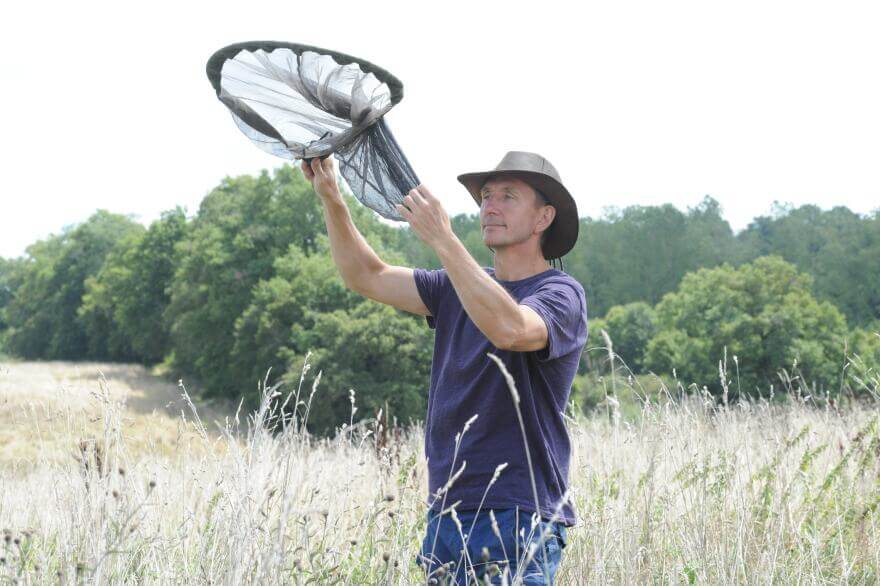
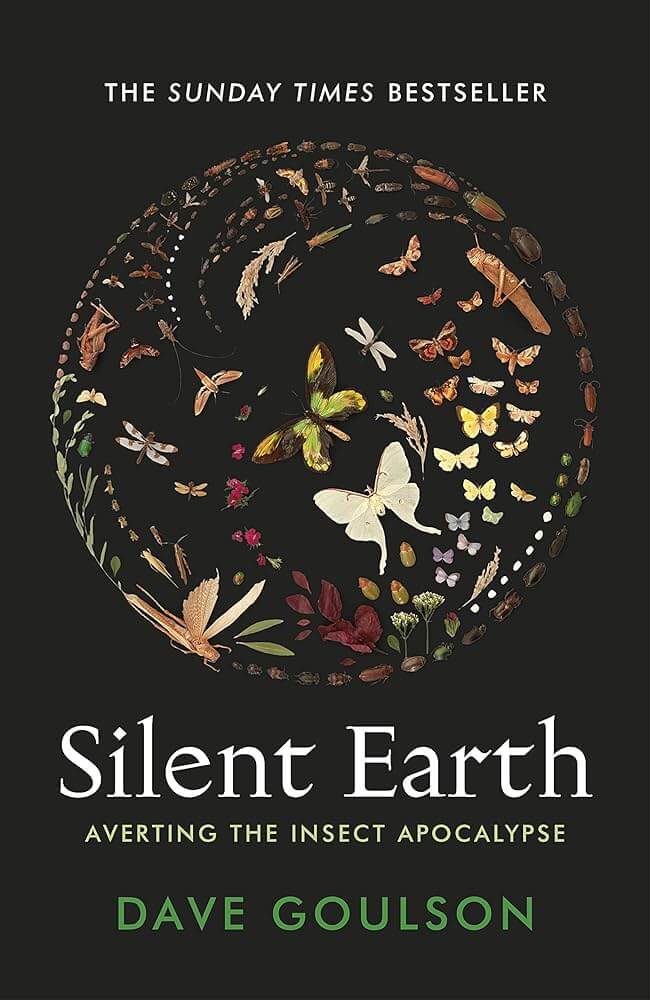
Much of the insect-related misinformation can be traced to controversial biologist Dave Goulson, who most recently, in 2021 , published the controversial book, “Silent Earth: Averting the Insect Apocalypse.” No stranger to hyperbole, Goulson posited that humanity’s “chemical onslaught on nature” is “akin to genocide,” and the “fragile web of life on our planet is beginning to tear apart.”
In the law, there’s a saying, “Extraordinary claims demand extraordinary evidence.” How persuasive is Goulson’s case? A review of the book indicates that Goulson’s evidence was purely anecdotal. He cites such “scientific” findings as fewer bugs splattering on the windshields of European cars now compared to decades ago. The few studies of global insect populations he did consider are deeply flawed or mischaracterized in his account.
Goulson wrote the book after a rapturous, uncritical reception to a 2017 study he co-authored with 11 other scientists that compared insect populations in certain German nature reserves over the last quarter century. Its dramatic ‘finding’ – that the biomass of flying insects had declined an astonishing 76 percent in 27 years generated the apocalyptic attention that he was clearly seeking. Goulson was immediately knighted “King of Insect Wisdom”. He was profiled in the New York Times and National Geographic. Articles quoted him extensively, even quoting him, as did The Guardian in its headline:“Warning of an “ecological Armageddon” among the insect population. In effect, Goulson set the terms of the reporting agenda for years to come.

Methodology weaknesses and the obsession with agri-chemicals
Nature magazine at least, contextualized his study, noting in its headline that the study only looked at limited regions in but one country, “Flying Insects are Disappearing from German Skies.” Entomologists would later point out the geographically limited study was inappropriately and wrongly ballyhooed as representative of trends in the rest of the world. Flaws in the Goulson team’s methodology and speculation emerged as scrutiny increased. Among other things, the research team often failed to sample the same sites in comparison years — a fundamental flaw that in itself renders the findings suspect, if not totally meaningless. They also used what are called malaise traps to collect their samples. These only collect insects when they are flying, which is highly influenced by other variables like the weather; insects fly more when it is warmer making the measurements even less reliable, despite the scientists’ attempt to account for them. And even though the study was conducted in nature reserves and did not even purport to test possible causes of decline, Goulson, who is not an entomologist, was immediately crowned the resident genius of insects, evangelizing his thesis that agricultural chemicals were driving the declines that were occurring in some regions.
Even if one were to overlook Gouldon’s bias in extrapolating from a few German nature reserves, claiming a global “ecological Armageddon” was commencing was a stretch. Germany is one of the most highly developed and densely populated places on Earth. It has been undergoing major land use changes for centuries, including the construction of some 30,000 wind turbines — whose massive blades are known killers of flying insects — and likely huge increases in light pollution (it isn’t just moths that are attracted to bright light).
To make the claim of global effects stick, Goulson relied heavily on a 2019 “meta-study” by Francisco Sánchez-Bayo and Kris Wyckhuys. Unfortunately, that study is as problematic ahis own. It was roundly criticized by the scientific community for its transparent bias —the authors only included studies found with a keyword search of “decline,” automatically excluding those showing stable or rising populations — and numerous other flaws..
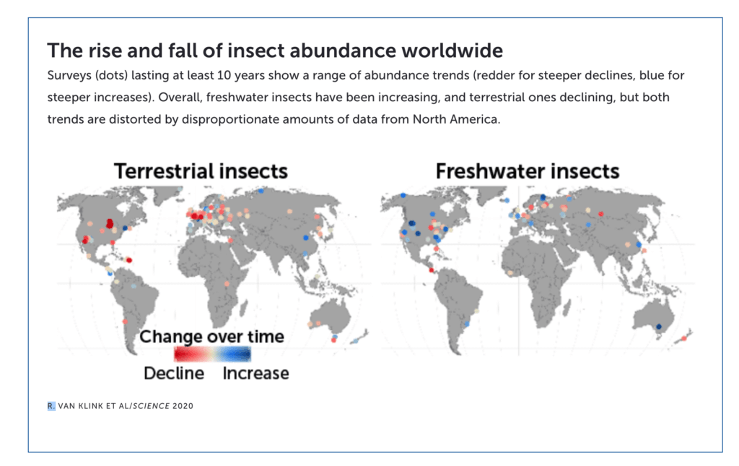
Goulson also cited a much better, though still highly imperfect, meta-analysis of global insect populations led by ecologist Roel van Klink that was published last year — except that Goulson omitted findings that contradicted key claims he would later make in “Silent Earth.” Most notably, Van Klink’s study undermined Goulson’s assertion that insect declines are severe in North America, and that modern agriculture — particularly pesticides — is the major culprit. Van Klink found that as of the year 2000, insect populations were no longer declining in North America and that cropland was actually correlated with increased insect populations. The only correlation van Klink could find with insect declines was land use changes and habitat destruction due to urbanization, which is hardly a startling revelation.
Van Klink did purport to find global insect declines, but these were three-to-six-fold smaller than the catastrophic claims made by Sánchez-Bayo, Wyckhuys and Goulson. Arguably the weakest aspect of the Van Klink study was the attempt to model global trends from the sparse and woefully incomplete data that exist on insects in most parts of the world. As shown on the map below, the great majority of the studies reviewed came from Europe and North America. Very few studies looked at insects in the entire, vast landmass of Asia, the largest continent in the world, or Africa, the second largest, or Australia. Hardly any studies included the insect-rich equatorial regions, and only one from the Amazon, which is thought to be home to between two and three million different species of insects, most of which haven’t even been named or characterized yet.
Goulson, who clearly was aware of the flimsy factual basis for his apocalyptic claims, occasionally tossed in a qualifier — e.g., a phrase such as “the declines, if they are real” (emphasis added) — in an attempt to inoculate himself from criticism. But as his narrative became lodged consciousness, with uncritical articles proliferating, he dropped the qualification; why qualify a speculative thesis when so few journalists questioned it?
More troubling, he fails to inform his readers of critical data that completely undercut his thesis, the most compelling of which is a study published last year by biologist Matthew Moran and a team of 11 researchers examining insect population trends in the United States. They analyzed insect diversity and abundance records at sites with varying climates across the United States over nearly four decades and found no overall decline. None. Some groups of insects in some areas declined while others increased. Altogether, insect populations in the US are stable and have been for decades.
 Viewpoint: Is the predicted ‘Silent Earth insect armageddon’ the inevitable result of using farm chemicals — or is it alarmist activist propaganda? Insect scientists challenge the doomsayers
 Are we facing an ‘Insect Apocalypse’ caused by ‘intensive, industrial’ farming and agricultural chemicals? The media say yes; Science says ‘no’



Goulson’s questionable past as an advocacy scientist
This isn’t Goulson’s first rodeo manipulating journalists. Once an obscure butterfly scientist, he rose to international prominence as a leader of the successful crusade in Europe to ban a class of state-of-the-art insecticides called neonicotinoids (neonics for short), which some environmentalists blamed for causing catastrophic declines in honeybee populations. At the time, the putative crisis — widely referred to as the “bee-pocalypse” — was headlined around the world, with thousands of stories predicting the imminent demise of the world’s honeybees and warning in terms very similar to today’s Insect Apocalypse stories of collapsing food supplies and global starvation. This hysteria memoralized in this now infamous Time magazine cover story by Bryan Walsh in 2012.
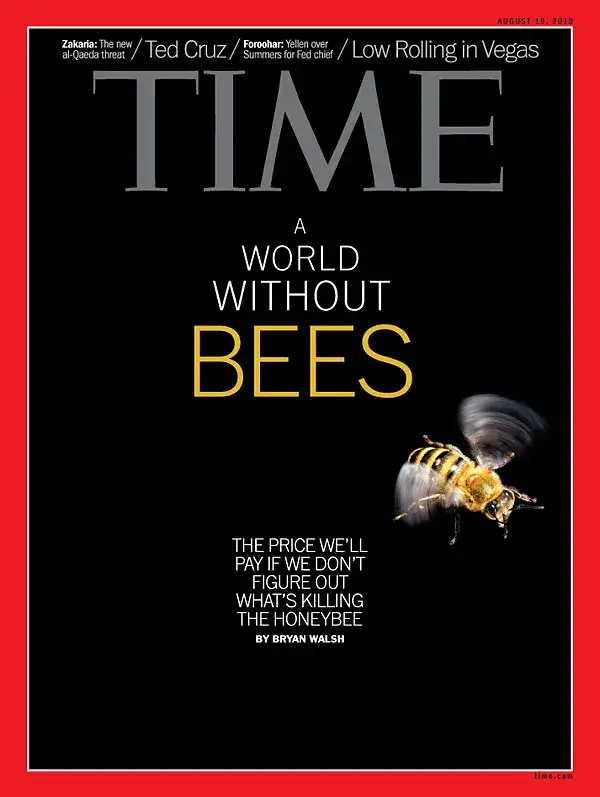
But there was no bee-pocalypse, as even the author of the Time embarrassment has owned up to. In 2013, I wrote a feature for Time magazine with the cover line: “A world without bees,” Walsh wrote in Vox an April mea culpa. “An advantage (or drawback) of being in journalism this long is that the predictions you made, say, 11 years ago, have time to play out. And as you may have noticed on your last visit to the supermarket, our agricultural system hasn’t collapsed…. The US may actually have more honeybees now than it ever has before. …, a startling 31 percent increase from 2007, and a larger increase than any other domesticated animals.”
Oops.
The entire time since that Time embarrassment appears, honeybee populations were actually increasing —in Europe, North America, and in fact every habitable continent on the planet. And, importantly, they had been increasing ever since neonicotinoid pesticides entered the market in the mid-1990s.
The orchestra of the bee hysteria, which has come to be known in some circles as BeeGate, was chronicled in the London Times in an article titled, “Scientists accused of plotting to get pesticides banned.” It reported on a leaked strategy document by members of the International Union for Conservation of Nature (IUCN) Task Force on Systemic Pesticides. It outlined their plan to have selected scientists (e.g. Goulson) conduct studies with predetermined conclusions that would demonstrate that neonics are harmful to bees. Those compromised studies would be placed in “high impact” publications and provide a “stronger scientific basis” for a campaign to ban the pesticides.
Goulson was a leading author of the “high-impact” 2019 paper that resulted. It was instrumental in solidifying the political pressure to make the EU’s 2013 “temporary” ban on neonics permanent. This sort of shadiness pervades Goulson’s book, which is still referenced by many journalists as the definitive word on what is causing supposed bee and insect deaths.
What is the latest science say about Goulson’s predicted insect apocalypse? Johannes Gutenberg, a professor at Mainz University in Germany, who led a team of four globally respected insect specialists who summarized the current science consensus in a special issue of Biology Letters in April 2023.
“More extensive use of land, climate change, and invasive species are the main causes of insect decline,” they conclude. Pesticides are notably absent as a driver of insect health concerns, just as they have been vindicated after being blamed for a non-existent bee catastrophe.
“In view of the results available to us, we learned that not just land-use intensification, global warming, and the escalating dispersal of invasive species are the main drivers of the global disappearance of insects, but also that these drivers interact with each other,” added Florian Menzel from the Institute of Organismic and Molecular Evolution at Johannes Gutenberg University Mainz. “The consequences of this development are numerous and generally detrimental for the ecosystems.”
Let’s hope that journalists have the courage, as Walsh did, to own up to their mis-portrayal of the extent and causes of insect population declines.
Henry I. Miller, a physician and molecular biologist, is the Glenn Swogger Distinguished Fellow at the American Council on Science and Health. He was the founding director of the FDA’s Office of Biotechnology. Find Henry on X @HenryIMiller
Jon Entine is executive director of the Genetic Literacy Project. Follow him on X @jonentine