


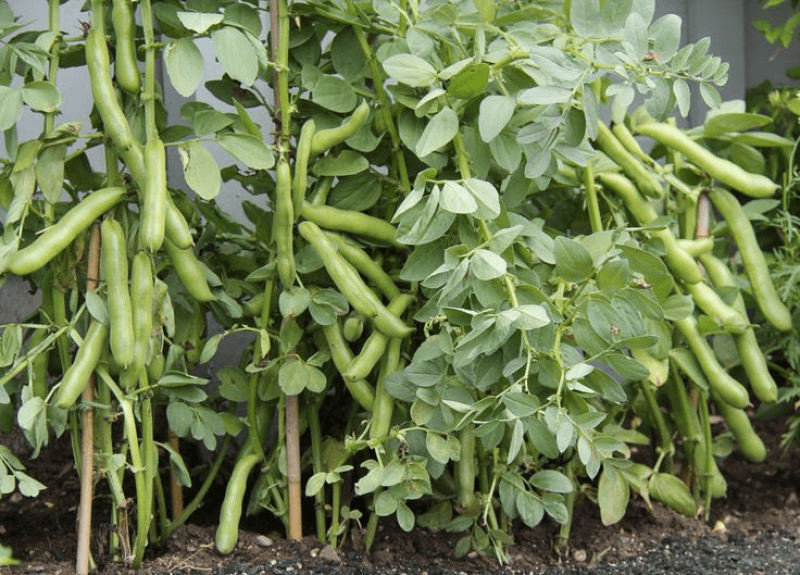
As their nitrogen-fixing capacity is becoming better understood, scientists are hoping to find ways to increase productivity, and eventually apply some of these effective soil-enriching characteristics to other crops such as cereals. With the ability to fix nitrogen, crops would need less nitrogen fertiliser and soil health would simultaneously improve.
Pulses, the edible dry seeds of legume plants, are staple foods in the diets of both people and livestock around the world. Across Europe and the US, they are commonly eaten as tinned beans, chickpeas and lentils, while in sub-Saharan Africa, cowpea is among the most important legumes.
High in protein, carbohydrates, dietary fibres, vitamins and minerals, pulses play a fundamental role in nutritious healthy diets. Both the seeds and leaves are also used as feed for livestock. For smallholder farmers in developing nations, nutritious pulses are a cost-effective substitute for animal protein and make up a large proportion of typical diets.
In Western Kenya, Rwanda and Burundi, people eat more than 30kg beans a year on average, while many African countries recommend pulses as a meat alternative in dietary guidelines. Pulses can also be stored for extended periods without affecting their nutritional content.
The magic inside root nodules
Some 100 million years ago, legumes developed the natural ability to house beneficial bacteria inside dedicated structures called root nodules. Here, bacteria convert gaseous nitrogen from the air and soil into a form that’s accessible to the plant as nutrients.
So, legumes need less nitrogen fertiliser than cereal and other vegetable crops. A high-performing legume can fix up to 300kg of nitrogen per hectare, which would otherwise cost farmers around $1 per kg in fertiliser to meet the nutrient needs of the plant.
At the Enabling Nutrient Symbioses in Agriculture project, we are trying to understand how exactly legumes do this. We are exploring how these nitrogen-fixing root nodules evolved in only legumes in the first place. With that knowledge, we hope to find ways to increase the efficiency of nitrogen fixation inside the root nodules and maximise the growth and yield of legume crops.
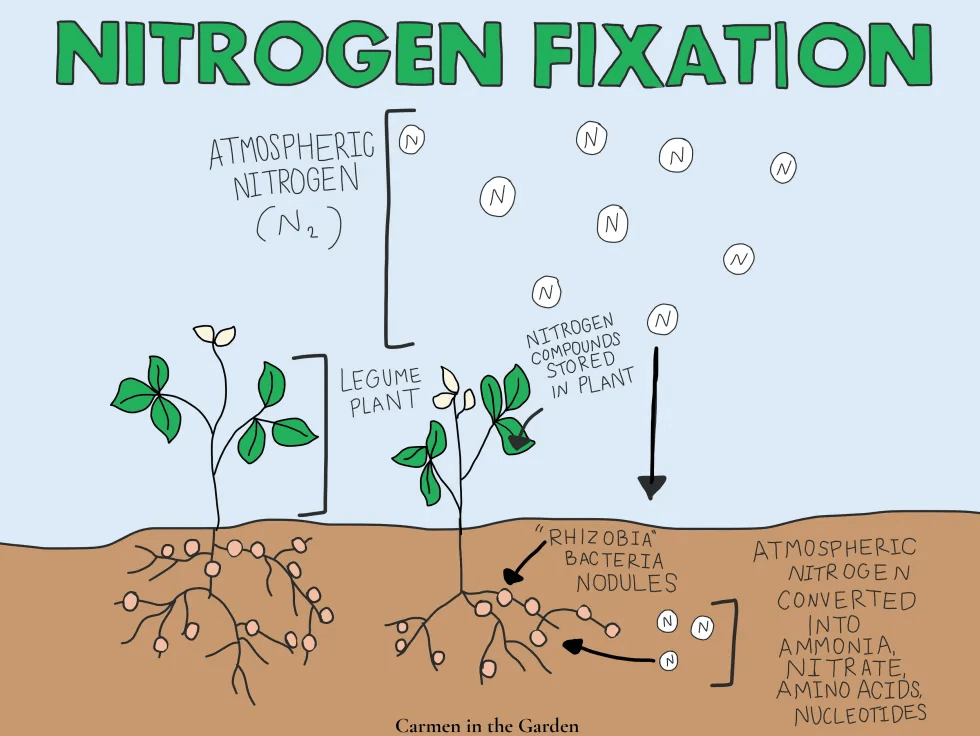
Beneficial bacteria
My research group is investigating how legumes can engage with beneficial bacteria and avoid disease-causing microbes. While bacteria like the rhizobia in these root nodules help plants source nutrients, other soil microbes including bacteria and fungi could cause disease and prevent plants from converting as much nitrogen. So the plant must have a defence mechanism that keeps disease-causing microbes at bay. This may also prevent it from fully engaging with beneficial bacteria.
 Viewpoint: The US government and corporations are funneling billions into cover crop research to combat climate change. Is the money and the hype worth it?
 Breakthough Institute: Are cover crops the silver bullet to reduce agricultural carbon emissions as regenerative-farming enthusiasts claim? Time for a rethink



Our team of researchers has identified potential factors that limit nitrogen fixation in the nodules of Medicago, also known as barrel medic or barrel clover. This legume is frequently used for research and not grown for consumption. By studying these limiting factors, we hope to improve the efficiency of nitrogen fixation without affecting the crop’s in-built defence mechanisms to protect it from disease.
Having studied this mechanism in the research legume, researchers are now studying a few relevant crop legumes such as soybean and cowpea to understand how widespread and applicable the underlying biological mechanisms are, and whether they can be harnessed to improve other pulses in the future.
Despite being some of the oldest domesticated crops, many legumes are much less adapted to farming and so have significant potential for further improvement through breeding and genetic engineering, making them more suitable and sustainable for modern food systems.
The benefits of more efficient nitrogen fixing in legumes would include greater growth and biomass and, we hope, higher protein content in the seeds or pulses. This would increase the nutritional value per crop, meaning more high-quality nutrient-rich food could be produced per hectare.
Higher yields would create new opportunities for small-scale and subsistence farmers to grow and benefit from legumes – such as soybean – as cash crops to improve rural livelihoods. More productive legumes could be more effective as a rotation crop that improves soil health, which is especially important for farmers dealing with degraded soil, such as those found across sub-Saharan Africa.
The more we know about this unique ability of legumes, the greater our chance of successfully developing other crops with a similar ability. Such a development, though some years away, could transform sustainable agriculture, especially in areas where access to synthetic fertiliser is already limited by cost and availability.
Extending nitrogen fixing to other crops has long been an ambition of crop scientists around the world and as the study of plant biology advances, the pulse of progress is quickening.
Sebastian Schornack is a senior research group leader in the Enabling Nutrient Symbioses in Agriculture (ENSA) project at the University of Cambridge. Find Sebastian on X @dromius
A version of this article was previously posted at the Conversation and is reposted here with permission. Any reposting should credit both the GLP and original article. Find the Conversation on X @ConversationUS



























