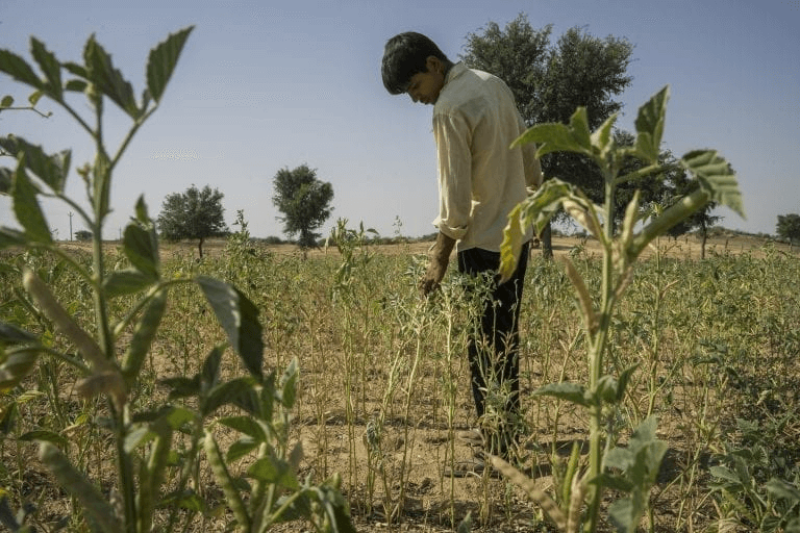

Climate change is bound to affect our food systems. The impact of rising CO2 levels may impact crop yields in complex ways like altering plant metabolism, changing soil fertility, erosion by pests and several others. Thus our food systems must be modelled for resilience in a warmer world.
Proteins are the building blocks of life. These proteins are synthesised upon activation of certain genes in the plant or animal cell. One of the biggest mysteries of life on earth is to understand what triggers the synthesis of a particular protein in a cell and how a protein molecule is shaped in 3-D, as this understanding helps in determining the protein’s function and how it would interact with other such molecules to create organ structures or say an enzyme.
AI tools like Google’s AlphaFold attempt to predict these 3-D structures of protein molecules by reading the cellular codes in the form of amino acid sequences. It’s quite similar to imagining a complex machine and its functionality, say an automobile engine, merely by reading the instruction booklet meant for its assembly. No doubt an AI-enabled enhanced and faster understanding of life’s fundamental systems like the protein structures can help in the creation of more resilient crop varieties.