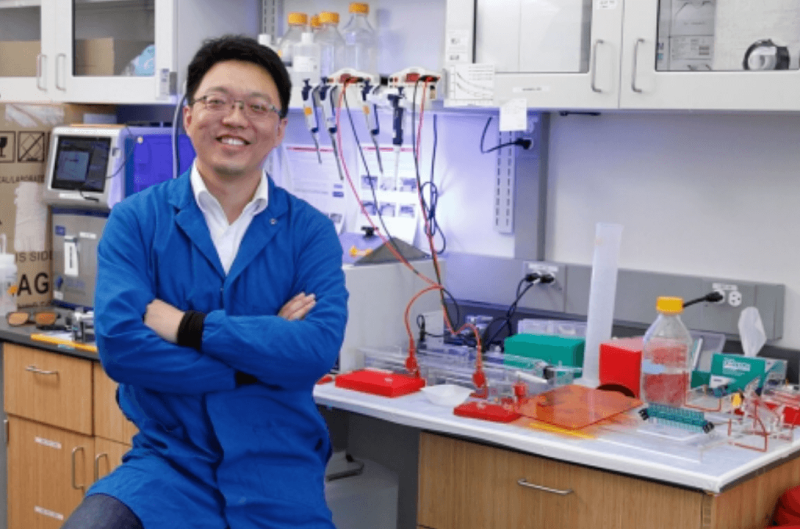
Over the past decade, CRISPR has taken the biomedical world and life sciences by storm for its ability to easily and precisely edit DNA. Here, Stanford University bioengineer Stanley Qi explains how CRISPR works, why it’s such an important tool, and how it could be used in the future.
How far has CRISPR technology come since it was created?
The short answer: In about a decade, scientists went from wondering if this technology would even work in human cells to getting the first CRISPR drug approved uses in the clinic.
…
What do you think CRISPR is capable of doing in the future?
The short answer: It could help improve the quality of life as we age, engineer useful organisms, and even serve as a universal vaccine against viruses.

Qi: I’m excited by CRISPR possibly helping anti-aging, but less in the sense of making people live longer. No one can escape aging, and it’s a huge burden to our healthcare system and decreases the quality of life. My hope is that in the future, CRISPR isn’t just being used to save lives, but also to improve the quality of life when people age.
I also hope CRISPR can become a way to engineer a lot of useful life forms. For example, there are microbes that can capture solar energy and convert it to electricity, and maybe those could be used to produce sustainable energy. Additionally, we could engineer food that’s more nutritious, prevents obesity, and so on.