Are you a night owl? Genes from our Neanderthal ancestors could be responsible for the way we sleep

Credit: James Wheeler

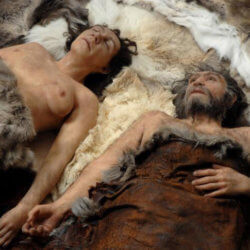
In a paper published in Genome Biology and Evolution, scientists suggest that genes from our oldest relatives could be responsible for the way we sleep.  Though many Neanderthal genes have been lost to the winds of evolution, researchers think that for some people, their waking times might come straight from the Middle Paleolithic age.

Follow the latest news and policy debates on sustainable agriculture, biomedicine, and other ‘disruptive’ innovations. Subscribe to our newsletter.

Only about 4% of human genes today come from Neanderthals. That’s because they’re a different species to modern humans, and while there was some crossover between the two, Neanderthal genes have mostly faded over time.

The researchers found out that modern humans and Neanderthals had different genes that affected people’s circadian rhythm, or “body clock.”

They found that not only did plenty of people still carry the Neanderthal variant, but they also discovered that those with the gene tended to be morning people.

The researchers suggest that it could be due to the light and lifestyles in which Neanderthals lived. It’s not so much that getting up early was good for Neanderthals, they say ― but adapting quickly to changing light levels could have been helpful.


This is an excerpt. Read the full article here

{{ reviewsTotal }}{{ options.labels.singularReviewCountLabel }}
{{ reviewsTotal }}{{ options.labels.pluralReviewCountLabel }}
{{ options.labels.newReviewButton }}
{{ userData.canReview.message }}

Related Articles

Infographic: Global regulatory and health research agencies on whether glyphosate causes cancer

Infographic: Global regulatory and health research agencies on whether glyphosate causes cancer

Does glyphosate—the world's most heavily-used herbicide—pose serious harm to humans? Is it carcinogenic? Those issues are of both legal and ...

Most Popular

Screenshot-PM-24
Viewpoint: The herbicide glyphosate isn’t perfect. Banning it would be far worse.
d-b
Blocked arteries, kidney stones, nausea, constipation, fatigue: Long list of health problems caused by too much vitamin D 
79d03212-2508-45d0-b427-8e9743ff6432
Viewpoint: The Casey Means hustle—Wellness woo opportunism dressed up as medical wisdom
ChatGPT-Image-Mar-10-2026-01_39_01-PM
Viewpoint—“Miracle molecule” debunked: Why acemannan supplements don’t work
ChatGPT-Image-Mar-27-2026-11_27_05-AM
The myths of “process”: What science says about the “dangers’ of synthetic products and ultra-processed foods
ChatGPT-Image-Apr-30-2026-12_21_05-PM-2
The tech billionaires behind the immortality movement
ChatGPT-Image-Apr-30-2026-05_00_48-PM
Wellness grifter physician turned wellness influencer out as surgeon general nominee

Sorry. No data so far.

glp menu logo outlined

Get news on human & agricultural genetics and biotechnology delivered to your inbox.