A recent research article— “Crop yields fail to rise in smallholder farming systems in sub-Saharan Africa” — uses 7 models, 6 equations, and 29 pages of supporting online material to support the title’s claim. The same conclusion was reached for maize, the major food crop in Africa, by US Department of Agriculture scientists using publicly available data. (The PNAS paper did not cite the USDA paper – citation amnesia?)
Neither paper abalyzed why yields have stagnated. U.S. President Teddy Roosevelt once said: “Complaining about a problem without posing a solution is called whining.
Why are African farmers and governments not embracing the best farming tools?
There have been decades of conventional breeding efforts by two major international breeding organizations in Africa and by national breeding programs and pan-African seed companies. The breeders had come up with new varieties that had much higher yields under their ideal testing conditions. Two African scientists—Drs Peter Mbogo and Fred Kanampiu, have partnered with molecular biologist Prof Paul Christou and me to analyze why African farmers are mostly not using the most advanced agricultural tools available. Our analysis has just been published in Pest Management Science.
The typical African field is affected by two or more biotic constraints such as stem borers, armyworms, weeds such as the parasitic Striga, a variety of pathogens, including those producing mycotoxins both pre-harvest and in storage, as well as virus diseases. The increasingly erratic climate in Africa exacerbates these stresses. Even when high-yielding varieties are resistant to one or two of these, the traits are typically polygenic and/or recessive. They are hard to cross into locally adapted material and harder yet to stack the many needed traits that are inherited that way.
 Viewpoint: Why Washington should sharply increase funding for intensive agricultural to address climate change, spur sustainability
 Leaked European Commission document recommends softening EU regulations of gene edited crops and other products of New Genomic Techniques: “The current EU GMO regulation is not fit for purpose”


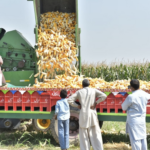
Farmers calculate that it is not worth buying fertilizer if their crop will be decimated by one or more of these biotic constraints or droughts. In a just-out paper, we propose to utilize the vast array of well-proven transgenes, most of which are already commercially used in the West to control the biotic stresses and drought, and stack them in a single locus. This can be done using the combinatorial biolistic transformation system pioneered by the Christou group. The dominantly inherited multi-resistance trait single locus can be crossed into locally-adapted, elite high-yielding material, and would be valuable for farmers, vastly increasing maize yields, and allowing for more than regional maize sufficiency.
Unfortunately, proposing a solution does not alone solve the problem. That will take a decade of work by an academic-industry consortium to achieve widespread commercialization. And then only after such a consortium to perform the necessary R4D is funded. The time is ripe, as African governments have begun to realize, to embrace transgenics to address these problems.
Jonathan Gressel, Professor of Plant and Environmental Sciences at the Weizmann Institute of Science, co-authored with Dr. Peter Mbogo and agronomist Dr. Fred Kanampiu in Kenya, and molecular biologist Prof. Paul Christou in Spain.