The threat of biological conflict is rising. Are we prepared?

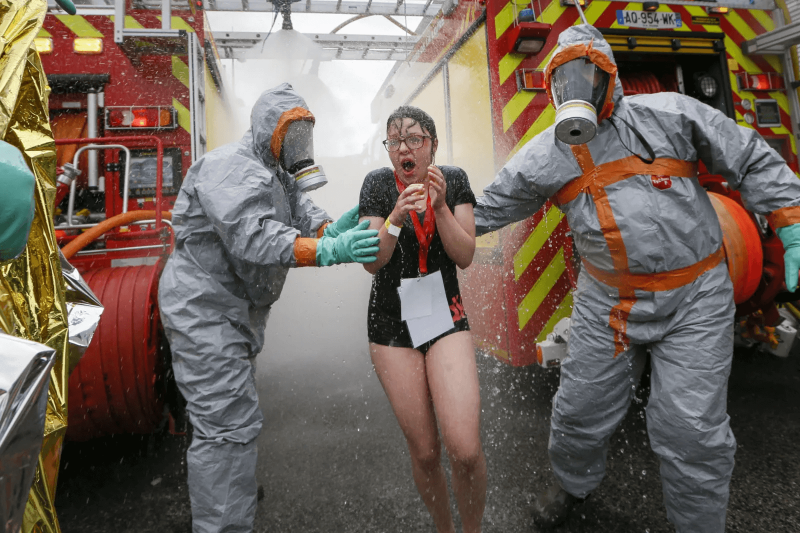
Be prepared: first responders during an emergency exercise, Saint-Étienne, France, April 2016 Credit: Robert Pratta/Reuters

The coronavirus, [Roger Brent (professor of basic sciences), T. Greg McKelvey Jr. (adviser to the Rand think tank) and Jason Matheny (Rand’s chief executive)] writes, was “an unthinking adversary” that probed the world’s defenses against new pathogens. Considering the toll the pandemic took in lives and social disorganization, imagine the “remarkably deadly” pathogens that thinking adversaries might design using rapidly advancing knowledge of molecular and human biology: “In a worst-case scenario, the worldwide death toll might exceed that of the Black Death” in the 14th century that killed 1 in 3 Europeans.

Follow the latest news and policy debates on sustainable agriculture, biomedicine, and other ‘disruptive’ innovations. Subscribe to our newsletter.

Brent, McKelvey and Matheny warn that for would-be terrorists, biological engineering, vastly accelerated by artificial intelligence, “could ease the path to mayhem”

Brent, McKelvey and Matheny urge “hardening” societies: developing “warning systems” to detect engineered diseases. (The coronavirus might have been one.) And preparing to surge production of personal protective equipment, vaccines and antiviral drugs. The world must “develop the ability to vaccinate its eight billion people within 100 days of an outbreak — faster than it took the United States to fully vaccinate 100 million people against Covid-19.”


This is an excerpt. Read the original post here

{{ reviewsTotal }}{{ options.labels.singularReviewCountLabel }}
{{ reviewsTotal }}{{ options.labels.pluralReviewCountLabel }}
{{ options.labels.newReviewButton }}
{{ userData.canReview.message }}

Related Articles

Infographic: Global regulatory and health research agencies on whether glyphosate causes cancer

Infographic: Global regulatory and health research agencies on whether glyphosate causes cancer

Does glyphosate—the world's most heavily-used herbicide—pose serious harm to humans? Is it carcinogenic? Those issues are of both legal and ...

Most Popular

d-b
Blocked arteries, kidney stones, nausea, constipation, fatigue: Long list of health problems caused by too much vitamin D 
Screenshot-PM-24
Viewpoint: The herbicide glyphosate isn’t perfect. Banning it would be far worse.
79d03212-2508-45d0-b427-8e9743ff6432
Viewpoint: The Casey Means hustle—Wellness woo opportunism dressed up as medical wisdom
ChatGPT-Image-Apr-30-2026-12_21_05-PM-2
The tech billionaires behind the immortality movement
ChatGPT-Image-Mar-27-2026-11_27_05-AM
The myths of “process”: What science says about the “dangers’ of synthetic products and ultra-processed foods
ChatGPT-Image-Mar-10-2026-01_39_01-PM
Viewpoint—“Miracle molecule” debunked: Why acemannan supplements don’t work
ChatGPT-Image-Apr-30-2026-05_00_48-PM
Wellness grifter physician turned wellness influencer out as surgeon general nominee

Sorry. No data so far.

glp menu logo outlined

Get news on human & agricultural genetics and biotechnology delivered to your inbox.