How EU politics hold back one researcher’s quest to disease-proof rice

Credit: Rosalee Yagihara,

For over a decade, Vittoria Brambilla has been trying to improve crops’ quality, yields, and nutritional value. But the botany researcher at the University of Milan feared her studies might never see the light of day. Her initial problems were not scientific but political.

Italian farmers had long sought a variety of short-grained arborio rice that was resistant to blast, a devastating fungal plant pathogen that destroys enough rice globally to feed 60 million people each year. After years of work, Brambilla used CRISPR to create a new blast-resistant arborio rice variety called RIS8imo….

Follow the latest news and policy debates on sustainable agriculture, biomedicine, and other ‘disruptive’ innovations. Subscribe to our newsletter.
[However,] the Italian Parliament’s strict interpretation of 2003 European Union rules on genetically modified organisms (GMOs) meant that Brambilla couldn’t conduct any field studies of her new rice.

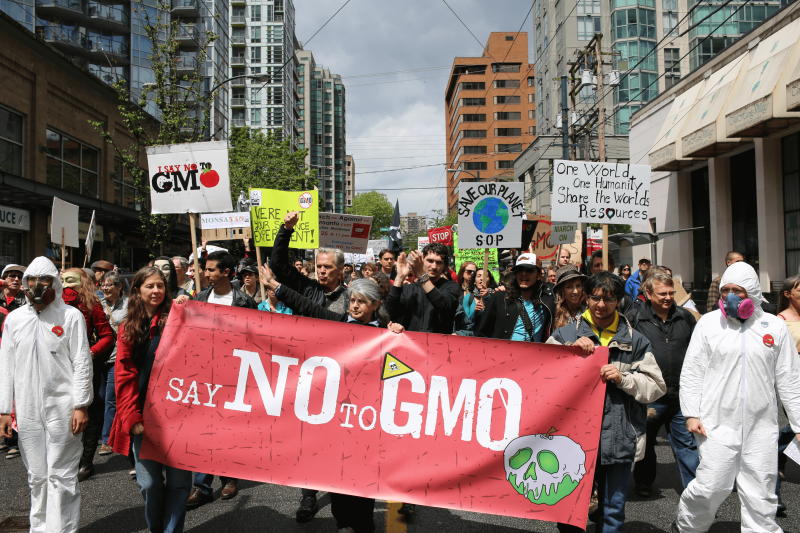
In 2023, after intense lobbying by farmers and scientists alike, the Italian government changed its law. Brambilla’s trial could go forward. The University of Milan scientists planted the rice earlier [in 2024], but protesters struck overnight, ripping all the plants out of the ground. For Brambilla, it was a stark reminder that policy changes around genetically modified crops, including those altered with new genomic techniques (NGTs) like CRISPR, don’t guarantee the public’s acceptance.


This is an excerpt. Read the original post here

{{ reviewsTotal }}{{ options.labels.singularReviewCountLabel }}
{{ reviewsTotal }}{{ options.labels.pluralReviewCountLabel }}
{{ options.labels.newReviewButton }}
{{ userData.canReview.message }}

Related Articles

Infographic: Global regulatory and health research agencies on whether glyphosate causes cancer

Infographic: Global regulatory and health research agencies on whether glyphosate causes cancer

Does glyphosate—the world's most heavily-used herbicide—pose serious harm to humans? Is it carcinogenic? Those issues are of both legal and ...

Most Popular

ChatGPT-Image-Jun-30-2026-01_09_47-PM
Viewpoint: As MAHA blows up over Supreme Court ruling limiting glyphosate litigation, Trump offers toothless plan to reduce pesticides in food
ChatGPT-Image-Jun-23-2026-12_19_35-PM
Ideological red flag: Led by anti-vax doctor, Tennessee is now the U.S. epicenter selling potent ivermectin shown worthless to prevent or treat Covid
Screenshot-2026-06-30-at-2.06.25-PM
PEW study: The sick state of American health information
Screenshot-2026-06-30-at-3.08.03-PM
From infrared sauna blankets to collagen gummies, here’s the top 10 social-media-promoted wellness shams
ChatGPT-Image-Jun-25-2026-12_23_17-PM
No, Bill Gates did not secretly engineer ticks to promote veganism
Screenshot-2026-06-30-at-10.43.50-AM
Viewpoint: Why are there no approved bioengineered insect-protected (Bt) apples?
photodune farming tractor s
Viewpoint: Glyphosate may be hazardous, but it is not dangerous as used by farmers. Critics of the Supreme Court’s Roundup ruling garble hazard with risk
ChatGPT-Image-Mar-10-2026-01_39_01-PM
Viewpoint—“Miracle molecule” debunked: Why acemannan supplements don’t work
ChatGPT-Image-Jun-30-2026-02_48_10-PM
Independent news review site launches free credibility and fact-vetted aggregation chatbot
Screenshot-2026-06-17-at-12.31.01-PM
Viewpoint: The dangerous influence of ‘woke’ post-modernism in science
marijuana-pot-in-hand-nveri-st-xpm-t-abq-fkifeos-s-rws-cmpx-
Facts & Fallacies podcast: Legalized weed drives drug addiction, psychosis?
ChatGPT-Image-Mar-4-2026-09_39_03-AM
Transgender female athletes and Title IX: Separating ‘policy’ from ‘legality’
Trans-flag
Explaining the Supreme Court ruling empowering states to ban transgender female athletes from competing in women’s sports
glp menu logo outlined

Get news on human & agricultural genetics and biotechnology delivered to your inbox.