Podcast:
Podcast: Play in new window | Download
Subscribe: RSS
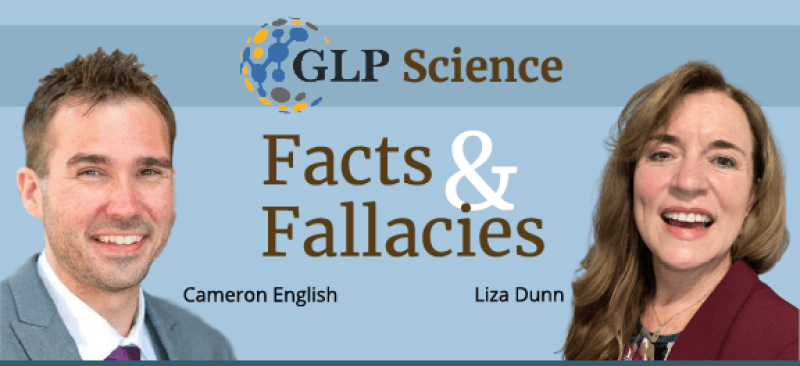
Join hosts Dr. Liza Dunn and GLP contributor Cameron English on episode 290 of Science Facts and Fallacies as they break down these latest news stories:
A growing body of research suggests that psychedelics could be far more effective in treating depression than existing therapies. This would be a welcome development, but there’s a major hurdle preventing the expanded use of these drugs: the research behind them isn’t very good. While anecdotal reports and some preliminary clinical data indicate that psychedelics could be promising mental health treatments, many of the studies investigating them are small and poorly designed, limiting their ability to provide critical evidence about the long-term risks and benefits of psychedelics.





An anonymous 64-year-old American woman ended her life in a forest on the Swiss-German last month using a “suicide pod.” Named after an ancient sarcophagus, the Sarco is a 3D-printed device that rapidly lowers the oxygen content inside a capsule that seats one person. As the amount of breathable air declines, the individual falls asleep and dies within a few minutes. This recent case of assisted suicide, which was apparently illegal, has reignited a latent debate over the ethics of allowing adults to voluntarily end their lives. Is it acceptable for doctors to help their patients kill themselves, or should a civilized society strive to do better?
With a looming shortage of primary care physicians on the horizon, several medical schools, with the financial support of a few billionaires, have begun to offer tuition-free education in the hopes of training more doctors. The goal of these programs is to incentivize physicians to practice in rural and urban parts of the US where health care access is limited. So far, though, the beneficiaries of this free education haven’t gone on to practice where their services are most needed, and they tend to enter specialties that pay more than primary care. If this approach didn’t boost access to health care, what other solutions could we try?
Dr. Liza Dunn is a medical toxicologist and the medical affairs lead at Bayer Crop Science. Follow her on X @DrLizaMD
Cameron J. English is the director of bio-sciences at the American Council on Science and Health. Visit his website and follow him on X @camjenglish