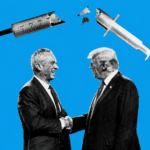
That’s especially true in recent weeks, where RFK Jr., Vani Hari, the Means’ siblings, and various podcast influencers have aligned themselves with the Trump campaign under the guise of “Make American Healthy Again” (MAHA) – insinuating that the Democratic party doesn’t care about the health of Americans. I’ve discussed some of the actions of these individuals and why they are objectively not concerned about the health of Americans here and here and here.
Now, I also have issues with some Democratic party policies, especially when they are influenced by anti-science activist groups like EWG, Consumer Reports, [and] Greenpeace; for example, performative “food dye bans” in California, so let’s not pretend they are always aligned with science either. But, recent headlines are yet another example of Trump and his policy positions are absolutely not going to make us healthier – because, if you recall, he already enacted things that are demonstrating that.
Let’s talk about recent reports of foodborne illnesses, such as Listeria and E. coli.
Disease-causing microorganisms are everywhere, but modern food production tools help keep us safe.
 Microbial pathogens are everywhere on the planet: in our soil, water, … wild and domestic animals, in people. As such, public health initiatives have been aimed at reducing potential sources of exposure to these microorganisms that can cause illness by implementing biomedical tools into our society.
Innovations like pasteurization, sterilization, refrigeration and freezing, antibiotic treatment of sick animals, vaccination, irradiation, water treatment and sewage, food storage and cooking regulations, and food processing have all improved the safety of our foods and as a result, our health.
Considering that there are over 335 million Americans in the country, we are incredibly fortunate that our food supply is the safest it [has] been in the history of our society. Unfortunately, misinformation and undermining the very infrastructures that were put in place to ensure this is jeopardizing this safety.
But when steps are skipped or when corners are cut, the increased risk that we are exposed to these disease-causing microbes increases. And that is something that the Trump administration did, which is a major contributing factor to recent outbreaks of dangerous pathogens like Listeria and E. coli.
Listeria monocytogenes is the bacteria that causes listeriosis.
Does it feel like every week you’re hearing about a food recall due to Listeria, or reports of people being sickened?
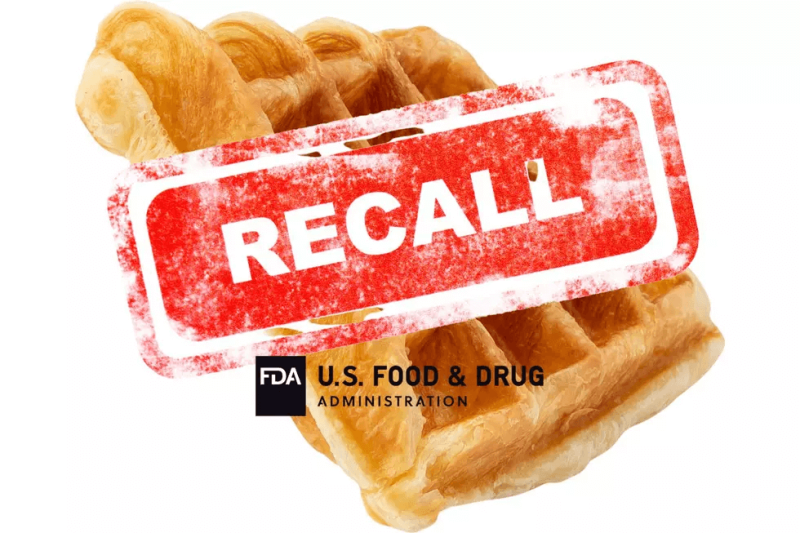
[In 2024], we have had several high-profile contaminations due to Listeria, including one that started in July [and] was traced to Boar’s Head brand liverwurst prepared at the Jarratt, Virginia plant. This impacted meats sold at deli counters across 13 states — resulting in 59 hospitalizations and 10 deaths. The Jarratt facility has since been closed and the liverwurst product is discontinued permanently.On October 18th, another recall was announced by TreeHouse [F]oods that impacts numerous brands of frozen waffles, all of which may contain Listeria. They report that a potential source of contamination was discovered during [an] inspection at one of their manufacturing facilities. Currently, no illnesses have been reported.
How do these foods get contaminated in the first place?
Listeria monocytogenes is everywhere in our environment.
Listeria is shorthand for Listeria monocytogenes, a hardy bacterium that causes listeriosis, a potentially severe foodborne illness. Listeria monocytogenes is found worldwide, … everywhere from soil to water to animal feces, and can cause illness in humans and other animals.
Unlike many bacteria, Listeria can survive harsh environments and is quite difficult to eradicate. For example, L. monocytogenes can survive freezing – and while it won’t reproduce when frozen, it will go on its merry way as soon as that temperature gets above 0°C (32°F). Listeria can also survive and reproduce in refrigerator temperatures and without oxygen, so even if you have some vacuum-sealed products in your fridge – if they were contaminated because of poor food production processes, those bacteria have a nice cozy home there.
This makes Listeria a particular concern with regard to foodborne illness because once something is contaminated with Listeria, it can be very challenging to control if the bacteria contaminate foods or common food prep areas.
Thankfully, Listeria is not invincible. While it can withstand cold, it is no match for heat or disinfectants which is why food production, preparation, and hygiene [are] incredibly important to prevent infection and illness.

Listeria can contaminate many foods, especially if improperly manufactured, processed, or stored.
Since Listeria is ubiquitous on the planet, it can theoretically contaminate anything, but common sources are:
- Unpasteurized food products (remember: heat can kill these bugs) including unpasteurized milk, dairy products, and juices (I wrote about the dangers of raw milk here) unpasteurized juices
- Raw meat (sorry carnivore bros, here is another demerit on your “diet plan”)
- Ready-to-eat deli meats and meat spreads
- Smoked seafoods
- Raw sprouts, leafy greens, and other produce items contaminated during processing or storage
- Soft cheeses are also associated with Listeria, particularly if they are made from unpasteurized milk
- Food prepared and handled at grocery stores, including deli meats and ready-to-eat products, especially if stores do not implement appropriate disinfectant procedures, as Listeria can survive on stainless steel and other food preparation surfaces for weeks.
The recent outbreak linked to deli counters is a prime example of how Listeria can infiltrate food products that are consumed cold or with minimal further preparation.
Before you panic, Listeria outbreaks are not incredibly common, but they are a public health concern.
Since 2004, there have been between two and seven Listeria-related food recalls each year. Considering Listeria bacteria are everywhere in our environment, this relatively low number is not a sign of rampant danger but rather, an indication of how closely our food is monitored to keep it safe.
If you want to read more about symptoms and ways to protect yourself at home, read this article I wrote for PopSugar:
But what I want to focus on here is how our food supply is kept safe:

Food safety agencies help monitor, inspect, and ensure food production processes adhere to guidelines.
On a societal level, we have food safety agencies that set regulations for the processing and production of all foods, even fresh produce (remember, everything we eat is processed to some degree). In the US, several Federal agencies administer these:
The Food and Drug Administration (FDA) oversees roughly 80% of our food supply including processed foods (and food additives), produce items, and seafood. The FDA also enforces the Food Safety Modernization Act (FSMA) of 2011, which changed the approach of food safety to [the] prevention of foodborne illness rather than reacting to contamination. The FSMA includes key pillars such as standards for food packaging, processing, and production that are guided by science to reduce sources of contamination, increased FDA authority for mandating recalls of potentially contaminated foods and inspecting domestic and international food production facilities, increased oversight on international imported foods, and improving science-based standards for regulations related to food safety.
The United States Department of Agriculture (USDA) regulates meat, poultry, and egg products through the Food Safety and Inspection Service. USDA scientists conduct routine inspections of slaughterhouses, processing facilities, and meat/poultry imports, and also enforce hygiene regulations and food recalls.
The Centers for Disease Control and Prevention (CDC) performs surveillance of potential foodborne illness outbreaks and coordinates with USDA and FDA to launch investigations when outbreaks occur and implement methods to halt outbreaks and prevent future outbreaks.
All sounds great, right? But what people forget is that these are federal agencies, which means their resources, authority, and budget [are] dictated by the federal government. As such, when science is politicized, the ability of food safety agencies to do their job is impacted.
The Trump administration gutted several key features of these food safety agencies, putting us at risk for foodborne illness.
So, with an election coming up and Trump and his MAHA crew claiming they care about health and food safety, let’s remind you all that Trump actively eroding food safety during his previous administration. If he gets elected, he will continue to build on what he has already done.
Trump’s administration from 2017-2021 focused on deregulation, budget cuts, and reducing federal agency oversight on food safety.
The Trump Administration made several cuts to the FDA’s food safety budget.
In 2017, they proposed a 31% budget cut, reducing the entire FDA budget by $900 million. While not all of this was implemented (Congress pushed back), the overall budget was substantially cut. The FDA saw an 8% reduction in [the] food safety authority budget, of about [83 million dollars.] Another $109 million cut targeted food safety research, personnel, and academic partnerships.
Because of budget limitations, food safety inspections dropped by 33%, meaning fewer food production facilities were being inspected and fewer were then subjected to regulatory enforcement to ensure they were complying with food safety measures. State-level inspections which FDA contracts out for, also dropped by 17.1%.
Budget cuts also delayed the implementation of the key pillars of the FSMA, meaning that the FDA could not implement the preventive measures mandated by the law. This particularly impacted their ability to ensure small- and medium-sized food producers complied with legal provisions for food safety.
The Trump Administration also cut the budget of the USDA and relaxed the regulations on meat, poultry, and egg production.
The USDA’s budget was cut [by] 19%, an amount of $4.8 billion. Specifically, the Agricultural Research Service budget was cut by $161.5 million, which eliminated critical research projects related to foodborne illnesses.
Trump also implemented laws that allowed poultry and pork processing plants to increase line speeds: this means processing products at a faster rate, allowing more opportunities for contamination to occur, while also reducing the number of USDA inspections. For example, relaxed regulations allowed poultry lines … at 54 poultry processing facilities to increase their line speed from 140 birds per minute to 175 birds per minute. For pork processing facilities, regulations had a cap of 1,106 hogs per hour, but Trump implemented the 2019 USDA New Swine Inspection System, which removed any regulation, allowing pork processing facilities to process unlimited hogs per hour. And if you read the press release, you can see that his administration is dictating the verbiage to make this sound like a good thing. But it isn’t.
I’m sure you can imagine that increasing these speeds while also reducing the number of inspectors is a recipe for contamination, right?
His administration relocated the Economic Research Service (ERS) and the National Institute for Food and Agriculture to Kansas City, under the guise of “benefiting Americans,” when in reality, it was to cut costs. Additionally, they knew that many employees would not be able or willing to move from DC to Kansas City, which undermined the agency’s ability to do their jobs. As a result, nearly 60% of these teams had to quit their jobs, exacerbating the already strained teams.

The Trump administration dismantled the deputy commissioner for food safety position created during the Obama administration. The goal of all of these efforts is to remove the regulatory oversight and authority of our Federal government and food safety agencies, delay and prevent the implementation of preventive health [measures] to protect our food supply and our health, and shift the authority to the food production facilities.
And yes, … reduced funding and oversight for inspection, … means the FDA and USDA are unable to enforce laws and regulations to prevent outbreaks of pathogens like Listeria and E. coli. Instead of following science-based guidance, his administration was focused on eroding public health and increasing profits – at your expense.
Do not be fooled: Trump, MAHA, and the focus on eroding scientific agencies autonomy is not aligned with health. These people want LESS oversight and LESS regulation on food safety. These ideas they have will make us less safe.
Foodborne illness risks increase when corners are cut by those controlling the Federal Government.
If you truly care about health, about the safety of our foods, about the ability to ensure that we can have confidence in our public health measures, MAHA, Trump, and the GOP policies are in direct opposition to that. While the current administration [has] started to recover many of these cuts and personnel losses, that is a process that takes time. And unfortunately, if Trump wins the upcoming election, the safety of our food supply with only worsen.
Science is politicized when it is weaponized and undermined. Yes, that happens across ALL ideologies. But if you want to vilify our governmental safety agencies like the FDA, USDA, and EPA, you need to look at WHO is controlling them, their autonomy, the policies they are required to enforce, and their resources to do so.
Andrea Love, a microbiologist and immunologist, provides the facts (and the data!) on science and health topics. Dr. Love is a GLP contributing writer and editor. Many of her articles were posted originally, in whole or part, at Immunologic. Follow Andrea on X, Instagram, Threads, Twitter
A version of this article was originally posted at Immunologic and has been reposted here with permission. Any reposting should credit the original author and provide links to both the GLP and the original article.