Viewpoint: Here’s why gene drives are crucial to fight malaria-carrying mosquitoes

Credit: NIH
Credit: NIH

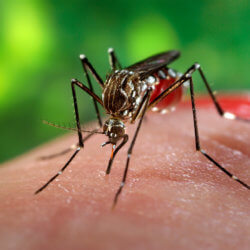
Mosquitoes carry some of the world’s deadliest diseases … but challenging geography, conflict, budgets, and insecticide resistance are among the issues hampering efforts to fight them. With global malaria cases continuing to rise and the climate crisis hastening the spread of virus-carrying mosquitoes into more countries, scientists are searching for low-cost, equitable ways to stop them [from] transmitting disease.

Could harnessing gene drive – a process that can rapidly spread a genetic modification – be the answer?

Follow the latest news and policy debates on sustainable agriculture, biomedicine, and other ‘disruptive’ innovations. Subscribe to our newsletter.

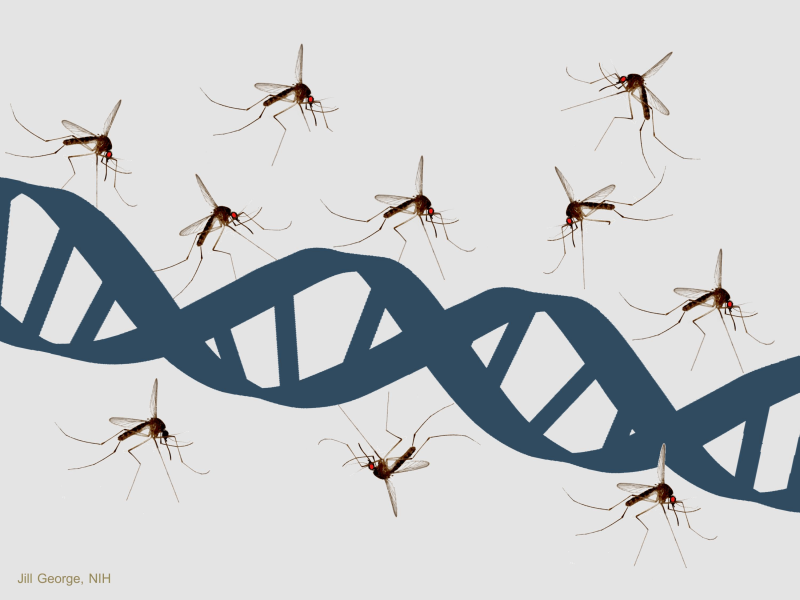
In broad terms, genetic modification is where scientists make changes to certain genetic characteristics, such as the ability of mosquitoes to carry the malaria-causing parasite. Whereas in an (artificial) gene drive, scientists alter the way genes are passed between generations to prioritise the spread of a certain gene.
By pairing these processes, scientists can spread desired genetic modifications – potentially throughout an entire species.


This is an excerpt. Read the original post here

{{ reviewsTotal }}{{ options.labels.singularReviewCountLabel }}
{{ reviewsTotal }}{{ options.labels.pluralReviewCountLabel }}
{{ options.labels.noReviewsLabel }}
{{ options.labels.newReviewButton }}
{{ userData.canReview.message }}

Related Articles

Infographic: Global regulatory and health research agencies on whether glyphosate causes cancer

Infographic: Global regulatory and health research agencies on whether glyphosate causes cancer

Does glyphosate—the world's most heavily-used herbicide—pose serious harm to humans? Is it carcinogenic? Those issues are of both legal and ...

Most Popular

Picture1
Hiroshima at 81: America’s new nuclear bomb, a buried Iranian target, and a question no one wants to ask
ChatGPT Image Jul 29, 2026, 10_14_27 PM
After muzzling RFK, Jr. over autism-vaccine conspiracy theories, Trump defies aides to push scares again
ChatGPT Image Jul 29, 2026, 05_50_04 PM
Fear, science, and the law: If talc powder is unlikely to cause cancer and J&J was winning in court, why did it pay more than $5.5 billion to settle?
Screenshot 2026-07-29 at 1.03
Two food fads that have some merit: Chia seeds in almost everything and protein added to water
ChatGPT-Image-Mar-10-2026-01_39_01-PM
Viewpoint—“Miracle molecule” debunked: Why acemannan supplements don’t work
ChatGPT Image Jul 29, 2026, 06_26_01 PM 2
Facts & Fallacies podcast: Organic food myths make a comeback on Instagram, with Dr. Kevin Folta
Screenshot-2026-07-09-at-1.09.25-PM
Anti-vaccine myths rattle health care
Screenshot 2026-07-22 at 1.38
Viewpoint: Are the U.S. and Europe headed towards a repudiation of agricultural biotechnology red tape?
Screenshot 2026-07-28 at 3.22
Hidden hunger: Climate change is speeding up the decline of important nutrients in our food
Screenshot 2026-07-28 at 3.43
Fat cat? GLP-1 weight loss drugs for animals are on the horizon
ChatGPT Image Jul 29, 2026, 10_31_48 PM
Bowing to Congressional pressure, Kennedy reverses himself and releases $600 million that helps developing countries buy and distribute vaccines
organic scaled
Facts & Fallacies podcast: Organic food cuts pesticide exposure? A response to Dr. Rhonda Patrick
Screenshot 2026-07-28 at 3.03
What is cyberchondria?
ChatGPT-Image-Jul-10-2026-09_42_12-AM-1
Peptides, patient autonomy, and the limits of medical freedom
glp menu logo outlined

Get news on human & agricultural genetics and biotechnology delivered to your inbox.