Evidence-based government policymaking should not be politicized but should strive to promote progress and benefit all Americans. Unfortunately, the expertise needed to formulate sound policy and make wise decisions is unlikely to come from many of President-elect Trump’s appointees.
Innumerable agencies and departments work together to guide federal science and technology policy. When accounting for sub-agencies, more than 20 major agencies and entities are involved with contributing to research, regulation, public health, or emergency response.
Many of the names are familiar to policy wonks: the Surgeon General, White House Office of Science and Technology Policy (OSTP), Department of Health and Human Services (HHS), Centers for Disease Control and Prevention (CDC), Food and Drug Administration (FDA), Nuclear Regulatory Commission (NRC), Environmental Protection Agency (EPA), Fish & Wildlife Service (FWS), Occupational Health and Safety Administration (OSHA), National Institute for Occupational Safety and Health (NIOSH), National Institutes of Health (NIH), Department of Defense (DoD), Department of Energy (DoE), and on and on.
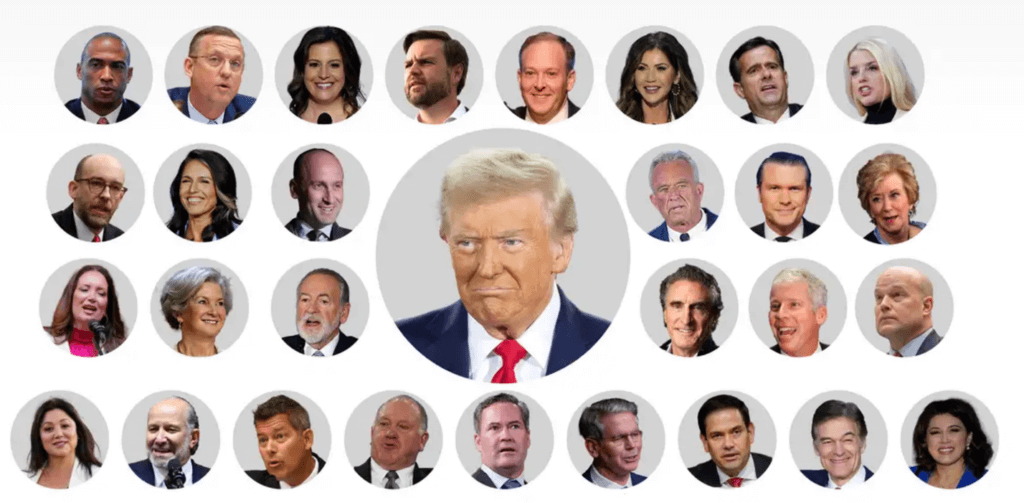
Maybe it is futile to propose sense at a time of nonsense and intense political partisanship, but we must hope that President-elect Donald Trump takes these appointments seriously and doesn’t assume he knows more about science than scientists. The first signs are not encouraging. This was Donald Trump, Jr. on Fox & Friends:
I want to make sure now that we know who the real players are, the people who will actually deliver on the president’s message, the people who don’t think that they know better than the duly elected president of the United States” (emphasis added).
What does that say about respect for independent advice and scientific and technological expertise? The President-elect does not have a good record of listening to experts. He is prone to framing all issues in political or personal terms. His former National Institute of Allergy and Infectious Diseases head and Chief Presidential Medical Advisor Dr. Anthony Fauci, and former White House Coronavirus Response Coordinator Dr. Deborah Birx, know all too well what it’s like to get thrown under the ideological bus.
Scylla and Charybdis
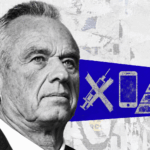
There is every reason to be concerned. The President-elect’s approach to scientific and medical advice seems a lot like a choice between Scylla and Charybdis: either Trump’s unschooled views or those of his proposed advisors, like unhinged anti-vaccine ideologue Robert F. Kennedy, Jr. (Secretary of HHS), Dr. Mehmet Oz (Centers for Medicare and Medicaid Services), Dr. Marty Makary (FDA), Dr. Janette Nesheiwat (Surgeon General), or Dr. David Weldon (CDC). These unqualified or poorly qualified nominees could have calamitous consequences for the nation’s public health if confirmed.
Nautilus and the Aspen Institute asked eminent scientists from across the country to offer recommendations for the new administration’s science and technology agenda. Many of these advisors called for additional investment in science, arguing that research is more essential than ever for navigating the complex challenges facing the nation, particularly one marked by deep political divisions.
In his introduction to the report, Dr. Aaron F. Mertz, Executive Director for Science and Society at the Aspen Institute, focused on what he characterized as a recent surge in anti-science propaganda and disinformation:
Our respondents see the rise of anti-science rhetoric as a dire threat to the future of the U.S. They raise alarm over growing irrationality and political manipulation of scientific facts in American society and around the world. This dangerous trend not only jeopardizes the country’s ability to advance knowledge but also undermines the capacity to confront global crises such as public health emergencies.
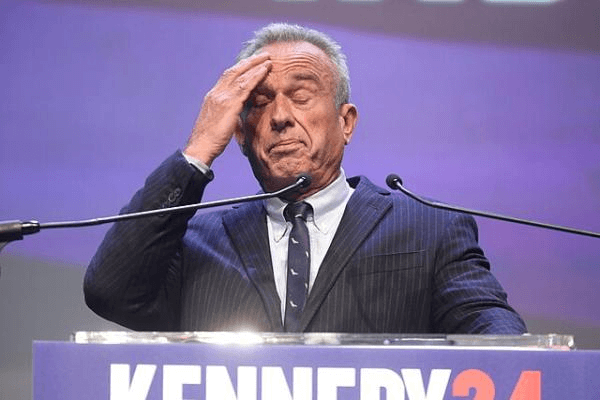
It’s noteworthy that those warnings came before then-candidate Trump gave all of us a glimpse of what he might soon do: unleash misguided and mendacious Robert F. Kennedy, Jr. “I’m going to let him go wild on health, to go wild on the food. I’m going to let him go wild on the medicines”.
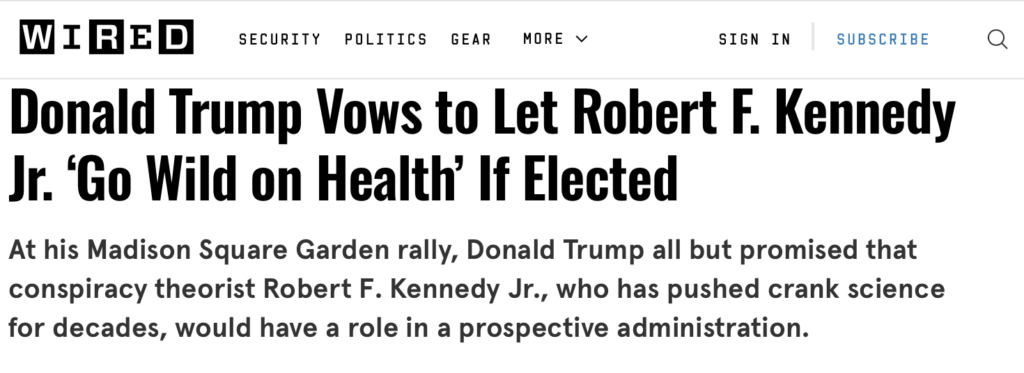
In his victory speech the morning after the election Mr. Trump reaffirmed his commitment to chaos. “He wants to do some things and we’re going to let him get to it. Go have a good time, Bobby!”
If Kennedy is confirmed by the Senate as Secretary of Health and Human Services, he would oversee the NIH, CDC, Centers for Medicare and Medicaid Services (CMS), and other health-related agencies. That is like appointing the president of the Flat Earth Society to head NASA.
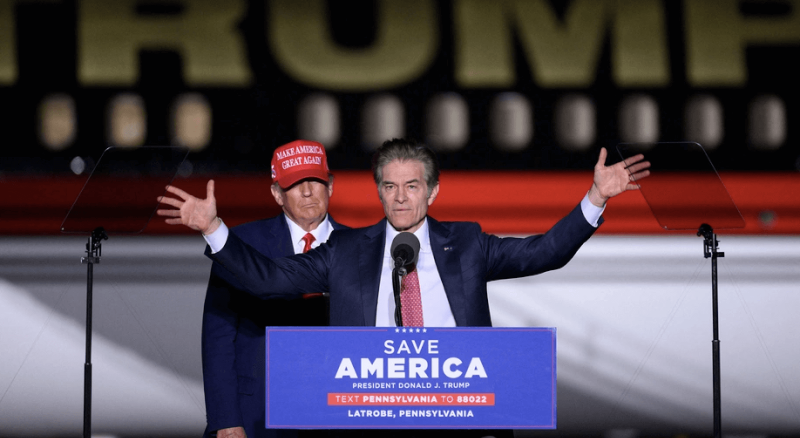
Dr. Mehmet Oz is barely better. The former talk show host has a lot of baggage. As reported in the New York Times:



He has sown misinformation — about Covid treatments, weight loss hacks and unproven supplements. He has invested in drug companies even as he has publicly taken aim at Big Pharma, and has profited from a medical device that he helped invent but that has been subject to several recalls.
Over roughly two decades in the public eye, Dr. Oz has drawn the ire of medical experts, members of Congress, and even his own peers, including 10 doctors (of whom I was one) who called for him to be fired from a faculty position at Columbia University, arguing he had shown a “disdain for science.” (The university appeared to quietly cut its public ties with him in 2022.)
COVID vaccine denialists
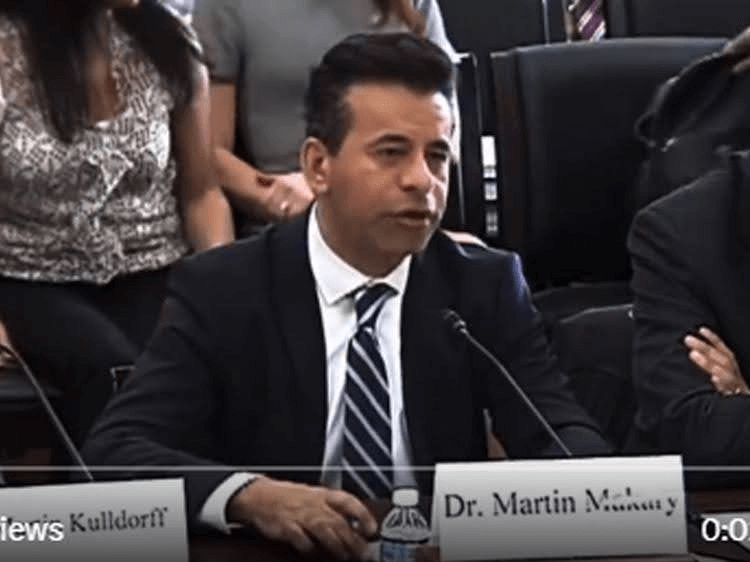
Dr. Makary was part of a misguided group of physicians who called for greater emphasis on herd immunity to end the pandemic and promoted the dangerous idea that mass infections would quickly lead to population-level protection. He has also criticized the supposed overprescribing of drugs, the use of pesticides on foods, and the alleged undue influence of pharmaceutical and insurance companies over doctors and government regulators.
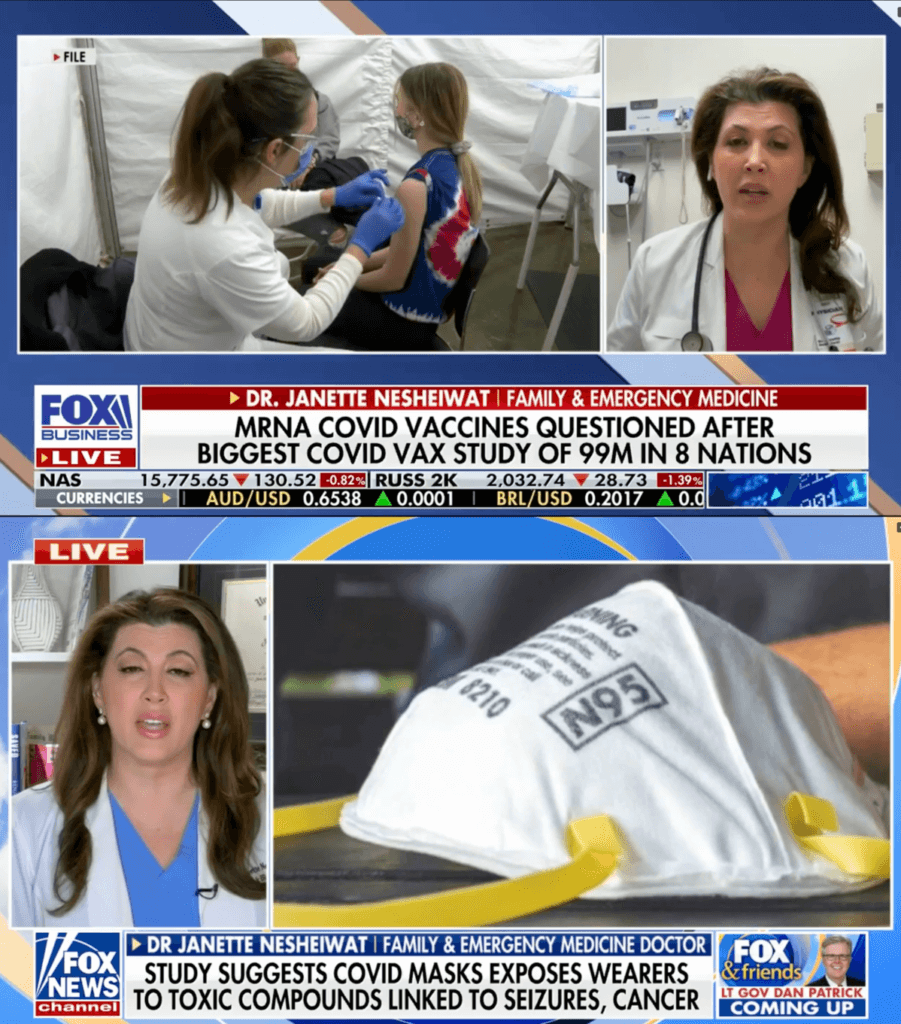
Dr. Nesheiwat, a family medicine physician, is bullish on vaccines but has questioned the necessity of masks:
Internist and former Congressman Dr. David Weldon, who has been nominated to head the CDC, would fit in well with the vaccine skeptics chosen to lead the other principal U.S. health agencies. As a member of Congress, Dr. Weldon raised questions about the measles, mumps, and rubella (MMR) and HPV vaccines and promulgated the myth that thimerosal, a preservative used in some vaccines, is responsible for a surge in cases of autism — a hypothesis without any basis. He also introduced a “vaccine safety bill” that would have transferred vaccine safety research from the CDC to another agency, because of a supposed “inherent conflict of interest.”
There was unintended irony in President-elect Trump’s statement announcing Dr. Weldon’s selection: “Given the current Chronic Health Crisis in our Country, the CDC must step up and correct past errors to focus on the Prevention of Disease.” How Dr. Weldon and the other healthcare-related appointees would square vaccine skepticism with the “prevention of disease” is problematic.
Stanford Medical School Professor Dr. Jay Bhattacharya has been nominated to become NIH director. He was one of the three authors of the infamous Great Barrington Declaration that called for intentionally letting COVID spread widely to induce “herd immunity.” He was consistently and spectacularly wrong about the COVID pandemic, claiming multiple times that it had been “defanged”: on April 14, 2021, May 3, 2021, July 21, 2021, July 28, 2021, and January 6, 2022.
Yale epidemiologist Dr. Katelyn Jetelina, who writes the “Your Local Epidemiologist Column,” captured the dismay of the scientific and medical communities at the choice of RFK, Jr. to head HHS:
For many of us who have devoted our lives to public health, science, and medicine—driven by an unwavering commitment to improving the health and well-being of Americans—this strikes deep. A mix of profound sadness, anger, exhaustion, and disbelief because the playing field has now completely shifted: Instead of pushing forward toward a healthier society, it’s now about keeping us from moving backward.
How do you express, in a few lines, the unsettling reality that someone with a catalog of lies so long is now tapped to be in charge of the public’s health? From his false claims that vaccines cause autism (they don’t), or that HIV does not cause AIDS (it does), or antidepressants are linked to mass shootings (they aren’t), or chemicals in water making kids trans (they don’t), or to Wi-Fi causing cancer (it doesn’t). The list of falsehoods feels endless.
Senate moderates may band together to block a few of the more extreme picks, but with the sheer number of unqualified nominations, some unfit selections are bound to squeak through. There have been rumblings about a Senate “McConnell Caucus” comprised of a handful of moderate Republican senators such as Mitch McConnell, Lisa Murkowski, and Susan Collins, who might block approval of unqualified appointees requiring confirmation — of whom Kennedy and Oz are the most obvious ones. (There are possible work-arounds, including “recess appointments,” that would enable the President to evade the Senate’s advise and consent role.)
Evidence-based government policymaking should not be politicized but should strive to promote progress and benefit all Americans. It will be essential to tap into genuine expertise to formulate sound policy and make wise decisions, but the first round of science- and health-related Trump appointments are not encouraging.
Henry I. Miller, a physician and molecular biologist, is the Glenn Swogger distinguished fellow at the American Council on Science and Health. He was the founding director of the FDA’s Office of Biotechnology. Find him on X @HenryIMiller