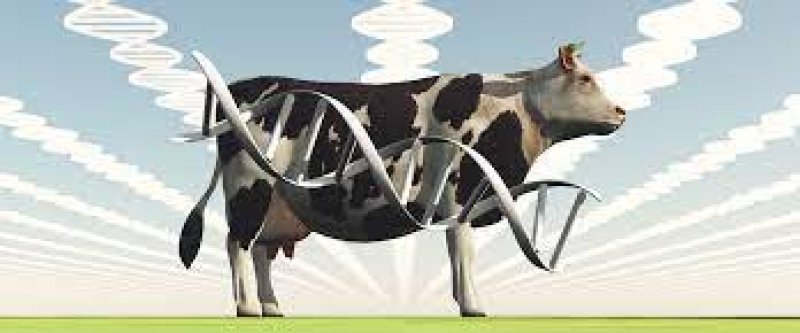

Modern genetics has enabled scientists to do much more: to make precise, targeted changes to the DNA of organisms in a lab. And that, they claim, will lead to new, more productive, disease-resistant crops and animals.
…
Dr Peter Stevenson, who is the chief policy advisor to UK-based Compassion in World Farming (CIWF), fears that the technology will further add to the intensification of animal farming – with negative consequences.
“The use of selective breeding over the past 50 years has brought a huge number of animal welfare problems,” he says.
…


“Do we really want to accelerate this process with gene editing?”
Any genetic alteration to an animal has the potential to have negative effects. But advocates say that for any commercial application, firms have to demonstrate to the regulator that their changes do not harm the animal and back this up with data.
Indeed, many of those who argue for the use of gene-editing technology do so partly on animal welfare grounds – because it could make farm animals more resistant to disease and, since fewer would die as a result, fewer would be needed in the first place.