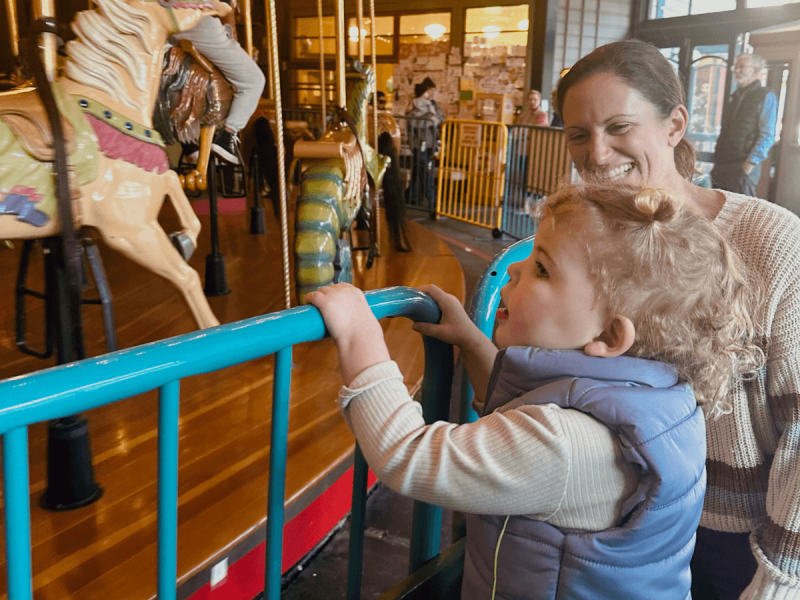

Lucy Landman was born with a very rare genetic disorder that causes severe intellectual disability, weak muscles, and seizures, among other symptoms.
There are only a handful of kids in the world with Lucy’s disorder, which is called PGAP-3 CDG [and there’s] no way to treat it. In principle, CRISPR, the gene-editing technique that enables scientists to easily make very precise changes in genes, could be a godsend for patients like Lucy….
“We’re lucky that both of her mutations — the one that she gets from me and the one she gets from my husband — are what we call base-editable,” says Landman, a pediatrician who lives outside San Francisco.


That means her mutations are good candidates for CRISPR, which could be used to “kind of cut out the wrong base pair and put back in the right one,” she says. Landman says she also feels lucky to live in 2024 when CRISPR treatments are “a legitimate possibility.”