In February 2020, an eclectic group of scholars published an important paper examining the range of possible contributions from synthetic biology to climate change solutions (DeLisi et al. 2020). Shortly afterward, the world’s leading science policy think tank, the Information Technology and Innovation Foundation, published a report discussing possible gene-edited solutions to climate change challenges (Giddings et al. 2020). Together, these papers paint a hopeful landscape rich with opportunities for solutions to many of the challenges of climate change. Taken together, they beg the obvious question: Which should be pursued first, and how can they best be galvanized? A subset of the authors of these two papers coalesced around this challenge. This volume is one result.
Contributors to this volume are a subset of the attendees at the last two meetings. The intent of the meetings was to discuss how best to demonstrate proof-of-concept for selected applications and start to flesh out plans to reduce them to practice at scale.
Each of the concepts described has considerable potential, within the foreseeable future, to reduce the amount of greenhouse gases entering the atmosphere, or to reduce the excess carbon now there. Cutting emissions is important but reducing atmospheric carbon concentrations is essential.
Even if humanity succeeds in eliminating carbon emissions altogether—difficult to do while keeping the population fed, housed, and clothed—there is still a large amount of carbon in the atmosphere beyond the capacity of earth’s natural ecosystem processes to absorb.
To remove such large amounts of CO2 from the atmosphere, we need technologies that will deliver at scale—very large scale—and economically. With applications like those described herein, and many more, this is tractable. But to do so, we need to do more than just innovate technologies. As emphasized by Marc Van Montagu in the Foreword (and in the chapter in this volume), we need to remove obstacles to such innovations in policies, law, and regulation.
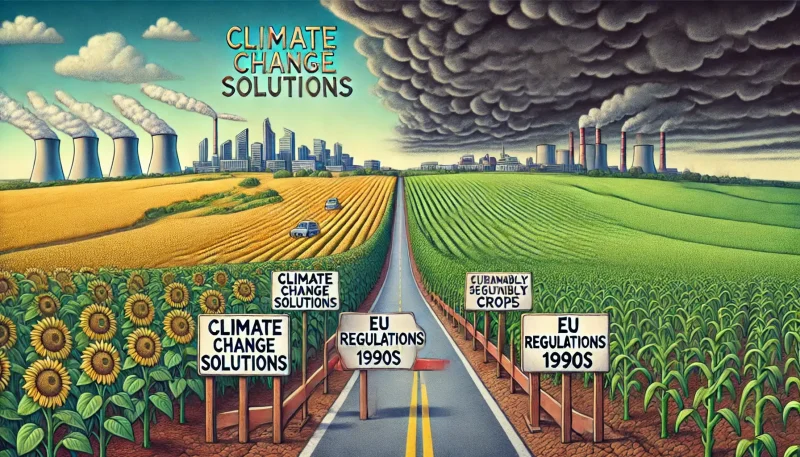
It’s time for countries around the world, including the United States, and especially the member states of the European Union, to set aside laws and regulations left over from the early days of the biotechnology revolution. They were driven by fears that have long been shown unfounded and a lack of understanding now thoroughly remedied by experience and must be replaced by policies that will enhance and enable innovations rather than impede them. The world waits.
The contributions in this volume describe specific projects with the potential to sequester or reduce emissions of greenhouse gases considerably and estimate the costs involved and the impact were the project deployed at scale. It is important to note that there are multiple opportunities for the projects to synergize with each other and other initiatives.
Charles DeLisi analyzes the expected impact of the $390 billion climate change component of the U.S. Congress’ Inflation Reduction Act H.R. 5376. Straightforward projections indicate that even if scaled to worldwide participation, the impact on atmospheric CO2 by the end of the decade will be inconsequential. This result highlights the need to include CO2 drawdown in any climate-mitigation/adaptation strategy, and to provide substantially greater support for creative solutions to energy generation.
Julie Gray describes research in her laboratory, which has successfully produced rice strains with fewer stomata and thus a decreased need for water. This is important for both adaptation and mitigation. With respect to the latter, water-intensive cultivation of rice leads to degradation of soil organic matter by methanogens and other fermenting bacteria, a process that releases methane and accounts for some 2.5% of anthropogenic CO2 equivalent emissions (Mboyerwa et al. 2022).
These emissions could be substantially alleviated by optimizing crops to reduce water loss and speed the much-needed shift from paddy rice toward dry seeded systems (Harlan and Pitrelli 2022; Caine et al. 2023). In collaboration with the International Rice Research Institute in the Philippines, novel rice varieties with reduced stomatal density have already been produced through gene editing and trait selection that could be field tested rapidly and adopted by farmers in the near future. The combined impact of enhanced rice drought tolerance, together with reduced methane emissions and energy savings from irrigation could reduce CO2 emissions by more than a Gt per year, with further reductions possible by application to other major food crops including maize, soybean, and rice as well as biomass crops like poplar and switchgrass.
Mary Lidstrom describes a plan for methane capture from air using aerobic methanotrophs. Methane has a warming impact 34 times greater than CO2 (on a 100-year timescale; 86 times greater on a 20-year timescale) and a relatively short half-life in the atmosphere (∼10 years). This makes it a key short-term target for slowing global warming by 2050. Lidstrom’s team is developing biofilter technology using bacteria that metabolize methane to remove methane from the air over emission sites, including agricultural areas, where methane is enriched compared to the atmosphere as a whole. This technology will be designed also to reduce production of another greenhouse gas, N2O, by limiting nitrate availability. By targeting tens of thousands of such sites, enhancing the current capacity of such technology, and envisioning a 20-year deployment, it would be possible to remove a total of 0.3 Gt methane (10 Gt CO2e) by 2050 (0.5 Gt CO2e/yr), resulting in 0.2o C less global
warming.
Lisa Stein is working with biological nitrification inhibitors and soil-free systems. While the Haber–Bosch process for N-fixation has enabled a stable food supply for half of humanity, the heavy use of synthetic fertilizers has caused a radical imbalance in the global N-cycle (Smil 1999). The resulting increases in nitrate production and GHG emissions have contributed to eutrophication of ground and surface waters, growth of oxygen-depleted zones in coastal regions, ozone depletion, and has exacerbated rising global temperatures. According to the Food and Agriculture Organization of the United Nations, agriculture releases approximately 9.3 Gt CO2 equivalents per year, of which methane and nitrous oxide account for 5.3 Gt CO2e, ∼10% of the total. N-pollution and slowing the runaway N-cycle requires a combined effort to replace chemical fertilizers with nitrification inhibitors based on biological formulations, which could significantly reduce agriculture-related GHG emissions, protect waterways from nitrate pollution, and soils from further deterioration. Stein’s team aims to bring biological nitrification inhibitors (BNIs) to the market to curb the microbial conversion of fertilizer nitrogen into greenhouse gases and other toxic intermediates. Worldwide adoption of these plant-derived BNI molecules in combination with biological fertilizers would substantially elevate nitrogen use efficiency (NUE) by crops while blocking the dominant source of nitrous oxide to the atmosphere. In addition to biological fertilizers and BNIs, a second project to curtail Npollution, soil erosion, and deterioration of freshwater supplies pursues the development of improved microbial inocula to increase NUE without GHG production in soil-free hydro- and aquaponics operations. The carbon cycle in these systems can be closed by including anaerobic digestion of solid waste followed by microbial conversion of methane into single-cell protein for fish feed.
Ken Nealson describes a project involving microbial acceleration of the natural process of silicate-carbonate mineral weathering as a method of atmospheric CO2 drawdown. There is general agreement that rock weathering via the conversion of basaltic (silicate) rocks to limestone-like carbonates offers an excellent (and irreversible) way to reduce atmospheric CO2 levels. The natural rates of such weathering reactions are slow, but Project Vesta is developing living microbial catalysts that greatly enhance the rate of this weathering. Preliminary work has shown major rate enhancement(s), and the project is now ready to begin screening and genetically engineering microbes to maximize the rate(s) at which they accelerate silicate weathering. The next step will be to scale up to 3000-liter batches, followed by medium and then largescale reactors. Vesta anticipates about 5 million tons of carbon removal per year with current supply partners, and after that there are sufficient mineral reserves and mine tailings to scale beyond the gigaton level in less than a decade. Their approach will encompass coastal, terrestrial (soil), and freshwater mineral enhancement, and include both reactor-based and in situ systems. Project Vesta has the capability to bring the described approach(es) to scale rapidly, using several laboratories and field stations where research is ongoing, together with an outstanding scientific, engineering, and administrative staff,
already working on permitting and other business issues.
Tobias Erb leads a large team looking for ways to improve photosynthesis beyond its natural limits. Plants generally use only about 1% of the sunlight that falls on them to make carbohydrates, consuming or “fixing” atmospheric carbon in the process. Research teams around the world are exploring ways to improve natural photosynthesis and have made considerable progress to date. But Erb and his colleagues are poised to make a quantum leap by radically reinventing photosynthesis using synthetic biology, enzyme engineering and machine learning to create innovative crops featuring a new-tonature CO2-fixation metabolism with photosynthetic yields increased by 20% to 60% ( potentially up to 200%). They have already demonstrated several synthetic pathways for improved CO2 fixation that are up to 20× faster than natural photosynthesis and require 20% less energy in the laboratory. Erb’s team is working to implement these new-to-nature solutions in microorganisms and plants to improve their CO2 uptake efficiency. Models suggest that their approach could lead to the ability to sequester upward of 3 Gt of CO2e annually, if applied to crops alone.
Xiaohan Yang proposes a three-pronged mutually reinforcing approach to carbon sequestration and climate change adaptation. This would involve increased photosynthesis, increased translocation of captured carbon, and increased soil capacity—and would, if successful, have a major impact.
The three objectives are (1) integrative engineering of CO2 capture, storage, and utilization in fast-growing poplar (which can be used as a feedstock for biofuels, biomaterials, and engineered for deeper roots and root architectures for increased carbon storage), (2) genetically enhanced agave-mediated carbon sequestration and utilization in dry and hot regions, and (3) the development of “care-free/climate-friendly” lawn grasses. It is noteworthy that increased production of agave would not only contribute to amelioration of malnutrition, which will become increasingly serious as the climate changes, but it would enable utilization of the planet’s 500 million acres of marginal land (arid and semi-arid) for production of agave and poplar, and for the sequestration of 18 Gt CO2e per year of atmospheric carbon. In addition, the crassulacean acid metabolism (CAM) photosynthesis pathway, which would be utilized, has the unique feature of high water-use efficiency due to daytime closure of stomata for reducing water loss mediated by transpiration, and night-time opening of stomata for CO2 uptake. More generally, CAM genes could also be engineered into C3 plant species to increase drought tolerance. Applying “care-free/climate-friendly” varieties of perennial ryegrass, tall fescue, Kentucky bluegrass, and fine fescue that are used in lawns, athletic fields, golf courses, etc., will lead to significant reductions in mowing frequency, fertilizer inputs, and water use, and could result in a greater than 90% reduction in emission of CO2, nitrous oxide, and methane associated with lawn care. Several studies have shown that greenhouse gas emission from lawn care, which includes fertilizer and pesticide production, watering, mowing, and other lawn care practices, is much greater than the amount of carbon stored by lawn grasses. Yang estimates that in the United States alone, lawn-care practices contribute at least of 41.3 million metric tons of CO2e.

Forest Biotech company FuturaGene ( parent company Suzano SA, Brazil) is focused on the sustainable enhancement of renewable plantation forest species. Plantation forests constitute only 7% of global forest area, but they provide ∼50% of industrial wood. Shortfalls of 1–4 billion m3 in industrial roundwood supply are projected by 2050, and the productivity of planted forests must triple by 2050 if global climate mitigation and adaptation targets are to be supported and destruction of natural forests prevented. FuturaGene proposes within the next 10 years to deploy genetic modification (GM) technologies (including direct yield enhancement and photorespiratory bypass) to plantation forestry across the subtropics to address those targets and they have the ability through parent company Suzano SA to do so at scale. FuturaGene has developed and obtained regulatory approval (in Brazil) for a direct yield-enhanced eucalyptus variety, which is ready for landscape-level testing (Riquelme 2015). Current carbon sequestration is estimated to be around 240 tons per hectare during a 7-year growth cycle (a 2015 desk study). A 12% increase in yield by either route would deliver 270 tons/ha/7 years. If yield enhanced lines were planted over the entire 1.2 million ha estate of Suzano, this would correspond to 324 million tons of CO2e per cycle. Across the entire Brazilian estate
of 9 million hectares, this would be 2.4 GtCO2e per cycle.
In my own contribution, I point out that while projects like these hold considerable GHG mitigation potential, the rate-limiting factor in their ability to sequester carbon is implementation, which is contingent on public acceptance. Policies, regulations, and business practices such as industry certification all create considerable barriers to development and deployment of innovative solutions developed with gene editing and genetic engineering. This is the case around the world despite the lack of scientific justification for such discrimination and in the face of massive experience demonstrating superior safety and sustainability of such technologies, and the lack of commensurate benefit from impeding policies and regulations. If the acceptance climate is not improved, these solutions will not be deployed. Pushing back against the concerted disinformation campaigns from special interests that have driven such discriminatory policies is difficult, particularly for governments, but independent, science-based voices are uniquely suited for the task. There are several entities with proven track records in this space, a handful of which are listed below.
- The Genetic Literacy Project (GLP), geneticliteracyproject.org;
- The Institute for Food Agricultural Literacy
(IFAL), ifal.ucdavis.edu; - The International Service for the Acquisition
of Agri Biotech Applications (ISAAA), www.isaaa.org/kc/default.asp; - PG Economics, pgeconomics.co.uk/publications; and the
- Information Technology and Innovation
Foundation (ITIF), itif.org/issues/agricultural-biotech.
There is agreement across several proposals that the optimal way to reduce CO2 is to improve biological productivity through crop engineering and increasing carbon fixation rates. There is also recognition that nitrogen use efficiency, as mediated by the soil microbiome, is essential to achieving this goal. To further decrease GHGs outside of crop systems, microbial processes including atmospheric methane oxidation and siderophore-mediated silicate weathering have been proposed. Organization to leverage the outputs of the projects described could center around the plant–microbe–geology axis with feedback between the atmosphere and hydrosphere. The idea would be to integrate implementation and monitoring of the proposed technologies to incorporate and include synergistic (and unintentional) effects across other ecospheres (e.g., biosphere, atmosphere, geosphere, hydrosphere). An organizational strategy that interconnects across systems would allow additional projects to be incorporated so long as the intention is to remain conscious of the interconnections and feedback. This strategy will also force us to keep in mind that systems necessarily work together and affect one another. We cannot afford to continue the age-old practice of changing one component of a system with the belief that nothing else will change in response!
Together, the total carbon sequestration capability of the projects described in this volume is estimated to begin at∼18 Gt CO2e. Given potential synergies and cooperation between them, supporting them as a group would yield greater benefits than selecting individual projects from a menu of discrete offerings, and sustained support over time with minimal bureaucratic burden would lead to the greatest returns on investment. None appears to be unduly hazardous. To quantify and evaluate their risks with precision is not easily done. It is important to remember, however, that the decisions that must be taken to develop and deploy such measures do not require understanding the absolute risks they may entail. These decisions depend instead on ascertaining the relative risks compared with the alternatives, including inaction. In medicine, high-risk experimental therapies can be justified when the alternative is terminal; we need to consider that we are on a road to irreversible and insufferable planetary warming unless we rapidly undertake bold and aggressive corrective actions.
We are grateful to all the contributors to this volume, which is made freely available electronically by generous financial support from the Bill and Melinda Gates Foundation. We also particularly want to acknowledge the support and encouragement of Rodger Voorhies, president, Global Growth and Opportunity Fund.
References:
Caine RS, Harrison EL, Sloan J, Flis PM, Fischer S, Khan MS, Nguyen PT, Nguyen LT, Gray JE, Croft H. 2023. The influences of stomatal size and density on rice abiotic stress resilience. New Phytol 237: 2180–2195.
DeLisi C, Patrinos A, MacCracken M, Drell D, Annas G, Arkin A, Church G, Cook-Deegan R, Jacoby H, Lidstrom M, et al. 2020. The role of synthetic biology in atmospheric greenhouse gas reduction: Prospects and challenges. BioDesign Res 2020. doi:10.34133/2020/1016207
Giddings LV, Rozansky R, Hart DM. 2020. Gene editing for the climate: biological solutions for curbing greenhouse emissions. https://www2.itif.org/2020-gene-edited-climate-solutions.pdf
Harlan C, Pitrelli S. 2022. A drought in Italy’s risotto heartland is killing the rice. https://www.washingtonpost.com/world/2022/07/22/italy-drought-2022-rice-risotto
Mboyerwa PA, Kibret K, Mtakwa P, Aschalew A. 2022. Greenhouse gas emissions in irrigated paddy rice as influenced by crop management practices and nitrogen fertilization rates in eastern Tanzania. Front Sustain Food Syst 6: 868479. doi:10.3389/fsufs.2022.868479
Riquelme L. 2015. FuturaGene’s genetically modified eucalyptus approved in Brazil. https://www.labiotech.eu/trends-news/futuragenes-genetically-modified-eucalyptus-approved-in-brazil
Smil V. 1999. Detonator of the population explosion. Nature 400: 415. doi:10.1038/22672
South PF, Cavanagh AP, Liu HW, Ort DR. 2019. Synthetic glycolate metabolism pathways stimulate crop growth and productivity in the field. Science 363: peaat9007.doi:10.1126/science.aat9077
Notes:
- Portions of this article are reprinted with permission from a piece previously published by the author on the ITIF website: itif.org/publications/2022/08/22/how-agrigenomics-can-help-address-climate-change.
Val Giddings received his Ph.D. in genetics and evolutionary biology from the University of Hawaii. Val is also president/CEO of PrometheusAB, Inc, and senior fellow at the Information Technology and Innovation Foundation. You can follow Val on X @prometheusgreen
A version of this article was posted at Information Technology and Innovation Foundation and Cold Spring Harbor Laboratory and is used here with permission. Check out Information Technology and Innovation Foundation on X @ITIFdc and Cold Spring Harbor Laboratory @CSHL