However, the science is not confirmed and there is no consensus among the scientific community that, if used properly, will cause human health issues.
Research has also shown that if your skin is exposed to it, only 2% is absorbed. And if, by chance you drink it, eat it, or inhale it, only 30% will be absorbed and you will eliminate it within 48 hours and 100% of any remaining residue will be gone within seven days. Is this absorption enough to be detrimental to human health?
What is Glyphosate?
Glyphosate, commonly known as Roundup, is one of the most popular and widely used herbicides on the farm and at home.
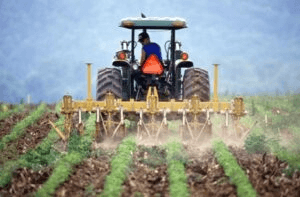
It doesn’t just kill weeds; it kills anything green, including farm crops such as corn, soybeans, cotton, canola, sugar beets, and alfalfa. These crops have all been genetically modified so that the farmer can spray glyphosate after the crop emerges from the ground and kill the weeds, but not the crop.
Glyphosate works by disrupting the shikimic acid pathway. This process allows plants to make certain proteins that they need for their growth. Humans and mammals get their amino acids by eating protein, while plants make them on their own.
When glyphosate is sprayed onto a plant, it is absorbed through the leaves, drops down into the roots and disrupts the plant’s ability to absorb nutrients from the soil. Thus, the plant cannot make its own proteins and dies.
Advantages of Glyphosate
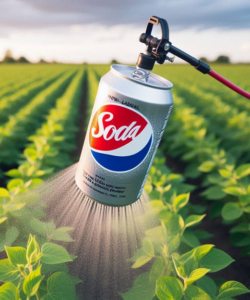
- Inexpensive and less toxic: The farmer only needs a small amount, about the size of a can of soda, per acre. Because so little is used, glyphosate is inexpensive compared to other herbicides. Also, glyphosate is less toxic than alternatives such as dicamba and atrazine.
- Increased Yield: Weeds compete with crops for sunlight and soil nutrients. By killing the weeds, the crops can thrive, thus increasing farmers’ yields while reducing crop losses. Without glyphosate, there would not be as much food produced as there is today. The farmer can also farm more acreage, thus producing a larger harvest and increased profits.
- Regenerative Agriculture: No-till farming means that the farmer doesn’t have to turn over the soil to kill the weeds. This also helps with climate change adaptability. No till farming gives farmers a great advantage as it preserves soil moisture, prevents erosion, reduces fuel consumption, reduces GHGs by ‘less iron on the ground’ and benefits insect diversity. No till farming also preserves the beneficial soil microbiota that provide nutrients for plants. Before glyphosate, no till was not very successful as the weeds took over the field.
Disadvantages of Glyphosate
- Glyphosate kills all plants: If it is sprayed near a non-GMO plant or crop, it will kill the plant or crop along with the weeds.
- Run-off: Glyphosate binds tightly to the soil, making it unlikely to reach deeper groundwater. However, since it lasts in the soil for 8 days, it can still run-off to a nearby watershed, along with the soil.
- Weed Resistance: Approximately 20+ weeds have developed resistance to glyphosate. Users must go to other, potentially more toxic, herbicides to mix with it to eliminate weeds.
- Trace amounts in food: Trace amounts have been found in various foods, which raises concerns for human health. To dry out wheat and oats before harvest, about 30% of farmers spray it to speed up the drying process. Trace amounts get into the processing facilities that make cookies, breads, etc. However, since we do not have a shikimic pathway, our bodies flush these trace amounts through via our urine. And we would have to eat about 1,000 loaves of bread a day to have a negative health effect.
- Health concerns while using: Even though the EPA and other organizations generally consider glyphosate safe when used as directed, some studies have linked it to non-Hodgkin’s lymphoma. Workers in the fields often don’t use masks or protective equipment. After long periods of spraying, they could have health issues.
What do Governmental Organizations Say?
Most governing bodies across the globe do not find conclusive evidence showing negative effects. However, some have based on animal studies.
Here are a few examples:
- The U.S. Environmental Protection Agency (EPA) summarized the impact of glyphosate on human health. They found no risks to concern, no indication that children are more sensitive to glyphosate, no indication that it is an endocrine disruptor, and no evidence that glyphosate causes cancer in humans.
- The European Union, European Chemicals Agency and the European Food Safety Authority showed that there is currently no scientific or legal justification for a ban. This was last reviewed in 2023 and will be reviewed again in 2033.
- The World Health Organization’s International Agency for Research on Cancer (IARC) states that glyphosate is ‘probably carcinogenic to humans’ based on limited evidence of cancer in humans but sufficient evidence in experimental animals or strong evidence of a carcinogenic mechanism.
- Health Canada found that, ‘when used according to the label instructions, products containing glyphosate are not expected to pose risks of concern to human health or the environment.’ They also monitor the compliance rate of food residues to their residue standards. They found a 4% compliance rate.
What Do Scientists Say?
We spoke to three scientists to hear their views on Glyphosate. While there were different views on its effect on soil health, all agreed that it is the least toxic of the herbicides on the market. They also all agreed that if you use it at home with safety glasses, rubber gloves, boots, you will have little risk or exposure; it is the farm workers in the fields spraying all day long without protective wear who are most at risk for non-Hodgkin’s lymphoma.
 Dr. Ila Cote is a toxicologist with expertise in environmental risk assessment and the interface of science and public policy. Her research focuses on causes of cancer and respiratory diseases and development of risk assessment approaches.
I first asked her if she uses it in her yard to kill weeds. She said yes. “It is not a very toxic chemical.” She went on to say that “unprotected farm workers will experience the highest risk.”
Dr. Cote agrees with the IARC when it comes to concerns about cancer:
“I am not as convinced that glyphosate does not pose a substantial risk to public health. Part of the problem is something can be of relatively low risk but if that risk is applied to everyone the increased numbers of cancers attributable to that risk can be substantial.”
– Dr. Ila Cote
Dan Wysocki is an Extension Soil Scientists at Oregon State University and past Regional Director at Soil and Water Conservation Society. He stated studies that showed it was safe for humans and the environment.
“I ask the thousands of farmers I speak with: ‘what would happen if you didn’t use glyphosate?’ There would be more tillage and more tractors emitting GHGs and disturbing the soil. Prior to biotechnology for glyphosate resistant crops, there were suites of chemicals used on these crops, and they were generally more toxic and applied more frequently and in greater amounts than glyphosate.
I am more worried about soil run-off into the watersheds than I am about glyphosate in the environment. If soil leaves the farm, so do the nutrients and the soil health. Eroding soil creates more risk than glyphosate does in the watershed.”
– Dan Wysocki

Ken Roseboro, Editor of The Organic & Non-GMO Report, has covered the controversy over glyphosate herbicide for 15 years as a journalist, noting research and various studies on its negative environmental and human health impacts, especially on farm workers and groundskeepers.
“Regenerative agriculture is the long-term solution. A lot of farmers who are doing great work on this and have found that their synthetic inputs have significantly decreased. Their yield drops initially, but as soil health increases, yields have been just as competitive as conventional agriculture.”
– Ken Roseboro
What is next?
There is no doubt about controversy surrounding glyphosate.
This is only exasperated by the class action lawsuit toward Monsanto, now Bayer. Approximately 10,000 plaintiffs have sued Monsanto for their physical and emotional injury after using glyphosate either on the field or as Roundup for several years. We would like to remind the reader that when a company reaches a settlement, often it is not because they are guilty but to reduce millions in legal fees.
In any case, the poison is in the dose

Trace amounts found in food or water probably won’t harm you and your body will flush it out. If you use it in your yard, wear a mask and gloves. If you are a farm worker spraying it all day long, wear a mask, gloves, eye protection, and maybe even protective clothes. Those of us who do not use it and randomly ingest trace amounts are not at risk.
Regenerative agriculture sounds like an easy solution, but it has varying degrees of effectiveness depending on the crop, the farm, the location, the weather patterns, and the soil. It includes cover crops. For example, where oats were used as a cover crop, farmers were able to reduce their synthetic inputs by 50%.
Technology is now playing a role in helping farmers control their weeds.
Consider these examples a demonstration of ways that farmers and companies are implementing technology to merge precision agriculture with regenerative agriculture:
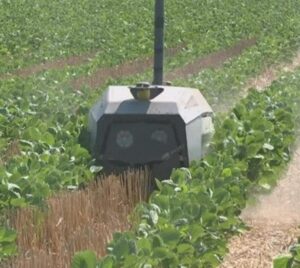
John Deere has a new See & Spray technology where their tractors can identify and spray a particular weed and not the entire crop. This brings precision ag to a whole new level.
One farmer invented Greenfield Robotics, an AI powered robot that identifies weeds and picks them, thus reducing herbicides in the field.
Seeing significant opportunity in this regenerative ag-focused technology, Chipotle, the fast casual restaurant, has backed and invested in this company.
The Bottom Line
Our bodies have an amazing ability to detoxify ourselves as long as we exercise, eat fruits, vegetables, fiber, and protein; get at least seven hours of sleep, and keep stress at bay. Cancer from glyphosate is not a forgone conclusion, it depends on your genetic make-up and your lifestyle. We do not take chemicals in our bodies and our environment lightly, but try not to panic and be sure to follow the science.
A version of this article was originally posted at Dirt to Dinner and is reposted here with permission. Dirt to Dinner can be found on Twitter @Dirt_To_Dinner