
In a historic medical breakthrough, a child diagnosed with a rare genetic disorder has been successfully treated with a customized CRISPR gene editing therapy by a team at Children’s Hospital of Philadelphia (CHOP)and Penn Medicine.

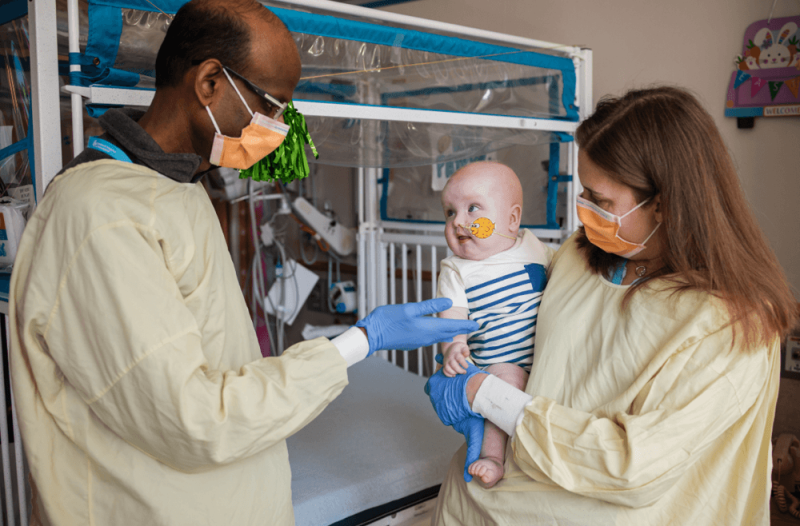
The infant, KJ, was born with a rare metabolic disease known as severe carbamoyl phosphate synthetase 1 (CPS1) deficiency. After spending the first several months of his life in the hospital, on a very restrictive diet, KJ received the first dose of his bespoke therapy in February 2025 between six and seven months of age. The treatment was administered safely, and he is now growing well and thriving.
The case is detailed [May 15, 2025] in a study published by The New England Journal of Medicine and was presented at the American Society of Gene & Cell Therapy Annual Meeting in New Orleans. This landmark finding could provide a pathway for gene editing technology to be successfully adapted to treat individuals with rare diseases for whom no medical treatments are available.
“Years and years of progress in gene editing and collaboration between researchers and clinicians made this moment possible, and while KJ is just one patient, we hope he is the first of many to benefit from a methodology that can be scaled to fit an individual patient’s needs,” said Rebecca Ahrens-Nicklas, MD, PhD, director of the Gene Therapy for Inherited Metabolic Disorders Frontier Program (GTIMD) at Children’s Hospital of Philadelphia and an assistant professor of Pediatrics in the Perelman School of Medicine at the University of Pennsylvania.
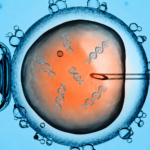
CRISPR (clustered regularly interspaced short palindromic repeats)-based gene editing can precisely correct disease-causing variants in the human genome. Gene editing tools are incredibly complex and nuanced, and up to this point, researchers have built them to target more common diseases that affect tens or hundreds of thousands of patients, such as the two diseases for which there currently are U.S. Food and Drug Administration-approved therapies, sickle cell disease and beta thalassemia. However, relatively few diseases benefit from a “one-size-fits-all” gene editing approach since so many disease-causing variants exist. Even as the field advances, many patients with rare genetic diseases – collectively impacting millions of patients worldwide – have been left behind.
A Collaborative Effort
Ahrens-Nicklas and Kiran Musunuru, MD, PhD, the Barry J. Gertz Professor for Translational Research in Penn’s Perelman School of Medicine, who are co-corresponding authors on the published report, began collaborating to study the feasibility of creating customized gene editing therapies for individual patients in 2023, building upon many years of research into rare metabolic disorders, as well as the feasibility of gene editing to treat patients. Both are members of the NIH funded Somatic Cell Genome Editing Consortium, which supports collaborative genome editing research.
Ahrens-Nicklas and Musunuru decided to focus on urea cycle disorders. During the normal breakdown of proteins in the body, ammonia is naturally produced. Typically, our bodies know to convert the ammonia to urea and then excrete that urea through urination. However, a child with a urea cycle disorder lacks an enzyme in the liver needed to convert ammonia to urea. Ammonia then builds up to a toxic level, which can cause organ damage, particularly in the brain and the liver.
After years of preclinical research with similar disease-causing variants, Ahrens-Nicklas and Musunuru targeted KJ’s specific variant of CPS1, identified soon after his birth. Within six months, their team designed and manufactured a base editing therapy delivered via lipid nanoparticles to the liver in order to correct KJ’s faulty enzyme. In late February 2025, KJ received his first infusion of this experimental therapy, and since then, he has received follow-up doses in March and April 2025. In the newly published New England Journal of Medicine paper, the researchers, along with their academic and industry collaborators, describe the customized CRISPR gene editing therapy that was rigorously yet speedily developed for administration to KJ.

As of April 2025, KJ had received three doses of the therapy with no serious side effects. In the short time since treatment, he has tolerated increased dietary protein and needed less nitrogen scavenger medication. He also has been able to recover from certain typical childhood illnesses like rhinovirus without ammonia building up in his body. Longer follow-up is needed to fully evaluate the benefits of the therapy.

“While KJ will need to be monitored carefully for the rest of his life, our initial findings are quite promising,” Ahrens-Nicklas said.
“We want each and every patient to have the potential to experience the same results we saw in this first patient, and we hope that other academic investigators will replicate this method for many rare diseases and give many patients a fair shot at living a healthy life,” Musunuru said. “The promise of gene therapy that we’ve heard about for decades is coming to fruition, and it’s going to utterly transform the way we approach medicine.”
A Future for KJ
Typically, patients with CPS1 deficiency, like KJ, are treated with a liver transplant. However, for patients to receive a liver transplant, they need to be medically stable and old enough to handle such a major procedure. During that time, episodes of increased ammonia can put patients at risk for ongoing, lifelong neurologic damage or even prove fatal. Because of these threats to lifelong health, the researchers knew that finding new ways to treat patients who are too young and small to receive liver transplants would be lifechanging for families whose children faced this disorder.
“We would do anything for our kids, so with KJ, we wanted to figure out how we were going to support him and how we were going to get him to the point where he can do all the things a normal kid should be able to do,” his mother, Nicole Muldoon, said. “We thought it was our responsibility to help our child, so when the doctors came to us with their idea, we put our trust in them in the hopes that it could help not just KJ but other families in our position.”
“We’ve been in the thick of this since KJ was born, and our whole world’s been revolving around this little guy and his stay in the hospital,” his father, Kyle Muldoon, said. “We’re so excited to be able to finally be together at home so that KJ can be with his siblings, and we can finally take a deep breath.”
This is a news release reposted in full