Viewpoint: From farm to famine? Kenya risks a Sri Lanka-style collapse over pesticide politics

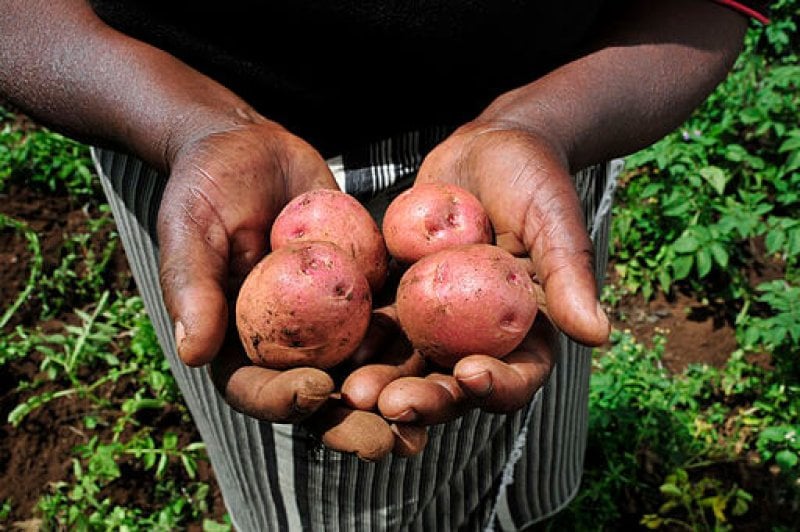
Potatoes from a Kenyan farm
Image Credit: CIAT

In 2025, Kenya, its farmers, and its consumers will deliver a world demonstration of why scientists have been pleading for government policies on pest control to be evidence-based, as they are instead swept up in a tide of misinformation.

A case in point is the pesticide chlorothalonil, one of the world’s most widely used fungicides. In Kenya, it has been the crop protection of choice for diseases such as potato and tomato blight, mildew, botrytis, and black spot, as well as stem rust on wheat, and coffee berry disease.

Mis- and disinformation are distorting science and public policy. Subscribe to our Daily and Weekly Digests for incisive coverage of ‘disruptive’ innovations in AI, agricultural biotechnology, food, chemicals, nuclear energy, vaccines, and other disruptive innovations.

The campaign against pesticides in Kenya focused on Chlorothalonil precisely because it is widely used, with initiatives such as testing vegetables to demonstrate detectable residues.

However, no one would believe that residues are less toxic than a cup of coffee, so they needed to present Chlorothalonil as poisonous.

The only remaining question is whether we will have to face a similar situation to Sri Lanka, with spiralling food prices, starving families, and havoc to lives, human health, and livelihoods, to realise that pests destroy food.


This is an excerpt. Read the original post here

Related Articles

Infographic: Global regulatory and health research agencies on whether glyphosate causes cancer

Infographic: Global regulatory and health research agencies on whether glyphosate causes cancer

Does glyphosate—the world's most heavily-used herbicide—pose serious harm to humans? Is it carcinogenic? Those issues are of both legal and ...

Most Popular

png_cheese_Raw_milk
100% raw milk, 100% misguided: As MAHA-fueled demand for unpasteurized milk soars, American Academy of Pediatrics renews call for a ban on its sale and distribution
ChatGPT-Image-Mar-10-2026-01_39_01-PM
Viewpoint—“Miracle molecule” debunked: Why acemannan supplements don’t work
Screenshot 2026-10-16 at 11.17
Viewpoint: Latest attack on renewable energy and farmers, new USDA rules could put solar grants out of reach for small producers
Nutrition and Supplements Infinity Collage
Drugs and supplements can extend life and five other longevity myths
Golden-GM-Emblem-with-EU-Stars
As Europe inches forward in its embrace of gene-edited crops, hopes abound that opposition to GMOs might fade
Screenshot-2026-10-19-at-11.09.17-AM
Vaccines, religious freedom, and protecting children’s health: New York Amish appeal to Supreme Court after $118,000 in vaccine fines for blocking shots
Screenshot 2026-10-16 at 5.38
PFAS in Agriculture: Science, Uncertainty, and Risk Communication
psychedelics ptsd neurosciencnews public
Chaos or at peace with the world: The complex ways psychedelics transform the brain
Screenshot-2026-10-20-at-10.53.36-AM
World Health Organization calls Kennedy- and CDC-backed Guinea-Bissau hepatitis B vaccine study designed to ‘prove’ the danger of vaccines “unethical”
ChatGPT-Image-May-28-2026-12_56_54-PM
Viewpoint: Vaccines' non-specific effects? The ‘shoddy’ Danish couple whose 'research’ inspires RFK, Jr.’s health delusion
Serene Mature Woman in Abstract Waves
Testosterone’s growing appeal to women: It anecdotally mildly improves sex life, but are there any other potential benefits—or red flags?
Government Briefing on Autism Trends
Viewpoint: ‘Statistical murder’: Kennedy’s expanding record of “duplicity and mendacity”
Screenshot 2026-10-19 at 11.19
How the “wellness” movement has turned into a rigid cultural belief system
glp menu logo outlined

Get news on human & agricultural genetics and biotechnology delivered to your inbox.