Beyond herbicides: AI opens the door to sustainable weed control

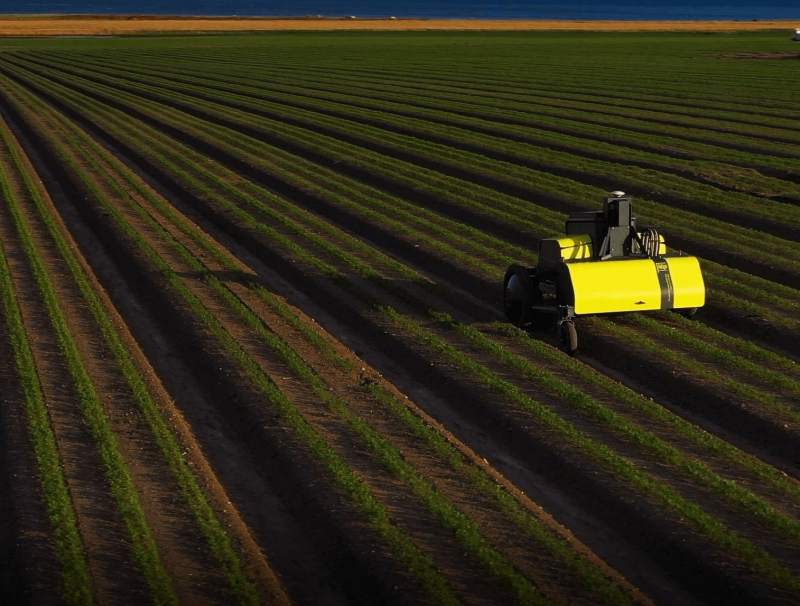
The AX-1 precision herbicide robot. Credit: Kilter

Weeds remain one of the most persistent problems in agriculture. But the biggest issue facing modern farmers isn’t getting rid of weeds; mechanical tools and herbicides can do that. Instead, the difficulty lies in identifying and killing weeds without harming crops.

Across the agricultural industry, AI tools are beginning to make a difference for farmers. That’s good news for an industry struggling against foes like the climate crisis and shifts in trade. From complex robots to chatbots, farmers are testing out a range of tools to hone their processes and achieve goals once out of reach.

Follow the latest news and policy debates on sustainable agriculture, biomedicine, and other ‘disruptive’ innovations. Subscribe to our newsletter.

Sarah Schinckel, [John Deere’s] director of emerging technologies, said AI has already improved its agricultural equipment. In 2024, she said, John Deere’s See & Spray system was used to spray over 1 million acres of farmland. Because the machine only sprays plants identified as weeds, the system was able to weed this acreage using 8 million gallons less herbicide than would typically be needed.


This is an excerpt. Read the original post here

{{ reviewsTotal }}{{ options.labels.singularReviewCountLabel }}
{{ reviewsTotal }}{{ options.labels.pluralReviewCountLabel }}
{{ options.labels.newReviewButton }}
{{ userData.canReview.message }}

Related Articles

Infographic: Global regulatory and health research agencies on whether glyphosate causes cancer

Infographic: Global regulatory and health research agencies on whether glyphosate causes cancer

Does glyphosate—the world's most heavily-used herbicide—pose serious harm to humans? Is it carcinogenic? Those issues are of both legal and ...

Most Popular

Screenshot 2026-05-06 at 2.56
Singularity crisis ahead? Can super babies save us from rogue AI geniuses?
Screenshot-2026-03-13-at-12.14.04-PM
The FDA wants to make many popular prescription drugs OTC—a great idea. Here’s why it’s unlikely to happen
Screenshot-2026-04-20-at-2.26.27-PM
Viewpoint — Food-fear world: The latest activist scientists campaign: Cancer-causing additives
Screenshot-2026-05-01-at-11.56.24-AM
‘Science moves forward when people are willing to think differently’: Memories of DNA maverick Craig Venter
Screenshot-2026-05-01-at-1.29.41-PM
Viewpoint: What happens when whole grains meet modern food manufacturing? Labels don’t tell the whole story.
images
The never-ending GMO debate: Pros and cons
Screenshot-PM-24
Viewpoint: The herbicide glyphosate isn’t perfect. Banning it would be far worse.
Screenshot-2026-04-03-at-11.15.51-AM
Paraben panic: How a flawed study, media hype, and chemophobia convinced the public of the danger of one of the safest classes of preservatives
Screenshot-2026-05-06-at-2.07.43-PM
Manufacturing a conspiracy: The timeline of how  the White House embraced the fringe claim that scientists are being mysteriously murdered
Screenshot-2026-04-30-at-2.19.37-PM
5 myths about summer dehydration that could damage your health — or even kill you
glp menu logo outlined

Get news on human & agricultural genetics and biotechnology delivered to your inbox.