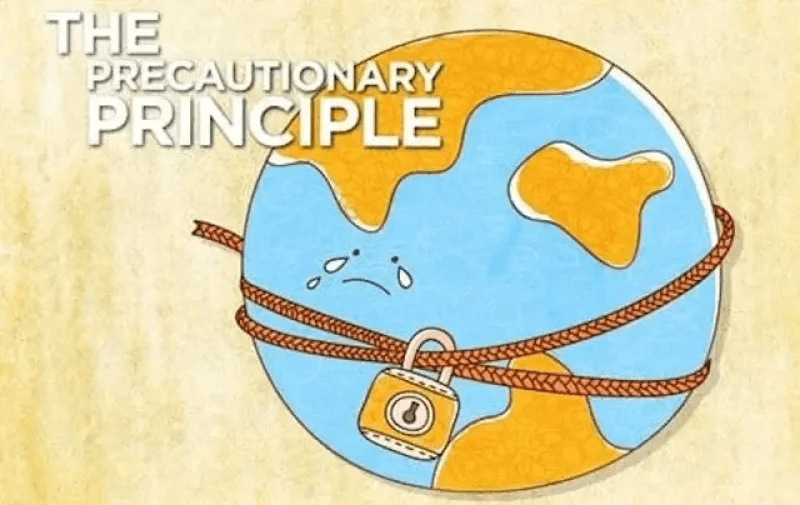

Both regulations and toxic tort decisions, being guided by an antiquated Precautionary Principle, routinely seek to lower exposure to potential hazards as low as possible. In most cases, these policies ignore key scientific developments over the past several decades finding endogenous production of toxins and the plethora of adaptive mechanisms that affect health and disease processes, including hormetic properties. EPA’s risk assessment policy, for example, has explicitly excluded “effects that appear to be adaptive, non-adverse or beneficial.”
In addition, because of countervailing risks that are often not considered, overall risk increases may be the result of precautionary policies. Increases in risk may be the overall result when we are trying to protect a hypothetical subpopulation but ignoring other affected subpopulations. The linear no-threshold dose-response theory for carcinogens is an important example of low-dose decision making that may be causing the most overall harm. This paper examines the history of how this became a default position and how different trade-offs that are often not practiced result in potential harm to populations not considered in both regulatory and toxic tort decisions.
The influence and limitations of LNT theory
While the LNT dates back to the 1920s, it became enshrined after a 1946 Nobel Prize acceptance speech by geneticist Hermann Muller. Muller’s primary topic was evolution, which he believed occurred via a combination of mutation and natural selection but with no repair of genetic damage. In light of the previous year’s atomic bomb detonations in Japan, Muller went on to conclude that there is “no escape from the conclusion that there is no threshold dose” for radiation.
Cause of most cancers and age-related degenerative diseases
It has been thought that most cancers are due to environmental influences but, in fact, it has been primarily due to medical advances that have allowed us to live to advanced age. Our bodies, through normal cellular metabolism, produce 200 billion times more reactive oxygen species (ROS) than background environmental exposure to radiation. ROS plays an essential role in the functioning of all cell types at low concentrations …
Protecting highly exposed and highly sensitive people
EPA describes vulnerable consumers this way: “These individuals often are either more susceptible to the adverse health effect than others in the population or are highly exposed individuals, or both.” In, for example, pesticide risk assessments, the agency calculates the 90th, 95th or 99th percentiles of exposure as a target for protective regulation. Such calculations account for variability (observable differences) and make additional allowances for uncertainty (lack of knowledge) …
Litigation and regulation implications
Most of the decisions about small exposures to chemicals and radiation occur in regulatory agencies and tort litigation. Although initially leveled on regulated companies and “polluters” in tort trials, in the end companies pass the costs on to workers and consumers through lower wages and higher prices.





We manage risks and, in many cases, seek zero exposure through regulation at the federal, state, local and private levels.
Summary
We have known about hormesis since the 1880s. There have been nearly 14,000 papers on it since 1990. In addition, Wildavsky wrote “Richer is Safer” over 40 years ago, which led to a greater understanding of how expensive regulations pushing very low levels of exposure of chemicals and radiation can crowd out public and private expenditures to control higher risks.