How gene editing could transform the humble potato into a sustainability powerhouse

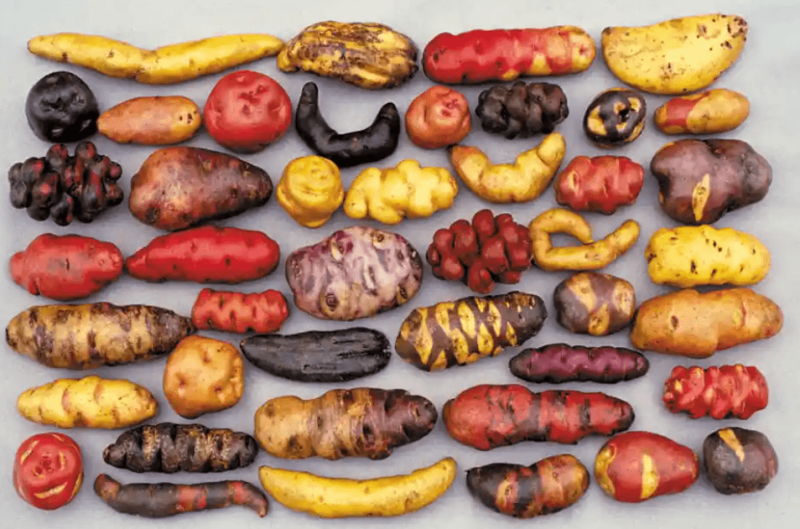
Peruvian hierloom potatoes. Credit: International Potato Centre

In Peru, [gene editing] is already beginning to emerge as an ally in facing the challenges posed by climate change, especially for one emblematic crop: the potato.

With more than 3,500 registered varieties, the potato is not only an essential part of national food security, as the first crop of national importance, but also a symbol of Andean cultural identity. 

Follow the latest news and policy debates on sustainable agriculture, biomedicine, and other ‘disruptive’ innovations. Subscribe to our newsletter.

“Restricting the use of this technology would be a mistake. We need a clear legal framework, based on scientific evidence, that allows for its responsible use,” [Julio Vivas Bancallán, CEO of the Peruvian Seed Association] argues. For him, gene editing is not only compatible with biodiversity, but can strengthen it by accelerating plant breeding processes that would otherwise take decades.

Peru thus faces a dilemma: open the door to biotechnology to avoid falling behind in agricultural innovation, or fiercely protect its genetic diversity. The two positions are not mutually exclusive, but they require a broad, informed, and participatory debate.

“We need modern regulation, dialogue between science and tradition, and politics will take advantage of this tool without betraying our biological and cultural wealth,” Vivas concludes.


This is an excerpt. Read the original post here

{{ reviewsTotal }}{{ options.labels.singularReviewCountLabel }}
{{ reviewsTotal }}{{ options.labels.pluralReviewCountLabel }}
{{ options.labels.newReviewButton }}
{{ userData.canReview.message }}

Related Articles

Infographic: Global regulatory and health research agencies on whether glyphosate causes cancer

Infographic: Global regulatory and health research agencies on whether glyphosate causes cancer

Does glyphosate—the world's most heavily-used herbicide—pose serious harm to humans? Is it carcinogenic? Those issues are of both legal and ...

Most Popular

Screenshot-PM-24
Viewpoint: The herbicide glyphosate isn’t perfect. Banning it would be far worse.
79d03212-2508-45d0-b427-8e9743ff6432
Viewpoint: The Casey Means hustle—Wellness woo opportunism dressed up as medical wisdom
ChatGPT-Image-Mar-27-2026-11_27_05-AM
The myths of “process”: What science says about the “dangers’ of synthetic products and ultra-processed foods
Screenshot-2026-04-03-at-11.15.51-AM
Paraben panic: How a flawed study, media hype, and chemophobia convinced the public of the danger of one of the safest classes of preservatives
d-b
Blocked arteries, kidney stones, nausea, constipation, fatigue: Long list of health problems caused by too much vitamin D 
ChatGPT-Image-Apr-30-2026-12_21_05-PM-2
The tech billionaires behind the immortality movement
ChatGPT-Image-Mar-3-2026-01_17_14-PM
MAHA wellness influencers deride proven anxiety medications, tout lifestyle fixes
ChatGPT-Image-Mar-10-2026-01_39_01-PM
Viewpoint—“Miracle molecule” debunked: Why acemannan supplements don’t work
Screenshot-2026-05-01-at-11.56.24-AM
‘Science moves forward when people are willing to think differently’: Memories of DNA maverick Craig Venter
glp menu logo outlined

Get news on human & agricultural genetics and biotechnology delivered to your inbox.